

Hersh: Closer look at the new faces in the Preakness
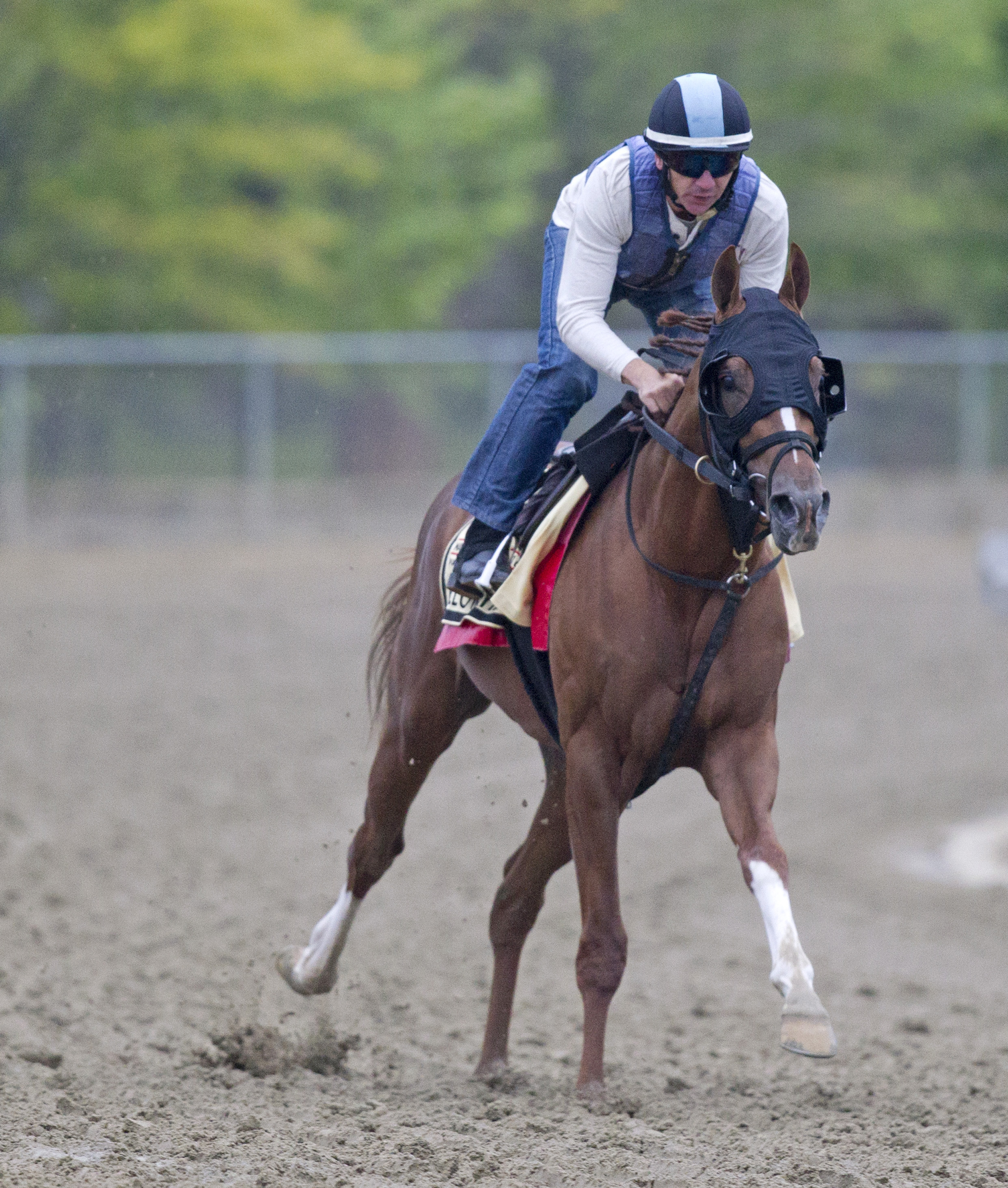
First, a brief retirement ceremony for the term “new shooters,” Preakness starters that didn’t race in the Kentucky Derby. “New shooters” has been around decades. It had a good run. Everyone is sick of it. “Horse that didn’t run in the Derby” takes a little longer to type and say, but let’s go with it.
Sometimes there’s a handful of non-Derby runners in the Preakness, sometimes a bundle. Years the Derby winner is perceived as relatively weak, the ratio of Derby runners to non-Derby runners tilts toward the former, 2009 for instance, when six Derby also-rans returned two weeks later to prove Mine That Bird a fluke. He beat them again but couldn’t handle Kentucky Oaks winner Rachel Alexandra.
California Chrome was the 2014 Derby favorite, won the Derby comfortably, and at the time looked a cut above the rest of his crop, so a mere two others out of the Derby, Ride On Curlin and General a Rod, ventured to Pimlico to try him again. They were no match, but ran second and fourth.
First, second, and fourth is fairly typical of the general recent dominance of Derby runners in the Preakness:
2014: 1, 2, 4
2013: 1, 2, 3, 4, 5
2012: 1, 2, 3,
2011: 1, 2, 4
2010: 1, 3, 5
There’s a rumor the Kentucky Derby is a race everyone wants to win. I think it might even be true. Obviously, the best 3-year-olds race in the Derby, and ergo, horses that don’t rarely are good enough to win the Preakness. Rachel Alexandra, who had her own story, was the last one, following Bernardini in 2006 and Red Bullet in 2000. Bernardini didn’t debut until January of his 3-year-old season, didn’t win a maiden race until March, and didn’t have the graded stakes earnings to qualify for the Derby. And he won the Preakness under tragic circumstances, when Derby winner Barbaro broke down. Red Bullet could have gone to the Derby, but he was thumped by Derby winner Fusaichi Pegasus in the Wood Memorial and his connections simply decided to pass on the Derby and take their swing with a fresh horse in Baltimore.
:: PREAKNESS: Buy pps, watch Saturday's card live
But then there was last year, when non-Derby runners finally made a mark again. No one came close to American Pharoah, but Tale of Verve, out of a mere maiden win at Keeneland, finished second, with Lexington Stakes winner Divining Rod third. Surely extreme conditions played a major role, heavy rain turning the track to a sea of slop, with the Derby place and show finishers, Dortmund and Firing Line, spinning their wheels as subsequent Triple Crown winner American Pharoah clocked 1:58.46 for 1 3/16 miles, nearly six seconds off the track record.
Setting aside last year, and throwing out the special case of Rachel Alexandra, it’s worth noting that five of the last nine non-Derby runners to finish third or better in the Preakness came out of a one-turn mile race, the Withers, the Jerome, and the Derby Trial. There’s one such runner this year, Fellowship, but he’s a different case than many of the previous stretch-out milers, having already started several times in two-turn routes. And, with just three Derby runners in this Preakness, Fellowship is part of a bumper crop of – let’s say it one final time – “new shooters.” Here’s a quick look at them.
Cherry Wine
Trainer: Dale Romans
Stakes wins: None
Last race: Blue Grass Stakes – 3rd
Best Beyer: 88
Use or lose: Use
This is Romans’ third non-Derby runner; Cozzetti, fourth in the Arkansas Derby, finished seventh in 2012; but First Dude finished a strong second in 2010 to Lookin At Lucky. First Dude had exactly the same pattern going into the Preakness as Cherry Wine, a third-place finish in the Blue Grass Stakes. First Dude had far more speed than Cherry Wine, but in an apparently pace-filled edition of the race this year, Cherry Wine’s running style should work fine. Cherry Wine was a Derby also-eligible, has a touch of quality, and ran well in his only sloppy track start. Use him.
Uncle Lino
Trainer: Gary Sherlock
Stakes wins: California Chrome Stakes
Last race: California Chrome Stakes – 1st
Best Beyer: 95
Use or lose: Lose
Without looking at every Preakness chart since the dawn of time, it’s a fair guess this is the first runner in the Triple Crown’s second leg that last raced at Los Alamitos. There is some precedent for a California-based non-Derby horse to run well in the Preakness: Rock Hard Ten finished second to Smarty Jones in his first start since being disqualified from second to third in the Santa Anita Derby. It happens that Uncle Lino also finished third in the Santa Anita Derby, but he was beaten more than eight lengths there by Exaggerator, second choice on Saturday. Uncle Lino does not look a lot like Rock Hard Ten, who got a late start to his career and had started only three times entering the Preakness. Uncle Lino has raced eight times, and not one of his Beyer Speed Figures is as high as all three figures Rock Hard Ten earned in this three pre-Preakness starts. The pace is against Uncle Lino, whose well established form suggests a miler.
Awesome Speed
Trainer: Alan Goldberg
Stakes wins: James Lewis, Mucho Macho Man, Tesio
Last race: Federico Tesio – 2nd, placed 1st
Best Beyer: 87
Use or lose: Lose
The Tesio Winner! That has been, through most of the Preakness history, a harbinger of failure. Icabad Crane finished third at 22-1 in 2008, but that was Big Brown’s year, and only one other Derby starter ran in the Preakness that year. The last five horses coming out of the Tesio and into the Preakness finished 10th, eighth, eighth, 12th, and eighth, usually beaten vast margins. Awesome Speed was drummed facing the top of the class in Florida and has the wrong running style for this race shape.
Collected
Trainer: Bob Baffert
Stakes wins: Grade 3 Sham, Grade 3 Lexington
Last race: Lexington Stakes – 1st
Best Beyer: 90
Use or lose: Lose
“New shooters – that hasn’t worked for me so far.” That was Bob Baffert talking about non-Derby starters in the Preakness during the week before the 2014 race. It didn’t work out again two years ago, either, as Bayern, a horse that would win the Breeders’ Cup Classic later in the year, went out and clunked home ninth of 10, joining Senor Swinger and Govenor Charlie as non-Derby Preakness also-rans from the Baffert barn.
Horses that raced in the Lexington have won the Preakness several times, but always when they also raced in the Derby. The only recent non-Derby Lexington starter to make the Preakness trifecta was Hemingway’s Key, who was eighth in the Lexington but managed third at 29-1 in Bernardini’s 2006 Preakness.
Collected made a favorable impression winning the Lexington; he also got a comfortable stalking-pressing trip behind a maiden named One More Round. He’s a pace horse in a race with other speed, and let Baffert talk a bit about where Collected stands.
“We never thought about the Derby with him. We thought about the Preakness, the shorter one. The owners get excited,” he said.
Laoban
Trainer: Eric Guillot
Stakes wins: None
Last race: Blue Grass – 4th
Best Beyer: 85
Use or lose: Lose
The Kentucky Derby media guide has an entire section devoted to “maidens in the Derby,” but, owing to a lack of material, there is no mention of maidens in the Preakness. Laoban, despite never having won, actually looks better qualified for the Preakness than maiden-winner Tale of Verve, who was facing other winners for the first time when he finished second last year. Alas, things still look grim. Laoban was beaten three lengths by Collected in the Sham and about three by Cherry Wine in the Blue Grass, and if those are second-tier hopes Saturday, Laoban is a third-tier contender without even taking into account the ill fit of his forwardly placed style. His second in the Gotham was bias-aided, and by most prevailing applications of logic, Laoban is a toss.
Abiding Star
Trainer: Edward Allard
Stakes wins: Parx Derby, Private Terms
Last race: Parx Derby – 1st
Best Beyer: 91
Use or lose: Lose
The Parx Derby is two years old. The 2015 winner, Bluegrass Singer, also ran back at Pimlico, but not in the Preakness: He finished fifth in the James Murphy Stakes on turf and has since lost eight more races in a row. Maybe Abiding Star is a better horse than that, but maybe not; he was, after all, in a $40,000 maiden-claimer on Jan. 1. He faces 10 foes in the Preakness after running against a total of 17 horses in his four straight wins following his maiden score. Abiding Star is all speed, speed that has to be used from a wide draw. He’ll affect the pace of the Preakness, but not much more.
Fellowship
Trainer: Mark Casse
Stakes wins: Florida Stallion Stakes – In Reality division
Last race: Pat Day Mile – 4th
Best Beyer: 87
Use or lose: Use
Aha – the lone Preakness runner exiting a one-turn mile, the best distance pattern for non-Derby runner Preakness runners in recent history. What’s more, Fellowship probably is better around two turns than one, and in the Pat Day Mile on the Derby undercard, he showed surprising early pace for a horse that has come from well behind in slower-paced route races. Casse has started two Preakness runners, Danzig Moon, who made no impression last year coming out of the Derby, and Dynamic Impact, who won the 2014 Illinois Derby, then was a distant seventh in the Preakness, subsequently going to the sidelines for one year. Dynamic Impact ran a career-best in the Illinois Derby and might have bounced, but Fellowship has a stronger foundation.
“My thoughts are one horse should never scare you away,” Casse said in 2014, referring to running Dynamic Impact against California Chrome.
There are two scary horses this year, Nyquist and Exaggerator, and on bare form, Fellowship can’t beat them. He can, however, sit behind a hot pace and run late for third or fourth.
Stradivari
Trainer: Todd Pletcher
Stakes wins: None
Last race: Keeneland allowance race – 1st
Best Beyer: 100
Use or lose: Tough Call
Again, there’s only Tale of Verve’s head-scratching second last year as a precedent for a stakes-debuting Preakness runner having any impact on the race in recent history. Stradivari comes to this far, far more highly regarded than Tale of Verve, and is Pletcher’s fifth non-Derby runner in the race, following Dance City (5th in 2011), Aikenite (10th in 2010), Take the Points (13th in 2009), and King of the Roxy (6th in 2007). All those horses had graded-stakes experience, but that cuts two ways: Stradivari is shorter on experience but longer on potential. Two other non-Derby runners who ran well in the Preakness, victorious Bernardini and second-place Rock Hard Ten, also came into the race with only three starts, two of which were wins. Bernardini, like Stradivari, lost his career debut, then scored a blowout Gulfstream maiden win second time out. Bernardini faced winners for the first time winning the Withers; Stradivari crushed an allowance field going two turns at Keeneland. The pace scenario could work against Stradivari, and he’s the likely third choice in the race, perhaps an underlay. Maybe the lack of a stakes start is a red herring, and it remains possible the Preakness serves as a true coming-out party for this horse that never had a chance to make the Derby – the kind of horse we used to call a “new shooter.”