

Bramlage: Recommendations from report on Mongolian Groom can be widely applied
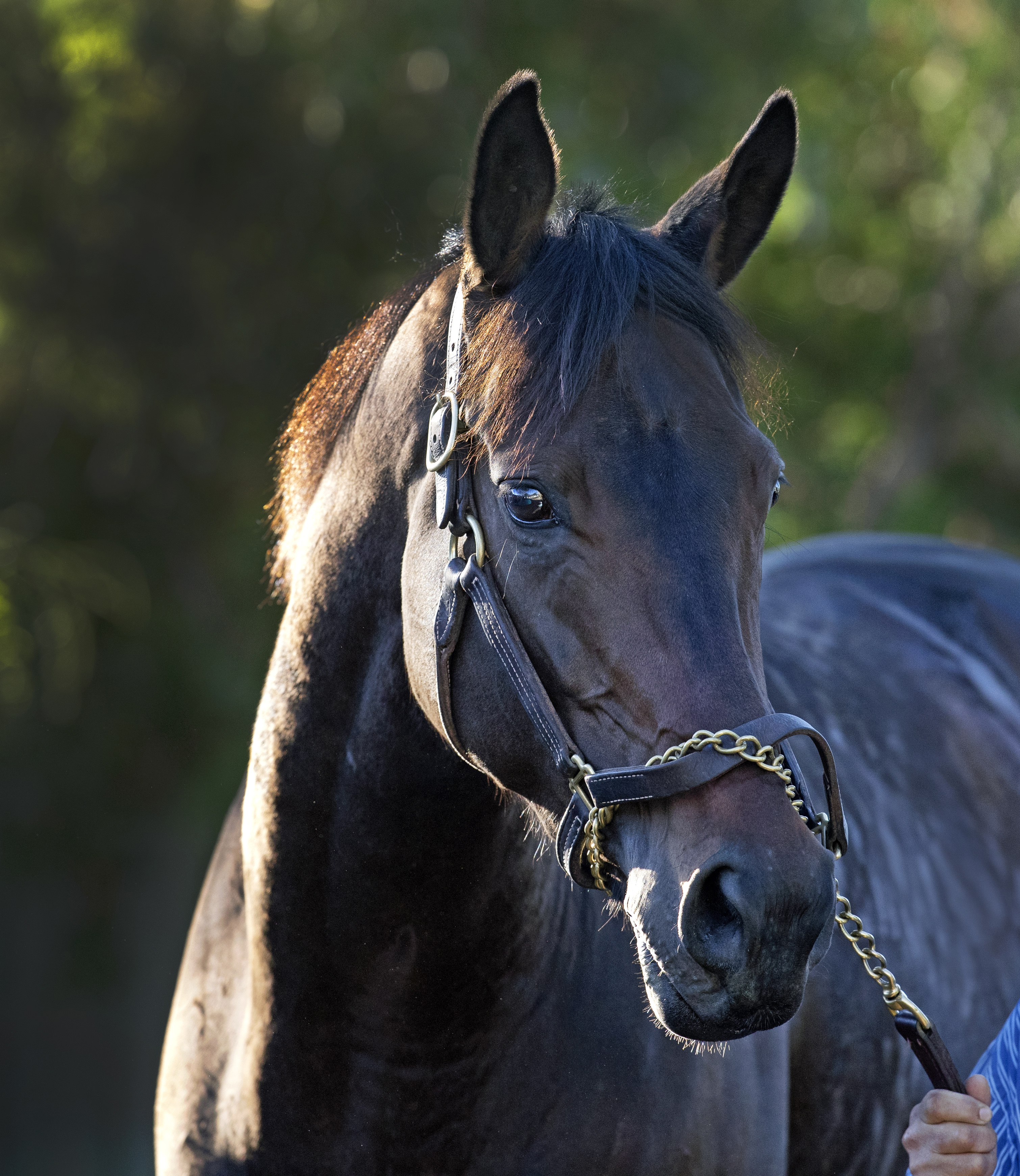
LEXINGTON, Ky. – Recommendations contained in a report released Wednesday examining the fatal injury suffered by Mongolian Groom in last year’s Breeders’ Cup Classic can be implemented at racetracks with far less prestige and personnel than those that host the year-end event, the author of the report, Dr. Larry Bramlage, said on Thursday.
Bramlage’s remarks came during a follow-up teleconference held on Thursday, one day after the report was released. The report revealed that Mongolian Groom had lesions indicative of lameness in both of his hind legs, but that a clinical diagnosis of unsoundness eluded veterinarians for a variety of reasons. The report also included six recommendations for Breeders’ Cup to consider as part of its extensive pre-race protocols for horses entered in the two-day event.
Even before last year’s event, Breeders’ Cup was known for conducting the most rigorous pre-race veterinary procedures in the industry, with possible equals among the tracks that host the three Triple Crown races, which also have comprehensive veterinary and security protocols. The 2019 Breeders’ Cup event expanded on that program due to concern over a rash of fatal injuries suffered by horses racing and training earlier in the year at the host track, Santa Anita in Arcadia, Calif.
The report noted that Mongolian Groom was evaluated while working or exercising on the track by five different veterinarians on five occasions, and that the horse received another six exams at his barn, by three different veterinarians. That degree of scrutiny is far in excess of the amount of observation that a typical horse undergoes for any single race on nearly every other race card in the U.S.
So given that level of scrutiny, is it possible that other racetracks with far less personnel could improve on what the Breeders’ Cup already does?
“There’s nothing to stop tracks from implementing the reforms in this report,” said Shannon Arvin, an attorney with Stoll, Keenon, and Ogden, which assisted in formulating the report, during the Thursday conference call.
Dr. Bramlage noted that a number of his recommendations, such as requiring horses suspected of some degree of lameness to jog in a circle, could be implemented by other regulatory vets simply on a voluntary basis, as a new best practice. And he said that recommendations that further attempt to clarify lameness diagnoses are also possible for racetracks without the personnel employed by Breeders’ Cup.
“The tool that implements [these recommendations] will be the regulatory vet,” Dr. Bramlage said, noting that the role of regulatory veterinarian “is the single biggest factor in reducing injury rates industry wide.”
Officials of the Breeders’ Cup said after the report was released Wednesday that the organization’s board will review the recommendations at its next board meeting. Breeders’ Cup is also a member of the Thoroughbred Safety Coalition, an organization formed last year after the 2019 event to implement measures that would reduce injuries and fatalities (the organization had its genesis earlier in the year, and the Mongolian Groom fatality was not a precipitating factor).
Fred Hertrich, the chairman of Breeders’ Cup, said on Wednesday that the organization would push the coalition to review the report’s conclusions for consideration. The coalition includes most of the industry’s leading racing companies, including The Stronach Group, which owns Santa Anita and a number of other high-profile tracks, and the New York Racing Association.
Mike Ziegler, the executive director of racing at Churchill Downs Inc., which is also a member of the coalition, said on Thursday that the Mongolian Groom report has been placed on the agenda for a coalition meeting scheduled for Jan. 24.
“We’re definitely taking a look at it, and if there are measures in there that we can adopt, those will be up for consideration,” Ziegler said.
One of the most prominent conclusions of the report was that Mongolian Groom had lesions on both rear cannon bones, an indication of lameness, but those lesions, described as 5 mm each in length, were not detected until the post-mortem examination of the horse. When asked whether existing pre-race diagnostics such as radiographs or other scans would have been able to detect the lesions, Dr. Bramlage said that it would be hard to speculate.
“Potentially, yes,” Dr. Bramlage said. “If you surveyed routinely you might have picked them up.” But interpretations of the scans are notoriously difficult, Bramlage added, and the lesions may also have been missed unless the scans were conducted with the intent to find the specific injury sites.
Mongolian Groom was not one of the four Breeders’ Cup entrants that veterinarians had asked to be scanned for potential lameness issues, despite notations from veterinarians both during the week of the Breeders’ Cup event and throughout the year that his rear action was sometimes “choppy,” a term of art among veterinarians to describe abnormalities in a horse’s gait. The report did say that Mongolian Groom’s rear legs were examined by veterinary personnel for potential lameness, but that those examinations were “negative.”
The use of scanning equipment to improve the diagnosis of lameness has been a prominent topic during the past year as the racing industry has searched for ways to reduce injuries. Over the past several months, Santa Anita has invested in several new diagnostic technologies to scan horses for pre-existing conditions that could indicate that a horse is at-risk of injury, and the Thoroughbred Safety Coalition is also exploring the use of new equipment.
Dr. Bramlage reiterated on Thursday that the use of new scanning equipment could lead to improved diagnoses, but he cautioned that the scans are not a failsafe solution. And he also said that the new diagnostic machines still have issues that may need to be solved in the near future.
“Those technologies are just coming of age,” he said. “They are not quite there just yet.”