

Woodbine opens 133-day meet with focus on new inner turf course
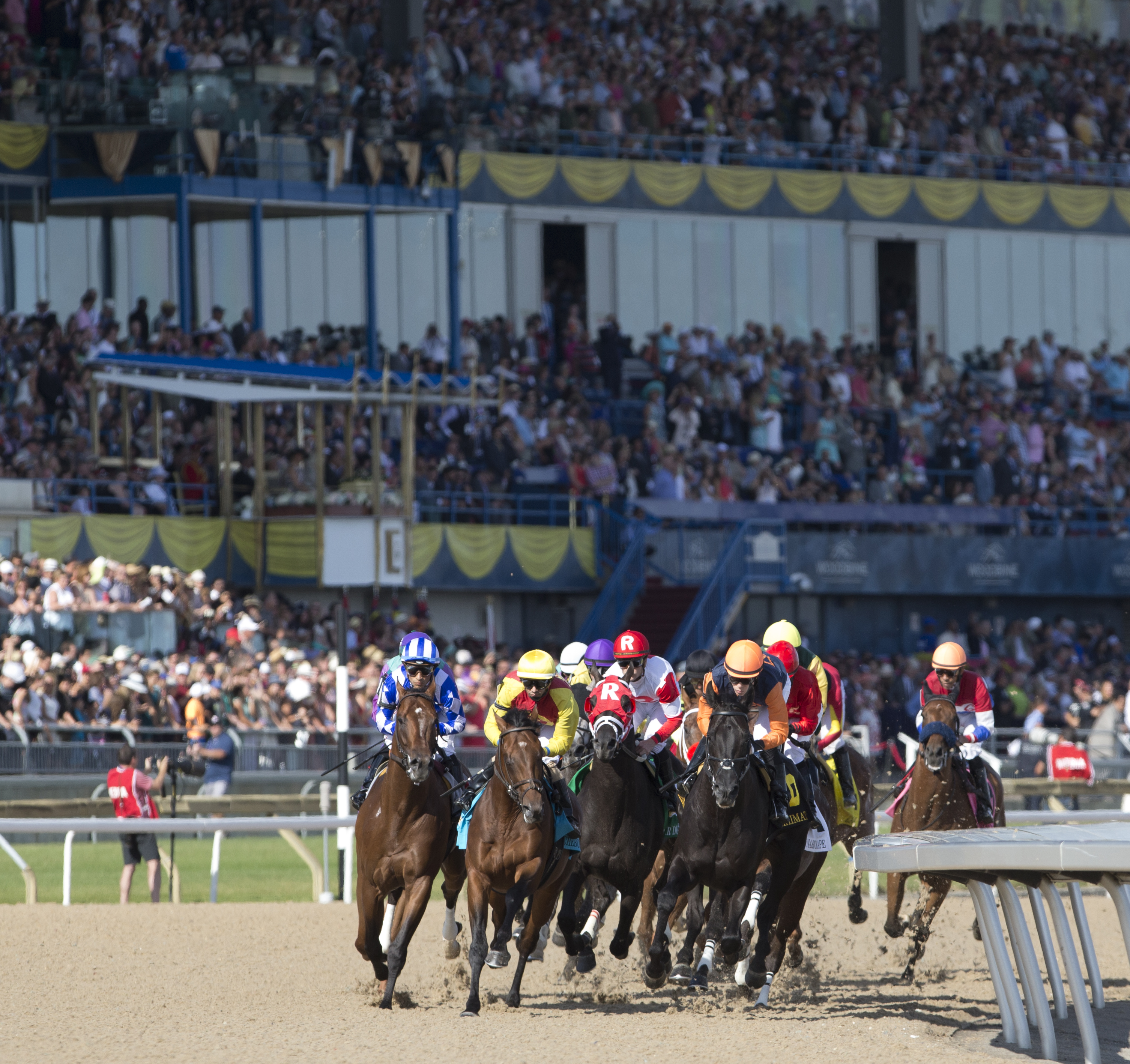
ETOBICOKE, Ontario – Woodbine kicks off its 133-day race meet Saturday with a 10-race card that drew 75 entries. The card features the Grade 3, $125,000 Whimsical Stakes for fillies and mares over six furlongs on Tapeta.
New to Woodbine this season is an inner turf course, replacing the old Standardbred track on the infield. The early portion of the meet will have racing on Tapeta exclusively, and track management is targeting late May for the first race over the new surface, said Jonathan Zammit, Woodbine’s vice president of Thoroughbred racing.
“Our first priority is always safety, and we’re going to make judgements once we get a little more consistent weather,” he said. “I would say the earliest it could be is exactly when the E.P. Taylor [turf course] opens up, which is usually late May. The E.P. Taylor is a mature course, and we know how it reacts, and we know how to manage it. The latest it could be is mid-June. It all depends on safety and weather, and that’s what we’re going to make our final decision based on.”
Zammit said the course will be tested by horsemen before a race is run over it.
“It makes good sense to have everybody test it out and work out any kinks before a live event,” he said. “Our plan is to get people on it before racing on it just to make sure they’re comfortable and familiar with it and they understand what it all entails. That will certainly be a part of the plan to get it ready for official racing on it.”
Woodbine will run races at five furlongs, 7 1/2 furlongs, one mile, 1 1/16 miles, 1 3/8 miles, and 1 1/2 miles over the new surface. Several stakes, including the Grade 3 Ontario Colleen, the Eternal Search, the Vice Regent, the Ontario Damsel, and the overnight Charlie Barley have been moved from the E.P. Taylor course to the new inner turf course. In addition, Woodbine has added two new stakes for 2-year-olds to the inner-turf course, the Woodbine Cares and the Ontario Racing.
“This is the first year of the new course, so we’re really going to be using this year to learn a lot about it,” Zammit said.
“Once we have a bit more data under our hats and we understand a bit more, we’ll be looking to add more stakes to that inner turf course moving forward.”
Woodbine has increased its number of turf races over the past three years, with 303 races last year, or 24 percent of all its races, run on grass. With the new course, Zammit expects that number to increase this year, and with turf races typically attracting larger fields than those on the main track, that could increase handle. All-sources handle last season was more than $533 million, up 5.8 percent over 2017.
Zammit said that turf races attract about 22 percent more handle than races on the main track. But, he added, there will be plenty of racing on Polytrack.
“We also want to strive for a well-balanced program serving the needs of our horsepeople on both surfaces,” he said.

Zammit added that the new turf course can be lit up at night, which allows for turf racing during Wednesday evening cards, which begin May 29. Woodbine has experimented with several racing series over the past few seasons, including the Turf Endurance series, and Zammit said the new turf course offers new opportunities for those series.
“We’re going to be doing some pretty cool stuff in terms of some additional competitions on the turf this year on the inner turf under the lights,” he said.
The meet is highlighted by the 160th running of the $1 million Queen’s Plate on June 29 and features seven Grade 1 races, highlighted by the Woodbine Mile and the Canadian International. The Royal North has been upgraded to a Grade 1 for this season.
Zammit said Woodbine’s horse population is similar to last year’s at this time.
“I think we’re in good shape considering the weather circumstances,” he said. “There are people who make some stops along the way before they get here, but there’s no red flags or anything. I think we’re in good shape, and we’re excited because the horses are here.”
