

Veterinarian changes plea to guilty in Navarro-Servis drug case
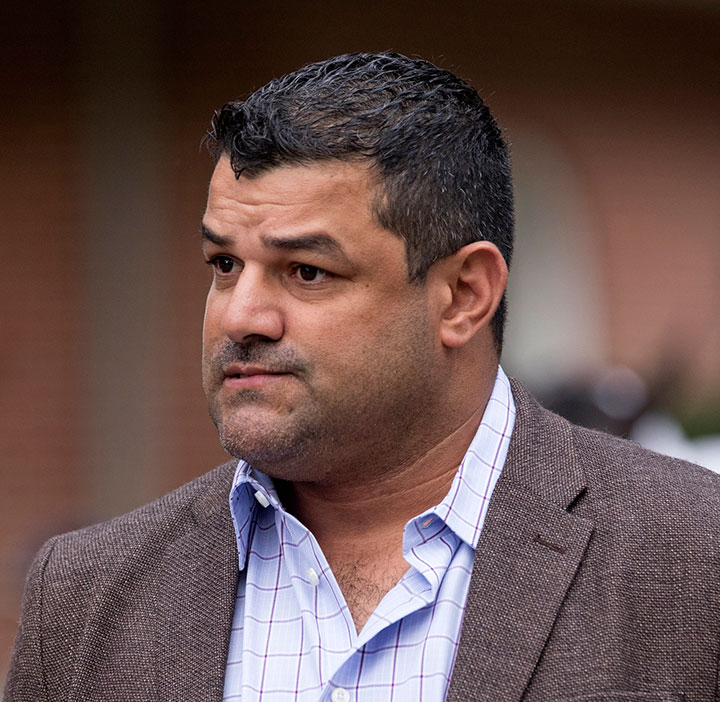
Kristian Rhein, a veterinarian who was indicted last year with more than two dozen other people connected to horse racing on charges related to trafficking in illegal substances, entered a guilty plea on Tuesday before a federal judge to one felony count of drug adulteration and misbranding of drugs.
Rhein, 49, entered the guilty plea after initially pleading not guilty to three charges related to the misbranding and selling of adulterated substances. Ten days ago, Michael Kegley, an indicted salesman for a compounding pharmacy who allegedly sold Rhein the illegal substances, entered a guilty plea to one count of drug adulteration or misbranding.
The charge carries a maximum penalty of 36 months imprisonment, and in a plea agreement with the government, Rhein agreed to forfeit slightly over $1 million in illegal proceeds from the scheme. Rhein has also agreed to pay $700,000 to the alleged “victims” of the scheme, though the liability for that amount could be shared with other individuals that participated in the scheme following their own guilty pleas or convictions, attorneys for both sides said.
Asked by Judge Mary Kay Vyskocil of the U.S. District Court for the Southern District of New York to describe “in his own words” the criminal behavior at the heart of his guilty plea, Rhein said: “I marketed and distributed in interstate commerce misbranded and adulterated drugs to trainers and veterinarians of Thoroughbred racehorses in an effort to assist those trainers and veterinarians to improve the performance of those racehorses through the administration of such misbranded and adulterated drugs while avoiding detection of that scheme by federal and state drug regulators.”
Sarah Mortazavi, an assistant U.S. district attorney, told Vyskocil during the 2 1/2-hour hearing that the government was prepared to present evidence at trial showing that Rhein misbranded drugs that he knew were adulterated and lacked FDA approval, and that he provided clenbuterol, a bronchial dilator that can have steroid-like properties when administered regularly to horses, to trainers without a prescription. Mortazavi also said that the government had evidence that Rhein had falsified veterinary records to hide the distribution and administration of those substances.
In an indictment unsealed in March 2020, prosecutors alleged that Rhein was recorded in wiretapped conversations discussing the sale of SGF-1000, a compounded product he purchased from a pharmacy in Kentucky, to the trainer Jason Servis, who was also indicted last year. On one occasion in 2019, Rhein told Kegley that Servis and other trainers were “buying literally as much” of the substance as Rhein could supply, according to an indictment.
On Friday, another high-profile Thoroughbred trainer who was indicted, Jorge Navarro, filed paperwork to the court indicating that he would change his “not guilty” plea as well. Navarro, who, like Servis, has been banned from racing, is scheduled to change the plea during an Aug. 11 hearing. Servis has entered a not guilty plea.
In subsequent testing of horses trained by Navarro and Servis following their indictments, regulators in New York said that the vast majority of the horses tested positive for clenbuterol despite no veterinary records indicating treatment with the drug. Clenbuterol, which is approved by the FDA, is highly regulated in racing due to its steroid-like effects.
According to the indictment, Navarro and Servis were recorded by investigators discussing SGF-1000 on multiple occasions, with Servis saying on one wiretap that he administered the substance to “almost everything” in his barn, including Maximum Security, the 3-year-old champion colt of 2019.
SGF-1000 is among a class of substances marketed by compounding pharmacies that have highly dubious claims of efficacy. Racing regulators had obtained and tested samples of the substance approximately five years prior to the indictments being released and found that they contained innocuous ingredients that would have little to no known impact on a horse’s performance. Nevertheless, the substance was marketed as a growth stimulant that could also help repair damaged tissue and act as a vaso-dilator. (Regulators also cautioned that the formulation of the substance could have changed in the years after it was obtained and tested.)
According to the indictment, Rhein told Servis during a wiretapped call that “they don’t even have a test” for SGF-1000, but he cautioned that it could return a positive for dexamethasone, a regulated anti-inflammatory. Racing regulators have said that the substance could only return a positive for dexamethasone if it actually contained dexamethasone, contrary to its label.
Mortazavi said during the hearing on Tuesday that trainers could “anecdotally see” the effects of SGF-1000 on their horses. Mortazavi also said that Rhein and other veterinarians charged “several hundred dollars for multiple shots” of the substance. Rhein acknowledged that he provided SGF-1000 and clenbuterol to Servis during the hearing and concealed the administrations on vet bills “to avoid scrutiny from the owners.” Rhein referred to Servis as his “client.”
Prosecutors have said that they intend to treat the sale or administration of any substance by the indicted individuals that was “promoted and intended to be a performance-enhancing drug” as if the substance was in fact efficacious, even if the substance was chemically a “dud.”
Just before officially entering his guilty plea toward the end of the hearing, Vyskocil asked Rhein directly, “Did you know that what you were doing was wrong?”
“Yes, your honor,” Rhein answered.
“Did you know that what you were doing at that time was illegal?” Vyskocil asked.
Rhein paused. “I’m under oath, your honor,” he answered. His attorney, Stephen Scaring, asked Vyskocil for a moment to confer with his client, and it was granted.
Minutes later, Rhein said that he was ready to answer questions, and Vyskocil repeated the question about whether Rhein knew that what he was doing at the time was “illegal.”
This time, Rhein said, “Yes, your honor, I did.”
Rhein will be sentenced in a hearing on Dec. 2. Kegley, the operator of the pharmacy that provided Rhein with the substances, is scheduled to be sentenced on Nov. 11.