

Through a press box window: History, a little charm, and traffic on the Belt
:quality(75))
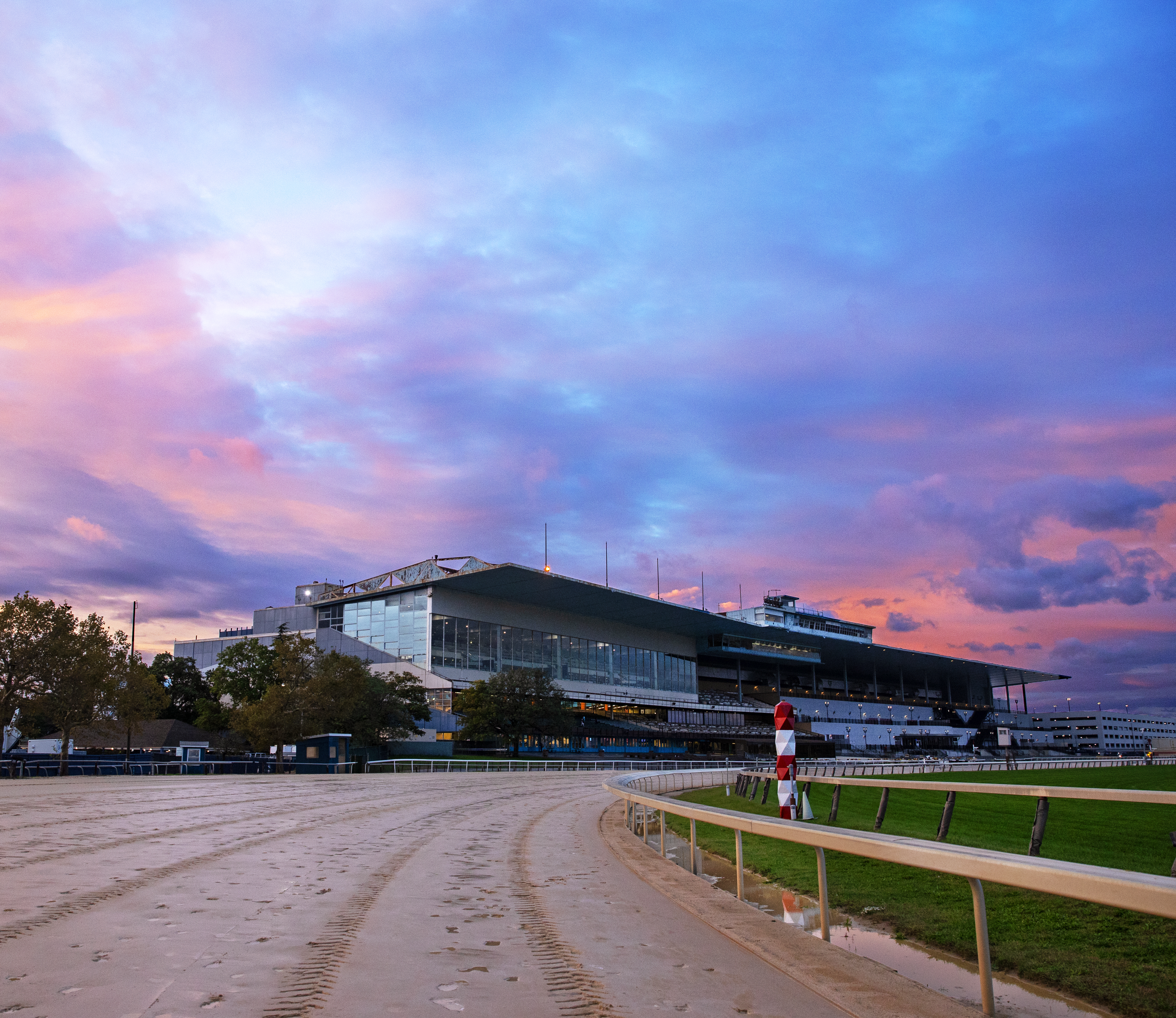
OZONE PARK, N.Y. – Through the dirty windows, under a leaky roof, with the loud clanging of heat pipes and, most recently, heavy-duty industrial fans, the Aqueduct press box is where I have watched the most races over three-plus decades of covering New York racing.
From that perspective, I will miss this place. The views of the track, planes landing and taking off from JFK Airport, the Rockaways in the distance, and the sight of traffic, frequently stopped, on the Belt Parkway were the East Coast version of the San Gabriel mountains viewed from the Santa Anita press box.
What won’t be missed is the commute to and from Aqueduct. The final 1 1/2 miles on the Belt Parkway to the Lefferts Boulevard exit? Now, that is the real “Test of the Champion.”
In my early years, the quality of horses who competed here was terrific. Nine days into the first full Aqueduct meet I covered in 1994, Cigar began his now famous 16-race winning streak. In a four-year span to begin this century, Fusaichi Pegasus, Monarchos, and Funny Cide all ran in the Wood Memorial on their way to Kentucky Derby glory. In 2004, Smarty Jones kicked off his 3-year-old campaign in the now-defunct Count Fleet Stakes.
But as the years advanced, the quality of racing – especially in the winter – deteriorated. First, gradually, followed by more rapid decline. When the slot parlor-only casino opened next door in 2011 and shortened the footprint of the track grounds, it was basically the beginning of the end of this place as a racetrack. That it took 15 years is actually surprising.
The consolidation of downstate racing to a totally renovated Belmont Park in September is rife with possibilities for the future, but that’s for another day. As the weekend plays out and the last of nine races, a starter allowance with a $100,000 purse, begins in front of the crowd, fans and horsemen alike will be flooded with memories. Here’s a snapshot of some of mine over three-plus decades.
In 1994, when Cigar began his winning streak, I was working for the New York Post, which, for reasons I don’t recall, didn’t have a Sunday edition back then. My Monday follow on Cigar’s NYRA Mile win was short, explaining how trainer Bill Mott had enjoyed an exceptional weekend as he won the Miesque at Hollywood Park and finished second, beaten a nose, in the Japan Cup with Paradise Creek. It was Simon Bray, then Mott’s assistant, who accompanied Cigar in the grassy winner’s circle that was the Aqueduct paddock.
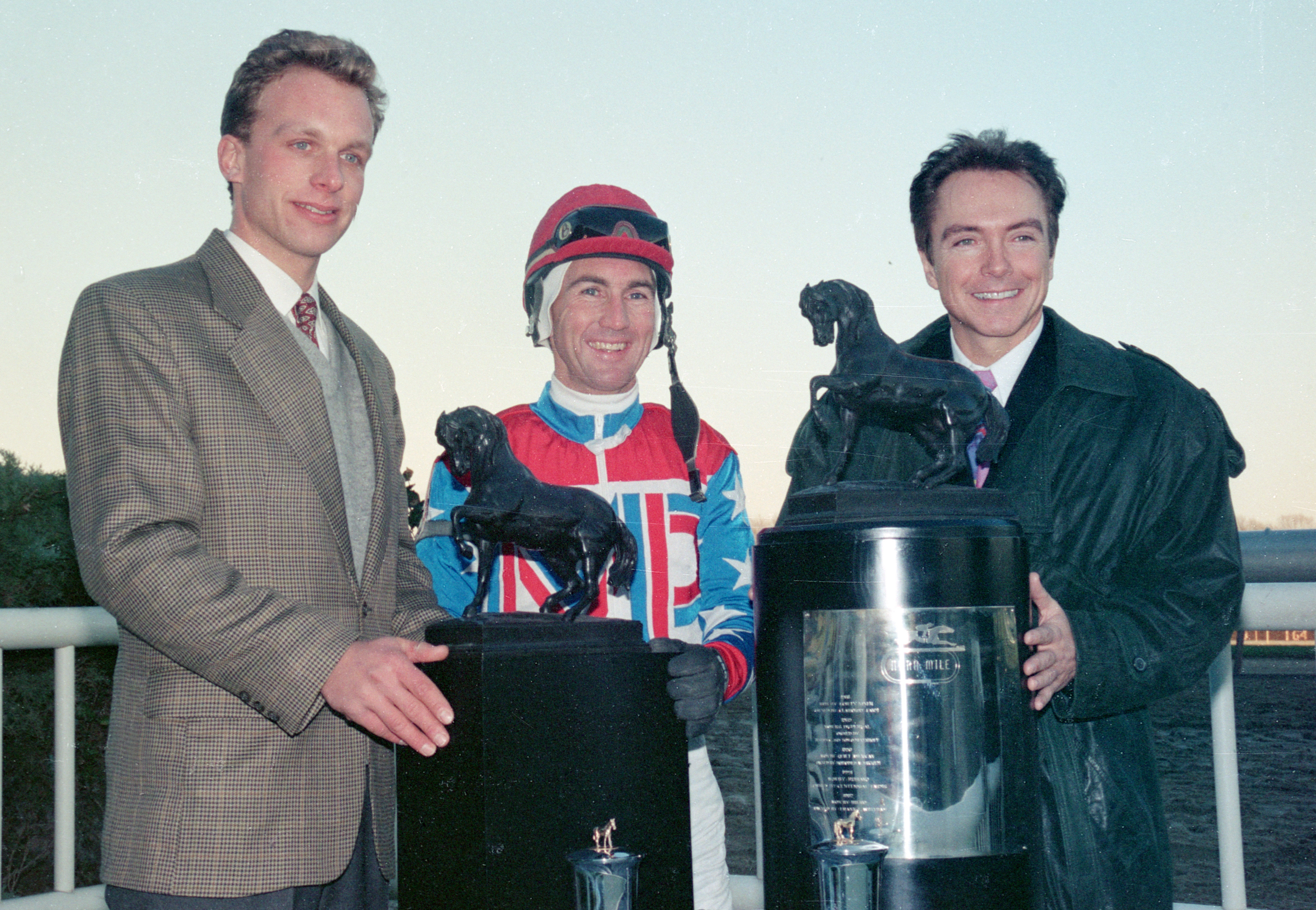
In the race immediately preceding the NYRA Mile, Thunder Gulch won the Remsen in what was his first start for trainer D. Wayne Lukas after owner Michael Tabor had purchased the colt privately. The Remsen was one of three juvenile stakes winners sent out that weekend by Lukas, who had won seven 2-year-olds stakes in New York that year. (An aside, Sunday is the one-year anniversary of Lukas’s passing).
Speaking to Lukas’s success that weekend, then-assistant trainer Todd Pletcher said “It’s really a product of what Wayne buys at the sales, and we’re fortunate to train for a lot of clients who breed a lot of nice horses.”
I believe that is the first time I quoted Pletcher. It would not be the last. And Tabor? Well, he was part-owner of last year’s Remsen winner, Paladin.
In that same Nov. 28 edition, I quoted Angel Cordero Jr. refuting rumors of a comeback. Cordero, then training, was often seen exercising his own horses.
“If Santa Claus brings me a new body, then maybe,” Cordero told me then.
While the history of Aqueduct includes many of the greatest horses of all-time racing and/or winning here, for purposes of the last 32 years, here are a few of my personal favorites.
Affirmed Success won his career debut at Aqueduct in May 1997. The last of his 17 career wins – six at Aqueduct – came in the 2003 Toboggan run over the inner track. He had won the previous year’s Toboggan on the main. In 42 career starts, Affirmed Success recorded 38 triple-digit Beyer Speed Figures.
Evening Attire, another warrior, won the 2002 Stuyevsant Handicap in the snow.
Claimers, and sometime stakes horses Be Bullish, Boom Towner, and Callmetony combined for a record of 69-64-45 from 254 career starts. Between the main and the inner, that trio won 42 races at Aqueduct.
Punch Line, trained by Billy Turner, winning the 1998 Fall Highweight under 136 pounds as an 8-year-old – the 21st win of his 55-race career – was an underrated achievement.
When Fusaichi Pegasus arrived at Aqueduct at the beginning of the week of his Wood Memorial win, there were several inches of fresh snow on the backstretch. Was surprised to see California-based trainer Neil Drysdale in a winter coat and boots. Only mildly surprised when Fusaichi Pegasus came back three weeks later to win the Kentucky Derby. Very surprised that 26 years later he remains the last horse to win the Wood and the Kentucky Derby.
On New Year’s Day 2004, Smarty Jones won the $75,000 Count Fleet Stakes over the inner track by five lengths. Don’t think I left Aqueduct that day convinced he’d become the first undefeated Kentucky Derby winner since Seattle Slew. Certainly didn’t think he’d be the last horse to win a stakes race at Aqueduct before winning the Kentucky Derby. (Orb won a maiden race as a 2-year-old six months before winning the 2013 Derby.)
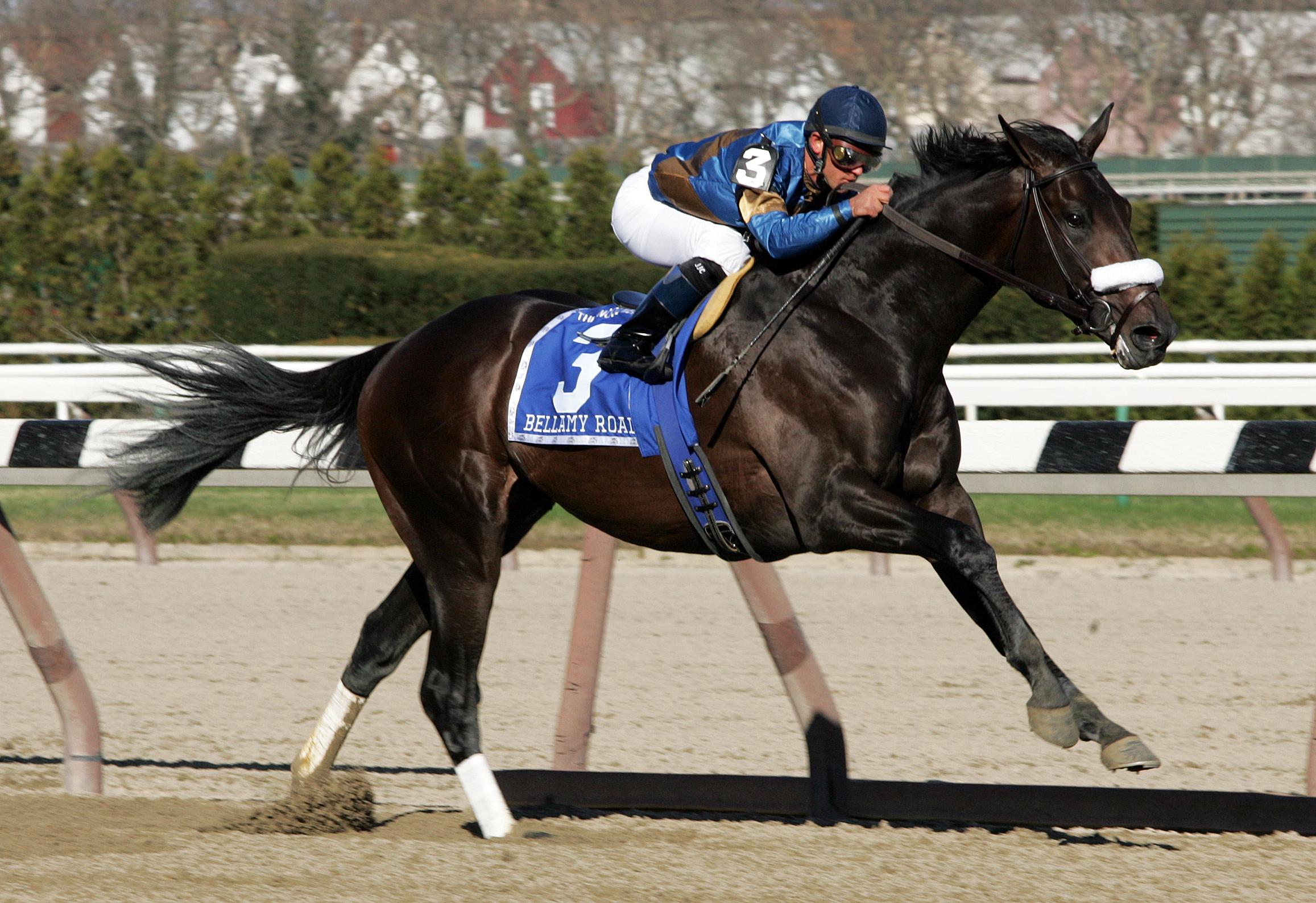
I believe the most impressive performance I witnessed live at Aqueduct was the April day in 2005 when Bellamy Road won the Wood Memorial by 17 1/2 lengths and equaled a track record (1:47) for 1 1/8 miles. The most movement done by jockey Javier Castellano was when he pointed to the crowd at the sixteenth pole. That he would race just twice more was disconcerting.
Eskendereya’s 9 3/4-length victory in the 2010 Wood Memorial was a thrilling sight to behold, especially for someone holding a nice Kentucky Derby future wager on him, made a few months earlier. The news shortly thereafter of his Derby defection and subsequent retirement was less thrilling.
In June 2008, a few hours before racing was to begin at Belmont Park, trainer Rick Dutrow held a press conference outside his Aqueduct barn to talk about a positive test he had in a horse who raced at Churchill Downs the day before Big Brown won the Kentucky Derby. But Dutrow touched on other topics, ripping several fellow trainers whom he thought achieved success in ways not related to horsemanship.
Four and a half years later, on a cold January morning, I was talking with Dutrow in the parking lot of the Aqueduct barn area on what would be his final day of training for more than 10 years owing to a suspension handed him by state regulators who thought he skirted the rules too many times. Was glad to still be here 10 years-plus later to watch Dutrow return and win a Whitney and a BC Classic with White Abarrio. He is now closing in on 2,000 career wins.
Two days after that conversation with Dutrow, I watched as Ramon Dominguez was unseated from his mount Convocation in a race run over the inner track. Remember going to Jamaica Medical Center with NYRA’s Jenny Kellner to try and get an update. In the waiting room sat a young rider by the name of Irad Ortiz Jr., tears in his eyes. Five months later, Dominguez, citing brain trauma, announced his retirement, cutting short what could have been an all-time great career.
I marveled at the unheralded but brilliant consistency of NYRA cameramen Steve Skullstead and John Mazzie, who showed the races seamlessly and always had the hero shot on the winner even in the closest of photo-finishes. That neither are no longer with us is sad.
When I first walked into the Aqueduct press box three decades ago, it was a vibrant place. All the local newspapers were represented, most by two or more individuals. Often think about colleagues, handicapping mentors, and – most importantly – friends, Rick Lang, with whom I worked at the New York Post, and Dave Litfin, my colleague at the Form for nearly two decades. There was no better wordsmith on this beat than Newsday’s Paul Moran. Watched other colleagues such as John DaSilva, Ed Fountaine, and Jerry Bossert lose their jobs as New York’s newspapers curtailed, if not altogether cut, racing coverage.
I’m pretty sure I was still in the press box working on my Gotham recap on March 7, 2020, when two people robbed $258,000 from the vault a few floors below. There would be only four more cards of racing the rest of the winter/spring at Aqueduct as the COVID pandemic shut racing down in the state for two months. It would be at Aqueduct in December 2021 where I received a COVID booster shot.
I watched from the Del Mar press box – the day after last November’s Breeders’ Cup – as jockey Flavien Prat rode seven winners on a single card at Aqueduct. It’s not every day you see something that’s never previously been done.
History was made often throughout 133 years of racing at Aqueduct. Was glad to have been a witness to a small part of it.
:: Want to learn more about handicapping and wagering? Check out DRF's Handicapping 101 and Wagering 101 pages.