

Sudden storm adds more drama to Preakness
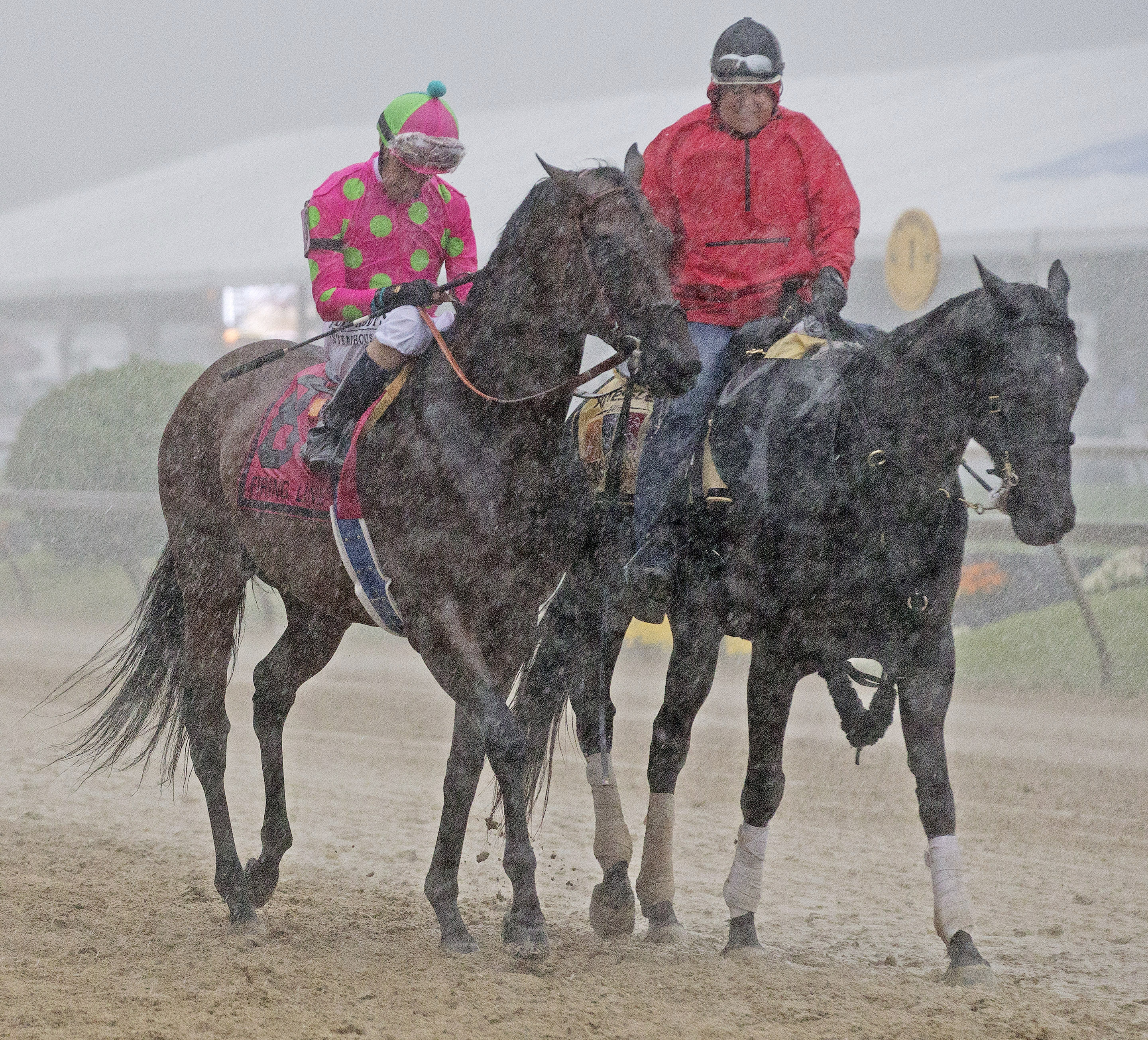
BALTIMORE – It was the perfect storm – or in the case of the 140th Preakness on Saturday at Pimlico, the most imperfect of storms.
Thunderstorms had been widely predicted by weather forecasters to precede the scheduled 6:18 p.m. Eastern post time for the second jewel of the Triple Crown. On cue, black clouds began gathering ominously with less than an hour to post, and the unmistakable smell of impending rain was in the air.
With 25 minutes to post, as the Preakness horses convened on the turf-course saddling area, the first drops began to fall. The storm steadily picked up in intensity from there, with strong winds blowing the rain sideways and lightning strikes visible in the distance. By the time “Maryland, My Maryland” was being played during the Preakness post parade – inaudible as it was, given the ferocious conditions – at about 6:10, an eerie darkness had enveloped the area and the rain was in full pour, turning the track from fast to sloppy in just a few minutes.
Fans on the apron and in the infield scattered for cover, although some infield fans gleefully screamed their approval at such chaos. The eight Preakness horses, meanwhile, warmed up for the race on the far turn but were barely visible from the grandstand.
At some point, Pimlico management ordered the huge infield crowd to evacuate, although many remained there to watch the race. The storm peaked for maybe five minutes, with small rivers visible on certain parts of the racing surface, which had been harrowed by the track maintenance crew just as the rain had started.
By the time the horses were loaded into the starting gate, there was sufficient light for the entire track to be seen from the frontside, and the rain had subsided noticeably, although there still were lightning strikes, illustrating the potentially perilous conditions.
Averting the frightening weather by delaying the race for 20 minutes or so was not an option, given the tight timeframe commanded by television constraints. When the storm ended, the official rainfall was not immediately available from the National Weather Service – but none was needed to know that this was one of the most extraordinary weather events in the 140-year history of the Preakness.
In the end, American Pharoah, the odds-on favorite, proved unfazed by the conditions as he galloped to a seven-length victory to keep his chances alive for the Triple Crown.
The storm had peaked then ebbed so quickly that by the time American Pharoah was led into the infield winner’s circle in front of the traditional cupola, blue skies were already appearing.
This was the first “off” track for the Preakness since Funny Cide won over a “good” track in 2003 and the first sloppy track for the race since Deputed Testamony won in 1983.