

Strong Kentucky Derby handle, TV ratings offer some encouragement to industry
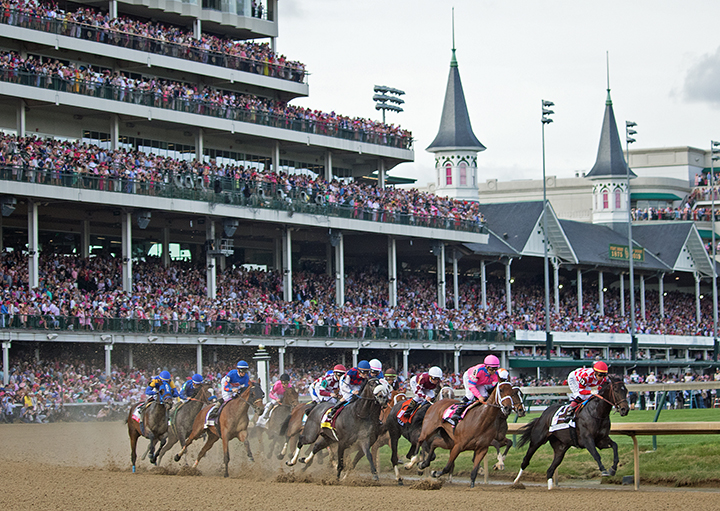
Handle on the Kentucky Derby, the Kentucky Oaks, and both of the races’ undercards set records last weekend at Churchill Downs, continuing upward trends for big-event days at a time when the sport overall is being buffeted by criticism.
The wagering records were backed by a rebound in the overnight television rating for the Kentucky Derby, with the figure climbing 20 percent compared with last year, to the highest level since 1992, according to NBC. At the track, however, attendance for both the Oaks card and the Derby card were down compared with last year, according to figures released by Churchill. Both days were overcast and rainy, as was Derby Day last year (but not Oaks Day).
Aside from the attendance declines, the wagering and television results counter a narrative that has emerged among critics of racing that the sport is facing an existential threat, a storyline that gained traction late this winter following an outcry over a spate of catastrophic injuries at Santa Anita Park in Southern California. The deaths drew widespread attention from national media outlets.
However, the Kentucky Derby is somewhat isolated from overall racing business trends, given its unique stature on the U.S. sporting landscape, and handle and television results may not reflect larger dissatisfaction with racing itself. Still, the broadcast of the Derby is watched each year by a wide swath of the population – 27 percent of all television viewers at the time of the Derby were watching the race, according to figures from NBC – and that audience did not contract this year, despite the negative attention focused on the sport.
The television rating was the figure that was being most anxiously anticipated going into the Derby this year, considering that the number might be the best barometer for how the larger public feels about the sport. The rating for the broadcast beginning at 5 p.m. Eastern was a 10.9 with a 25 share, with the rating peaking at 11.9 and a 27 share during the running of the race. Last year, the rating was a 9.1 with a 21 share, a 17 percent drop from the 2017 broadcast, a decline that now appears to be an aberration.
Total commingled handle on the Derby this year was $159.6 million, according to charts, up 7.8 percent from the record set last year and the fourth Derby in a row in which betting set a record. Commingled handle on all 14 races on Saturday set a record at $244.1 million, according to charts, up 9.1 percent over commingled handle last year. Both figures are records for any North American race or full card.
(Betting totals include all non-future pools that paid out on the Derby or the other races on the card, including those bets, such as a new pick six, that stretched over both the Friday and Saturday cards at Churchill.)
Favoritism in the Derby was spread out over four horses who went off at odds ranging tightly from 4-1 to 7-1, with the rest of the 19-horse field at double digits. That led to deep dipping in the straight and exotic pools, with wagering in the win, place, and show pools totaling $65.7 million, up 5 percent over last year, and wagering in the exacta and trifecta pools each up approximately 6 percent over last year.
While betting on Saturday’s late pick six including the Derby was down 19 percent, from $1.32 million last year to $1.07 million this year, the decline was more than made up for by a new pick six that linked all of the Grade 1 races on the Friday and Saturday cards at Churchill. The new bet drew $479,561 in handle. The pick five ending in the Derby was up 36 percent to $3.98 million, while the pick four handle was up 2.5 percent and the pick three handle up 4.9 percent.
The commingled handle totals for the Derby do not include $4.1 million in separate-pool wagering in Japan, where bettors were able to wager on the race for the first time this year due to the presence of Master Fencer, a Japanese horse. Japan’s governing racing body, the Japan Racing Association, relaxed rules several years ago allowing the country to import a limited number of foreign races, provided a Japanese horse starts in the race, spurring Churchill to reserve a spot for a Japanese-based runner through a new points series based on stakes races in the country.
The separate-pool total was well short of handle numbers that Japanese bettors have provided for other top international races in the past several years, but Master Fencer was considered to be a notch below the top-class 3-year-olds in the country, and went off at 59-1 in the U.S. commingled pools. He finished seventh but was elevated to sixth after the disqualification of the Derby winner, Maximum Security.
Attendance on Saturday was 150,729, according to Churchill, on a cloudy day in which a forecast of heavy rain in late afternoon proved accurate. Last year, Churchill reported attendance of 157,813, on what has been described at the wettest day in Derby history, based on rainfall totals. Attendance for Friday’s Oaks card was also down, from 113,510 reported last year to 105,719 this year, but weather conditions this year were less amendable than on Oaks Day last year.
Handle on the Kentucky Oaks was $19.3 million, up 10.4 percent, while handle on the Oaks card was $60.2 million, up 8 percent.
