

Schoenthal seeing benefits from producing his own feed
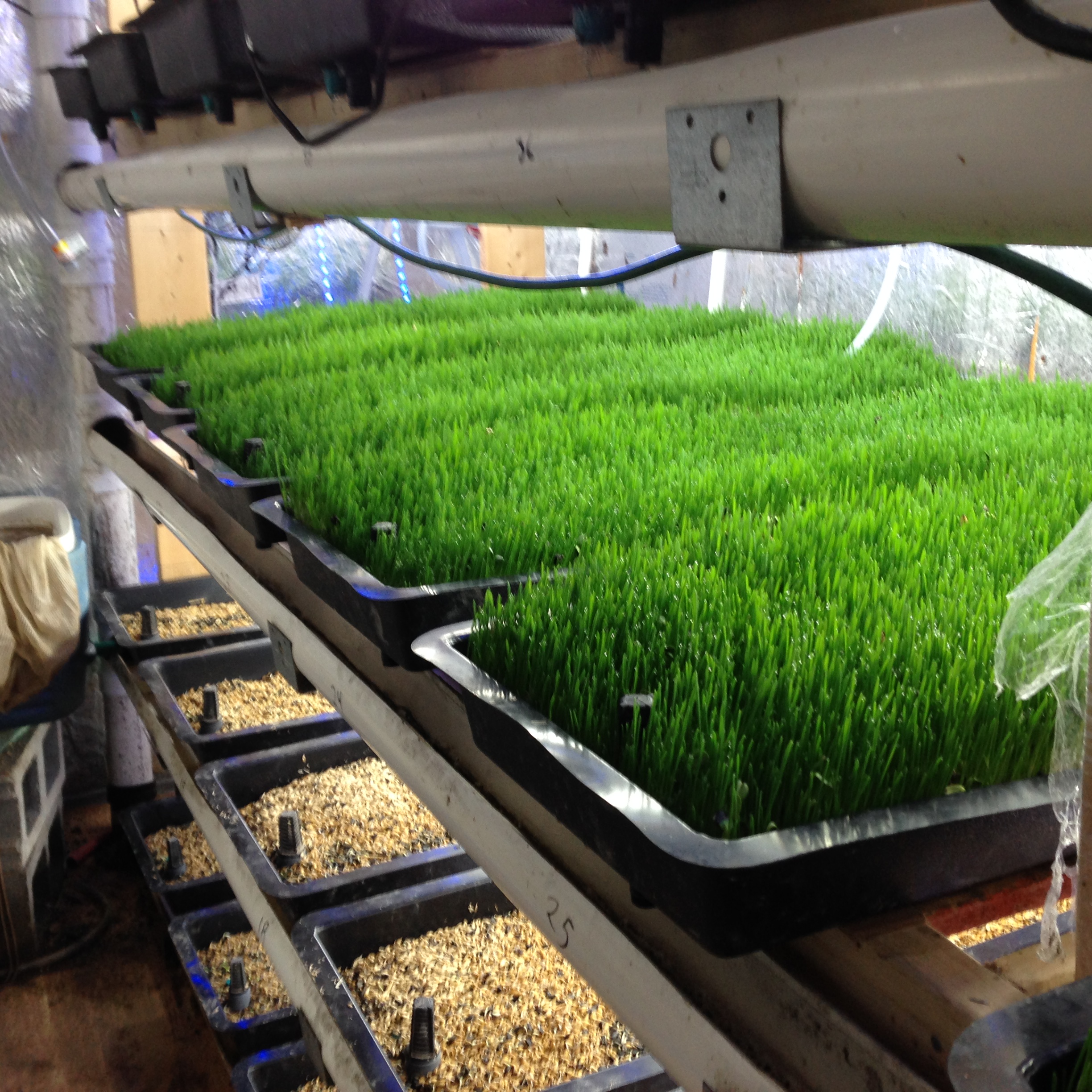
It was cold and windy with a touch of snow covering the ground on a recent morning at Laurel Park, not much greenery to be found – that is, until you step into the hydroponic growing shed trainer Phil Schoenthal has built into the side of his barn.
Schoenthal has been tinkering with growing his own feed the last three years. He’s invested a lot of time and money refining the process, and this past year he believes his horses have begun to benefit from his efforts.
Schoenthal’s greenhouse is narrow and maybe 15 feet long. Trays are stacked three high on shelving the length of the room. The trays on the bottom two shelves contain barley and sunflower seeds. The top shelf contains sprouted feed, or fodder, which consists of a mat-like base of roots and seed a few inches thick, topped by bright-green, grassy blades that are several inches high.
Under heat lamps and in humid conditions, the fodder goes from seed to feed in seven days. Schoenthal gives it to his horses in place of some of their dry-grain rations.
Last summer, Schoenthal, 37, campaigned the 3-year-old filly sprinter Miss Behaviour, who won the $500,000 Charles Town Oaks and finished second in the Grade 1 Test and Grade 2 Prioress. At the time, Schoenthal thought the fodder was helping improve her blood counts.
“I have to say that I have been doing other things to help her red-count levels, but they are way up,” Schoenthal said last summer. “Also, her electrolytes are off the chart.”
In the past, Schoenthal has had difficulty finding the right quality of seed and getting the yields he needs to make growing fodder worthwhile. He now appears to have largely solved those problems.
“I am really seeing the benefits this winter,” he said. “It’s hard to get horses to drink during the winter, the water buckets get frozen all the time, and they don’t want to drink. The fodder is 85 percent water, and I think it keeps them more hydrated than dry grain. I’m seeing horses bounce out of races better and be ready to run again sooner.”
Keeping horses hydrated is an ongoing battle at the racetrack, especially since almost all horses are treated with Lasix, a diuretic, before they race.
“When you treat horses with Lasix, it takes the water out of them, and then after the race you work to put it back in them,” he said. “Anything you can do to keep your horses hydrated is beneficial. I also think the fodder helps prevent ulcers. Standard feed is dehydrated. This is a more natural way for horses to eat.”
While the results of Schoenthal’s greenhouse project are difficult to measure, there is a movement within racing to return to simpler methods. What better place to start than the feed tub?
“I compare normal feed to McDonald’s, and this is more Whole Foods,” Schoenthal said.
Miss Behaviour injured
Miss Behaviour tired to finish sixth in her final start of the year, the Grade 2 Raven Run at Keeneland, and according to Schoenthal, she came out of the race with inflammation in a suspensory.
“Everyone tells me it isn’t bad and that she’ll be fine, but we are going to take our time with her and bring her back slowly,” Schoenthal said.
Miss Behaviour, a daughter of Jump Start who was bred and is owned by Cal MacWilliam and Neil Teitelbaum, has won 5 of 12 starts and $790,834. As a 2-year-old she won the Grade 2 Matron at Belmont Park.
“We’re going to send her to a place with an Aquatred so we can start getting her back in shape,” Schoenthal said. “Last year she ran from April to October, but obviously we’re going to get a later start with her this year.”