

Record-breaking Derby Day at Churchill Downs
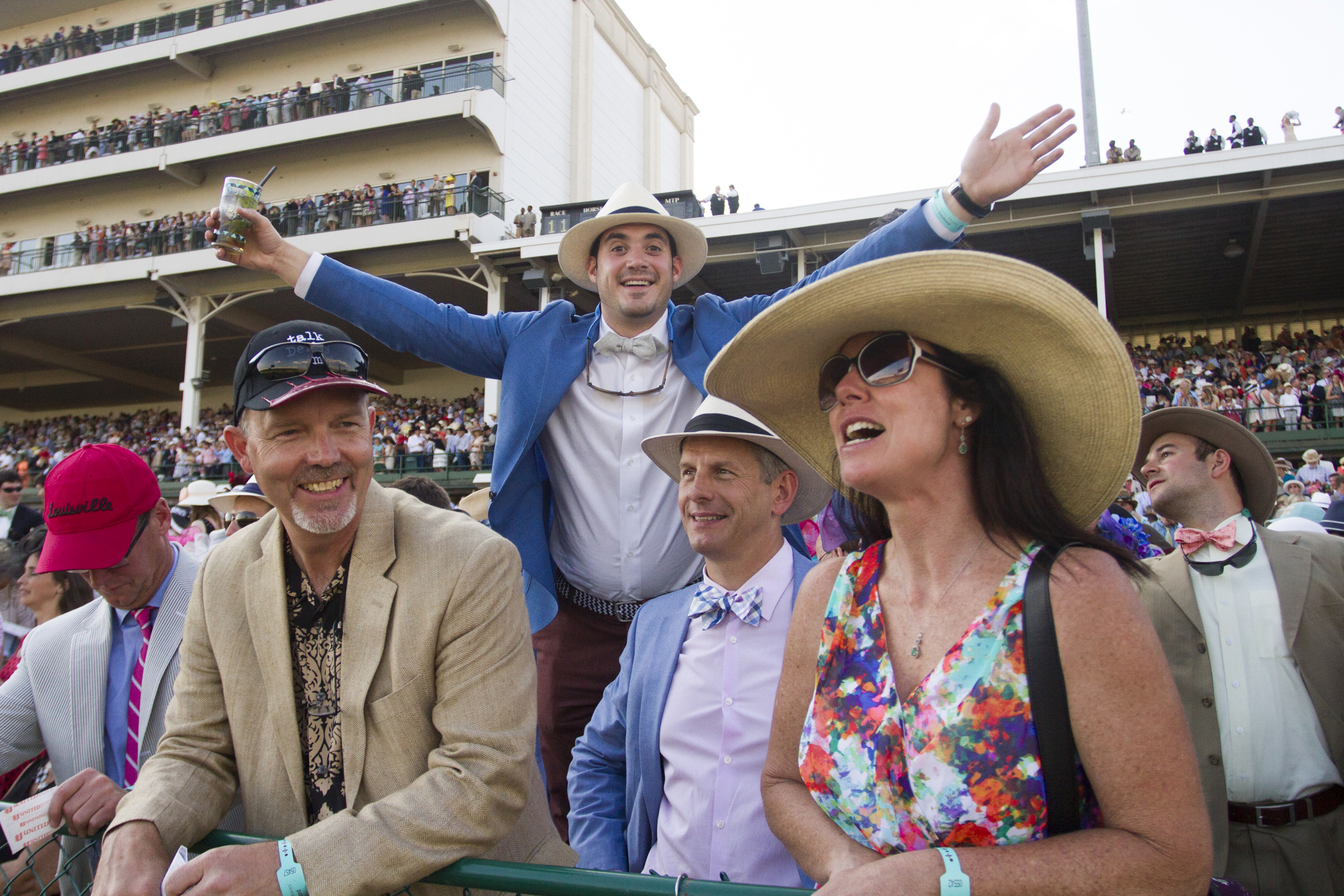
Racing nationwide may be in a slump, but the Kentucky Derby keeps getting bigger.
This year’s Kentucky Derby on Saturday at Churchill Downs broke records in all categories other than on-track handle, the first break-out performance for the race since 2012. Away from the track, the Derby broadcast ratings soared, even on a day when most of the U.S. was bathed in good weather.
All-sources betting on the Derby, including separate pool handle and the money players bet into the Kentucky Derby future pools, was $137.9 million, according to Churchill, $4.8 million higher than the previous record set in 2012 and a 7 percent jump over last year’s figure. There were 18 horses in this year’s Derby, one fewer than in last year’s edition of the race and two fewer than in the record-setting year. American Pharoah, the winner and the favorite this year, went off at 5-2.
The overnight television ratings for the race portion of a three-hour broadcast on NBC were 10.8, with a share of 24, the highest overnight since 1992, according to NBC, and a 7 percent jump over last year’s rating. The share measures the percentage of televisions in use that were tuned to the Derby broadcast, meaning 1 in 4 households in the U.S. watching television at the time was watching the race, a figure reserved for only the most popular sporting events in the country. In Louisville, the share was an astounding 65, according to NBC.
In addition, total betting on the 13-race card on Derby Day set a record at $194.3 million, according to Churchill, a figure that is $7.3 million higher than the previous record, also set in 2012. This year’s whole-card figure was up 4 percent compared to last year’s figure, which had approached the previous record.
As reported by Churchill, attendance at the track was 170,513, breaking the previous record of 165,307 set in 2012. The four highest attendance figures for the Derby have been reported over the past five years.
While attendance reflected the ideal weather and Churchill’s commitment to the promotion of the race and the Derby brand, the betting handle likely reflected the depth of this year’s field. Trifecta betting was up 11.9 percent, superfecta betting was up 13.4 percent, and betting on the super high five was up 52 percent, according to a chart of the race. However, betting in the pick three, pick four, and pick six pools that ended with the Derby were all down, with pick six handle dropping 15.2 percent.
On-track wagering on Derby day was $23 million, a 2 percent drop when compared with last year’s figure of $23.2 million. On-track betting on the Derby itself was $12 million, just slightly higher than the on-track betting figure of $11.9 million last year.
Churchill also announced record attendance and handle figures for the Friday Oaks card. Handle on the Oaks itself was up $1 million compared to last year, or 7.3 percent, according to charts. Combined, the two days will be the most successful Oaks-Derby combination in history.
Last year, Churchill raised the takeout rates for its bets just prior to the Derby, a decision that rankled many horseplayers and led to calls for a boycott of the track’s races. But the takeout rates allowed Churchill’s parent company to post higher revenues from the track last year, despite steep drops in betting during the spring meeting following the Derby, and this year, Churchill officials said they expect revenues from the Oaks and Derby to post a record as well.
“We saw continued improvement again this year, and we preliminarily expect record adjusted EBITDA growth over last year’s Kentucky Oaks and Derby week of $5-6.5 million,” said Bill Carstanjen, the chief executive of Churchill Downs Inc., in a release. EBITDA is earnings before interest, taxes, depreciation, and amortization.
Significantly for Churchill, the track reversed a stretch of bad publicity this year with a renewed focus on catering to the owners of Derby connections after several ownership groups last year criticized the company for inadequate services. In the offseason last year, the track built 20 suites trackside for the owners of Oaks and Derby entrants and provided cars and drivers for them during Derby week. Several owners praised Churchill management this week for the services.
The impact of American Pharoah on the remainder of the Triple Crown races remains to be seen. Last year, Derby winner California Chrome went into the Preakness on a wave of goodwill owing to his plebian pedigree and blue-collar connections, leading to record attendance at the race and significant gains in handle and television ratings. His attempt at the Triple Crown in the Belmont produced the highest wagering on that race in history by a wide margin.
Television ratings for the Derby indicate American Pharoah may be able to come close to California Chrome’s popularity, though his back story is not nearly as homespun, and ratings for the race may have been more heavily influenced by the hype surrounding this year’s field, as deep as any Derby in a decade.
American Pharoah is trained by the affable Bob Baffert, a native Arizonan who now is a four-time winner of the Derby, and he was bred and is owned by Ahmed Zayat, an Egyptian millionaire who emigrated to the U.S. at the age of 18.