

Racing at Santa Anita halted as track's owner, horsemen negotiate over Lasix ban
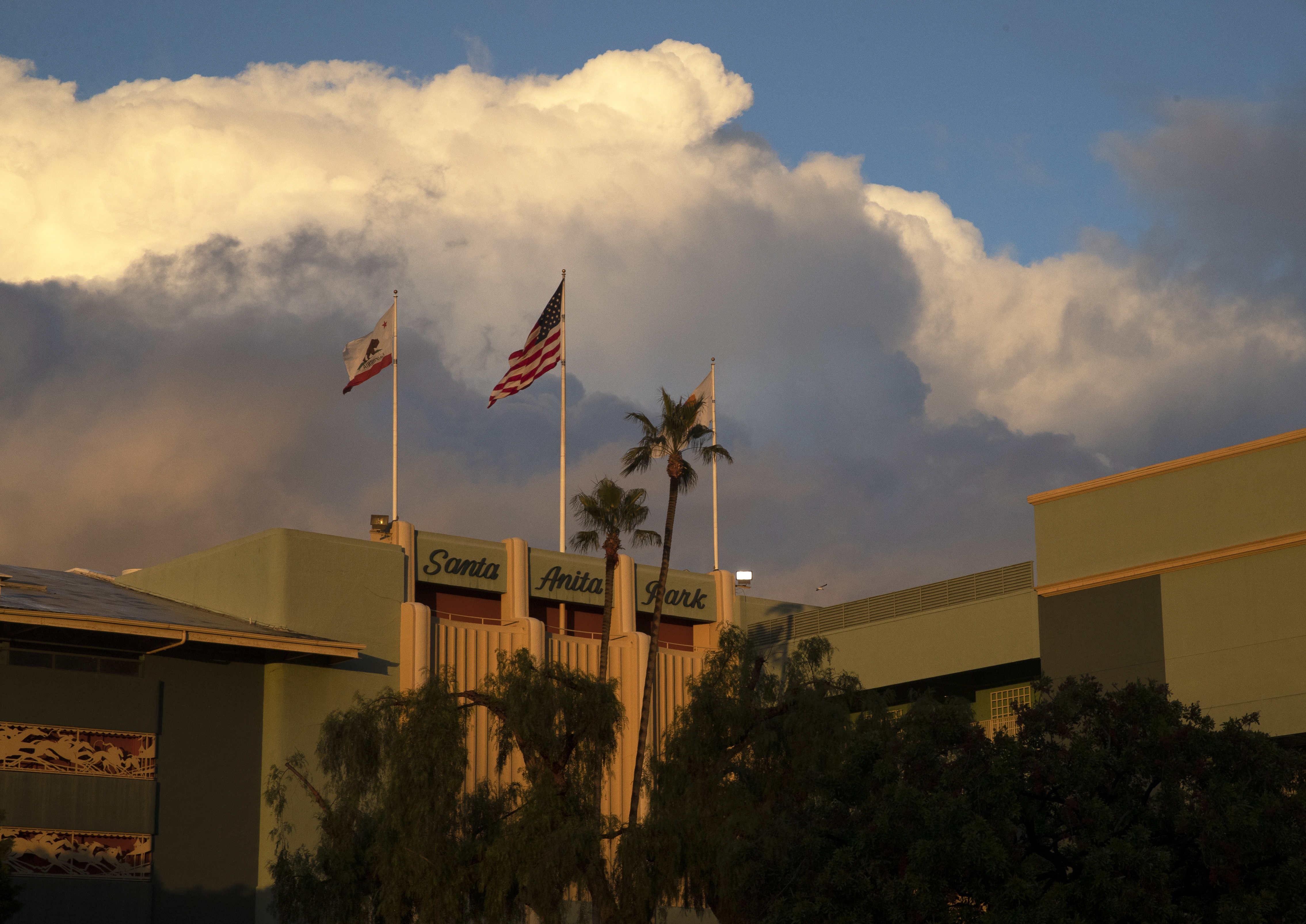
ARCADIA, Calif. – The future of horse racing at Santa Anita Park remained uncertain as of Saturday. No one knows when the track will reopen for racing.
Santa Anita was to reopen this coming Friday following a suspension of more than two weeks after a rash of equine fatalities and the reexamination of the racing surface. The reopening date has been postponed after the surprise announcement Thursday concerning the use of race-day Lasix.
Belinda Stronach, chairman and president of track owner The Stronach Group, declared Thursday an immediate ban on the use of Lasix at California tracks owned by TSG. Those include Golden Gate Fields and Santa Anita.
The announcement caught the California racing industry by surprise and generated major pushback from the Thoroughbred Owners of California and California Thoroughbred Trainers.
The TOC and CTT support the use of Lasix, a diuretic that helps prevent horses from bleeding. Stronach is against race-day Lasix. Her unilateral declaration came hours after the filly Princess Lili B became the 22nd equine fatality at Santa Anita since Dec. 26.
California Horse Racing Board regulations state that an immediate ban on a permissible medication such as Lasix cannot go into effect without TOC consent. The TOC was not willing to accept that scenario as of midday Saturday. Representatives from both groups continued to negotiate.
According to TSG chief operating officer Tim Ritvo, there is no timetable for the resumption of racing at Santa Anita. “We don’t have a date now; everything’s tentative,” Ritvo said Saturday morning.
TOC president and chief executive Greg Avioli was optimistic that a resolution would be reached. “I think this is going to get resolved one of two ways, between now and the first of the week,” Avioli said.
The options Avioli described include a compromise that would be a “reasonable phase-out” of Lasix use. The second scenario would be a directive from the CHRB.
“If The Stronach Group maintains the position of must-be-immediate [Lasix ban], I do not think you will get the support of the TOC or CTT,” Avioli said. “And at that point, it will be an issue for the CHRB to address.”
CHRB executive director Rick Baedeker was unavailable for comment on Saturday.
The no-Lasix directive from Stronach, and reluctance by horsemen to support an immediate ban, stalled apparent progress by racing officials to reduce the number of breakdowns.
Santa Anita instituted numerous safety protocols, and as wet weather receded, the racing surface has been deemed safe. Most agree that the use of Lasix is unrelated to the breakdowns, although the timing of the no-Lasix announcement – the afternoon following the 22nd fatal breakdown – suggested that Stronach might believe there is a correlation.
“Everyone has advised her that that’s not the case,” Ritvo said. “Lasix has not contributed to breakdowns. Lasix does not mask pain. I think we all know that. In her mind, she is doing something that’s really good for the horse.”
Ritvo outlined potential scenarios for hours and days ahead as negotiations continue. “If the TOC wants to agree with us [and accept the Lasix ban], then people would either want to run or not run, and they would [decide] by the entry box, by entering or not entering.
“We have said we are willing to run, and we are willing to run five races [daily] with five horses, if it came down to that,” Ritvo added, referring to no-Lasix races.
Avioli said TOC negotiations with TSG have been cordial, but he acknowledged that the Lasix issue is a lightning rod and most TOC members support the use of Lasix. The TOC board scheduled a meeting midday Saturday; a TOC general membership teleconference was scheduled for later Saturday.
If TSG and the TOC are unable to reach an agreement, the CHRB could step in. The no-Lasix directive appears to go against CHRB rule 1581, which states that changes in permissible medications such as Lasix must be agreed to by the horsemen’s organization.
The CHRB could side with TSG and disallow Lasix at Santa Anita. In that case, racing would continue at Santa Anita, probably will small fields. Or, the CHRB could side with the TOC. The possibility exists that race dates allocated to Santa Anita might be reallocated to other Southern California tracks.
In the uncertain environment, horsemen are weighing options. Trainer Jeff Mullins has plans to ship “as many as possible” to Keeneland in the next 10 days. Trainer John Sadler worked two horses whom he originally planned to run in Santa Anita stakes.
The Sadler-trained Gift Box, an early favorite for the rescheduled Santa Anita Handicap on April 6, worked five furlongs. His turf horse Catapult, aiming for the Grade 1 Frank E. Kilroe Mile on March 30, worked a half-mile.
Sadler said the Big Cap and Kilroe remain the objectives, “with the caveat that if the races do not happen, then one could go to Oaklawn and the other to Keeneland.”
Gift Box could ship to Oaklawn for the Grade 2 Oaklawn Handicap on April 13, while Catapult could be redirected to the Grade 1 Maker’s 46 Mile on April 12 at Keeneland.
