

Quantity at higher level than quality at fall-winter meet
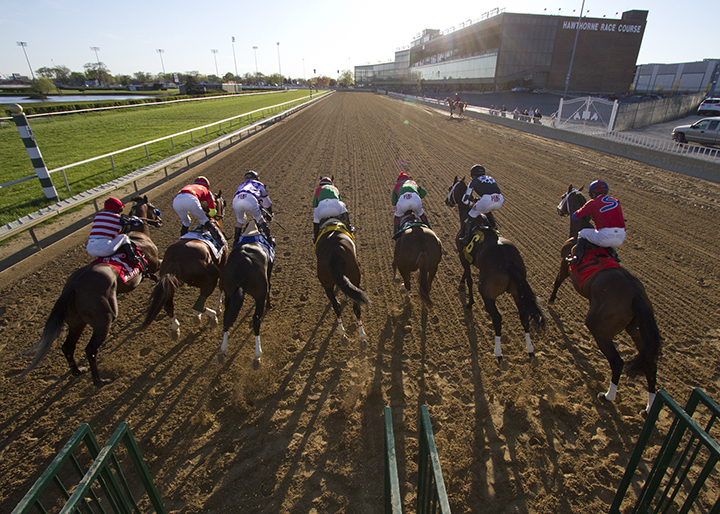
STICKNEY, Ill. – The first race of the meet is a $6,250 maiden claimer with a $7,800 purse. The first horse in the first race is named The King’s Hero. He’s trained by Hugo Rodriguez, son of trainer Lalo Rodriguez, former longtime assistant to the late trainer Tom Tomillo, once a Chicago mainstay. The King’s Hero has raced twice. Both starts produced Beyer Speed Figures less than zero.
That’s a decent summation of the 44-day fall-winter race meet, which starts Friday at Hawthorne Racecourse.
There are deep roots here on a once-proud circuit, but racing now hangs precariously, with lots of slow horses running for low purses.
In 2004 – to take a season not so distant – the fall-winter Hawthorne meet had 620 races that averaged 9.24 starters. Last fall Hawthorne ran 317 races that averaged 8.49 runners. While racing opportunities have dwindled, that’s not a bad starters-per-race level for this era. Entries were good for opening day this meet, 89 horses in eight races.
“It was a pretty strong response from the horsemen given the level of purses,” said racing secretary Allan Plever.
Plever said he expects purses at the meet to average about $110,000 per day, the same as recent meets. The stakes schedule, which once included the important Hawthorne Gold Cup, has been pared to four Illinois-bred stakes. Illinois, unlike in all neighboring states with sanctioned racing, pays purses derived almost entirely from betting handle.
“Of course we remain hopeful that at some point the gods are going to grace us with some [gambling expansion] legislation and we’ll be competitive with other states,” said Plever. “We’ve been waiting a long time for that. Some people have died waiting.”
There are three allowance races carded Friday, and trainer Roger Brueggemann, once a Hawthorne kingpin, has entrants in two of them and in four races total. That’s a good sign, and Plever said that Brueggemann, who trains mainly for Midwest Thoroughbreds, is back up to 30 stalls this meet. Eoin Harty also has 30 stalls and could help fill maiden special weight and allowance races.
“The quality will be there the first four to six weeks and we’ll make the most of it while it is,” Plever said.
By mid-November, Chicago stables that winter at Southern venues have begun moving their stock, but more horses could spend winter here this season. Hawthorne, unlike last year, isn’t conducting a winter harness meet, which means Thoroughbreds can train nearly all winter over the track.
It’s been a relatively warm autumn, and rain early this week brought needed moisture to a dry Hawthorne grass course. The track got hit with an extremely wet October last fall that curtailed turf racing opportunities. Plever stayed conservative, carding one grass race opening day.
Race cards during October and November start at 3:10 Central as Hawthorne tries to hit a sweet spot between East and West Coast major tracks. First post is 12:55 during December and for the four January cards. The racing week runs Wednesday through Saturday during October before Wednesdays are dropped from the standard schedule the remainder of the season.
