

Private Terms winner Shackled Love moving on to Tesio
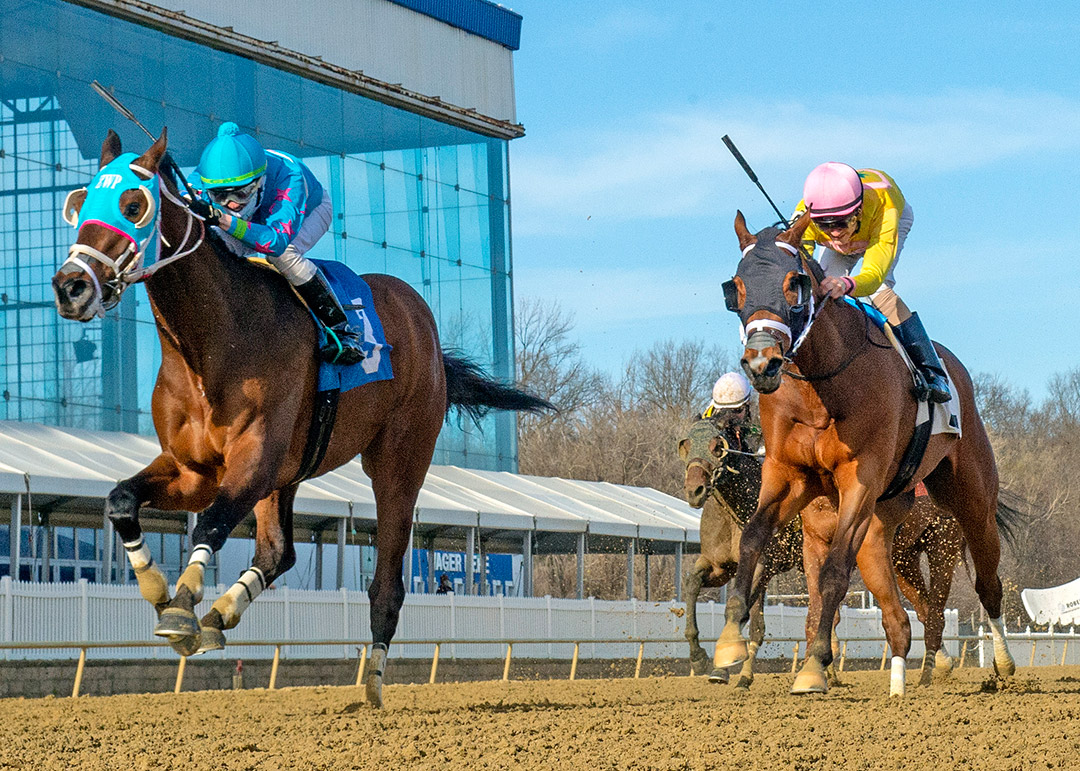
Trainer Gary Capuano reports that Shackled Love, upset winner of last Saturday’s $100,000 Private Terms Stakes for 3-year-olds at Laurel Park, “came out of the race well” and will point for the $125,000 Federico Tesio at Laurel on April 17. The Tesio serves as an automatic qualifier for Triple Crown-nominated horses to the Grade 1, $1 million Preakness on May 15 at Pimlico.
Capuano said that the connections always had high hopes for the son of Preakness winner Shackleford and stakes-winning miler Steady N Love.
“We had some pretty good expectations for him,” Capuano said. “He trained well. He’s a very tall, big horse and he’s filling out and getting a little better each race.”
Capuano also trains stakes winner Shackqueenking, the Private Terms fourth-place finisher.
:: Bet horse racing on DRF Bets. Double Your First Deposit Up to $250. Join Now.
“I thought he ran well,” Capuano said. “He was right there turning for home. He got within a half-length or so of the top pair and he has a tendency to hang a little bit. The other two finished up quick and nobody was able to close into them. I wish he would have finished a little better.”
Capuano also reported that stakes winner Threes Over Deuces, second in the Grade 3 General George in 2020, will return for a 6-year-old campaign.
“He’s back in training. Another 30 days or so, he’ll be about ready,” Capuano said. “We gave him a freshening. He’d been running for a couple of years straight and never really got any time off. We gave him the winter and he looks good.”
The ultra-consistent Maythehorsebwithu, runner-up and beaten favorite in the Private Terms, came out of the race “a little tired,” according to trainer Brittany Russell, but is also likely for the Tesio.
Michael Trombetta, trainer of sixth-place finisher Royal Number, felt the lack of early pace worked against his colt.
“The first two horses lined up. It seemed like they were going plenty fast enough, but when we started to gain a little momentum and run to them, they ran away from us,” Trombetta said. “I think the speed was a little better than average on that day and the track was helpful for those kinds of horses.”