

N.Y. regulators may consider appeal to shorten Dutrow penalty
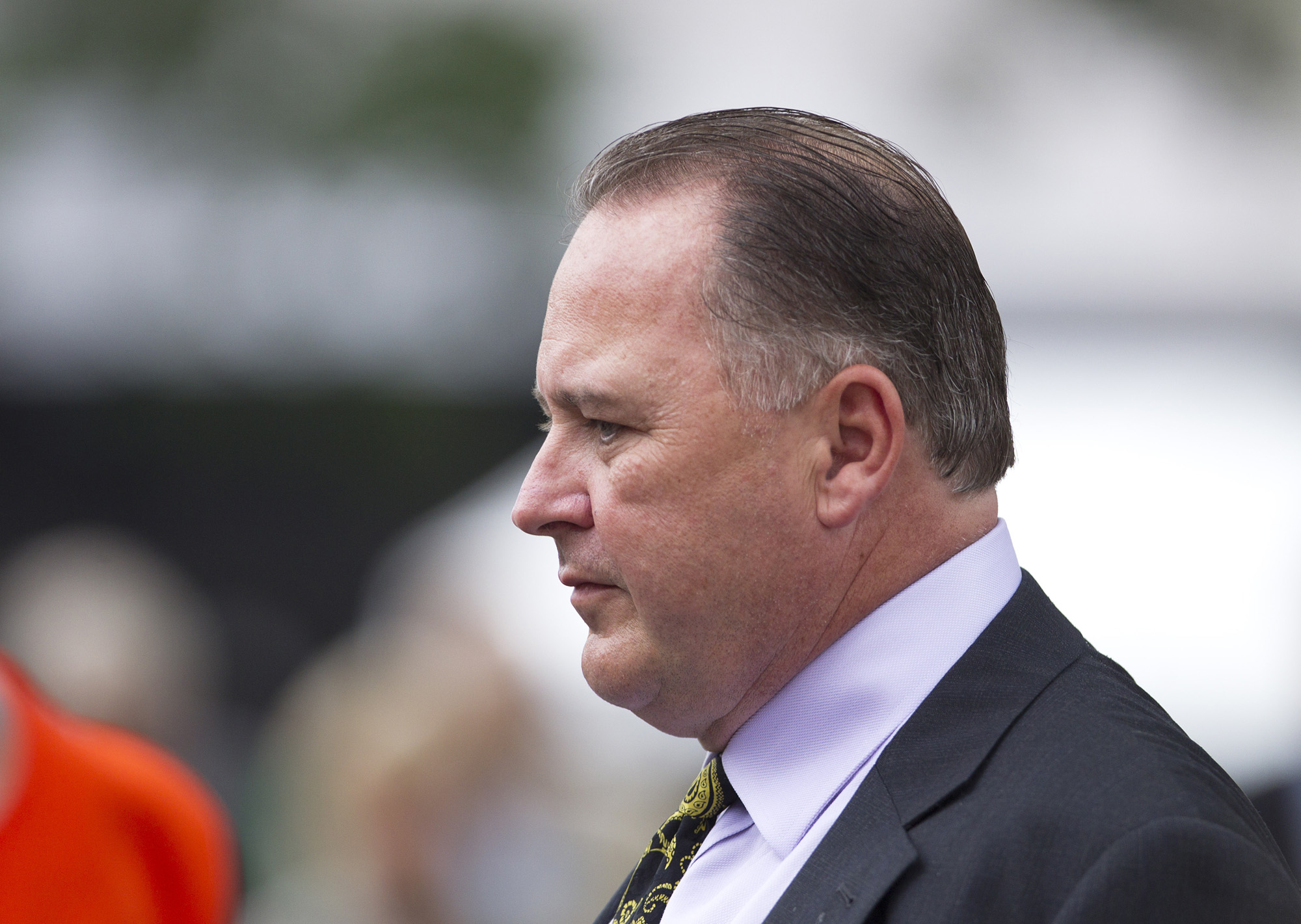
New York racing regulators are considering whether to weigh an appeal by supporters of the trainer Richard Dutrow to modify his 10-year ban on applying for a license, according to officials involved in the campaign.
The appeal to reconsider the penalty could be added to the agenda of the July 16 meeting of the New York Gaming Commission, according to attorney Karen Murphy, who has been coordinating an effort to modify Dutrow’s ban, five and a half years after he began serving the penalty.
“It’s about doing the right thing because the penalty may have been out of whack since the beginning,” said Murphy, who launched an internet petition in March to gather signatures from racing participants to reconsider the penalty. “We’re not looking to re-litigate the case. We’re just looking for them to consider clemency.”
A spokesman for the gaming commission, Brad Maione, said on Wednesday the commission would have no comment on the matter until an agenda for the meeting is published. Agendas are usually posted three or four days prior to a meeting.
Dutrow, who trained 2008 Kentucky Derby winner Big Brown, was banned by New York regulators in late 2011 for 10 years based on a hearing officer’s recommendation that his long record of medication and administrative violations made his continuing involvement in racing “inconsistent with the best interests” of the sport. Dutrow’s most recent violation prior to the ban was a positive test in one of his horses for butorphanol, a powerful painkiller, and the subsequent discovery in his barn of three syringes filled with xylazine, a painkiller and muscle relaxant, according to commission investigators.
Dutrow’s attorneys appealed the penalty all the way to New York’s highest court, allowing the trainer to continue to run his racing operation during the process, but the trainer exhausted his appeal options early in 2013. He began serving the 10-year penalty in January 2013.
Any effort to reinstate Dutrow will run up against powerful passions on both sides of the issue. Owners who employed Dutrow have long maintained that the trainer was a gifted and caring horsemen while acknowledging that he was careless with medication rules. Critics of the trainer – which include a large number of racing commissioners – have said that the 10-year penalty was appropriate given the lengthy list of violations that Dutrow had racked up over the years and his apparent unwillingness to avoid trouble by cleaning up his act.
The petition launched in March includes a number of prominent names in the racing industry, including Hall of Fame trainers and jockeys. Some supporters, including Murphy, said that the 10-year ban was handed down at a time when the racing industry was under intense scrutiny because of widespread criticism of the sport’s medication policies and the welfare of its horses, leading to a belief that Dutrow was made a poster boy for the sport’s problems and an example to others in the racing industry.
“It was an unfortunate confluence of factors when this happened,” said Murphy, referring to the imposition of the 10-year penalty. “That led to a mischaracterization of his record.”
Should the gaming commission put an item on its agenda, the item would likely ask commissioners if they should reconsider the penalty, which could set in a motion a lengthy process to determine whether Dutrow could return to training. Dutrow does not have a license and would have to reapply, and it is questionable whether other racing jurisdictions would accept his license. For example, even before the 10-year penalty was handed down, Kentucky refused to grant Dutrow a license, and Dutrow then pulled a license application in New Jersey, fearing the state would follow Kentucky’s lead.
Since Dutrow was banned, he has struggled with financial problems but has maintained social ties to racing participants.
“For me, I can’t find a reason saying he should serve one more day,” Murphy said.