

No shortage of first-rate runners on Showcase Day
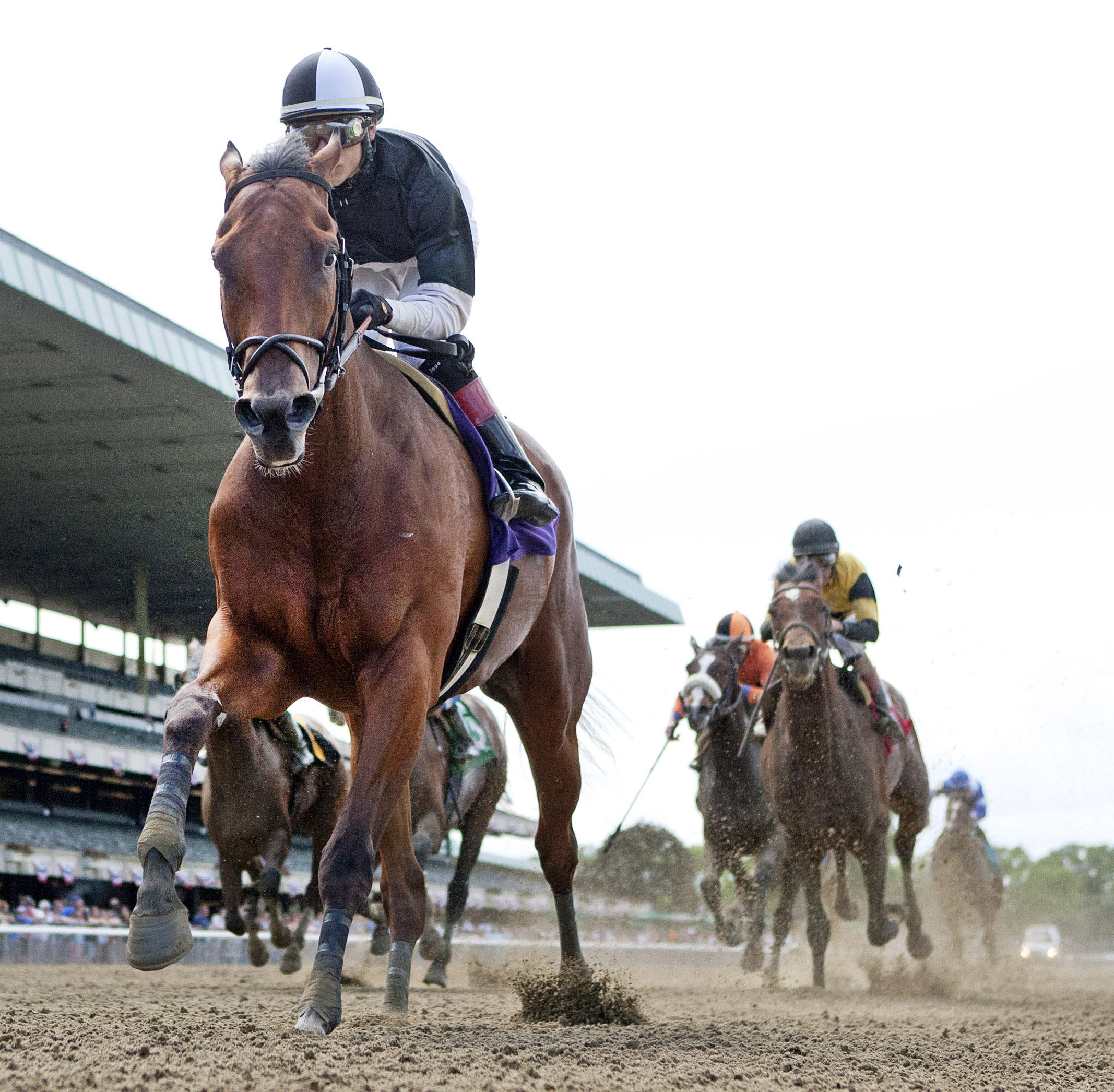
ELMONT, N.Y. – Trainer Mike Hushion remembers the days when it was easy to tell that the upcoming race was for New York-breds.
“They all looked like greyhounds walking into the paddock,” Hushion said.
That is far from the case nowadays. The advancements in the New York-bred program have been ongoing for years. Better-bred horses have led to bigger accomplishments. Of course, none was bigger than when Funny Cide captured the Kentucky Derby and Preakness in 2003.
But Funny Cide wasn’t a fluke. The continued improvement in the New York-bred program will be on display in a few weeks at Santa Anita, where as many as 10 New York-breds could participate in the Breeders’ Cup, topped by Zivo in the $5 million Classic.
And it says something for the statebred program that so many New York-breds could run in the Breeders’ Cup and there are still plenty of good horses to participate in Saturday’s Empire Showcase Day program at Belmont Park.
In Artemis Agrotera, the winner of the Grade 1 Ballerina, Hushion has one of the favorites for the Breeders’ Cup Filly and Mare Sprint. In Sioux, Captain Serious, and Princess Violet, Hushion has contenders in three of the eight stakes being run here Saturday. There are 11 races on Saturday’s card, all for New York-breds, with purse money totaling $1.96 million. First post has been moved up to 12:20 p.m.
“You used to think buying a New York-bred, you were getting discounted goods to run in restricted races,” said John Fort, who spent $200,000 to buy Sioux as a yearling one year after he spent $185,000 to buy Amberjack, a New York-bred who won multiple stakes in 2013. “Now, it’s possible to buy a New York-bred with the expectations of winning any kind of race.”
Fort had high expectations for Sioux when he purchased the son of Awesome Again out of the 2012 Saratoga open sale. Sioux is out of the Pulpit mare Andraste, herself a half-sister to the Grade 1 winner Vicar.
As a 2-year-old last October, Sioux won going a mile at Belmont in his second start. A month later, he finished seventh in a first-level allowance race won by Samraat, who as a 3-year-old would win the Whirlaway and the Gotham – both Grade 3 stakes – en route to a fifth-place finish in the Kentucky Derby.
Sioux, meanwhile, was given the winter off following that November race. Fort, who races under the moniker Peachtree Stable, said he didn’t want to run Sioux in New York during the winter. He said he probably made a mistake by not sending the horse to Hushion in south Florida to get ready earlier.
Sioux did not make it back to the races until Aug. 9, when he won a first-level New York-bred allowance by 5 1/4 lengths. There was some thought about running Sioux in the Grade 2 Pennsylvania Derby, but those plans changed when the race drew Kentucky Derby and Preakness winner California Chrome and Haskell Invitational winner Bayern.
“You want to put them in a race where you can do something significant,” Fort said.
Eight days after the Pennsylvania Derby, Sioux won a second-level allowance race for New York-breds by 9 3/4 lengths, earning a 99 Beyer Speed Figure.
On Saturday, Sioux will stretch out to 1 1/8 miles for the first time.
“From the day Mr. Fort bought him, he thought he was going to be a stayer,” Hushion said.
Sioux will take on a group that includes Saratoga Snacks, last year’s Empire Classic winner; So Lonesome, this year’s Albany Stakes winner; and Empire Dreams, the New York Derby winner.
The Empire Classic may be the richest race on Saturday’s card, but it might not be the best. The $200,000 Mohawk on turf features the trio of King Kreesa, Lubash, and Kharafa, winners of the three previous stakes restricted to New York-bred runners on this circuit.
“I can’t remember three horses as good as those, plus they lasted to make it even more fun,” said Christophe Clement, the trainer of Lubash. “It’s a difficult division where you could say it’s a success for the New York-bred program.”