
Mejia gets 10-year suspension for buzzer
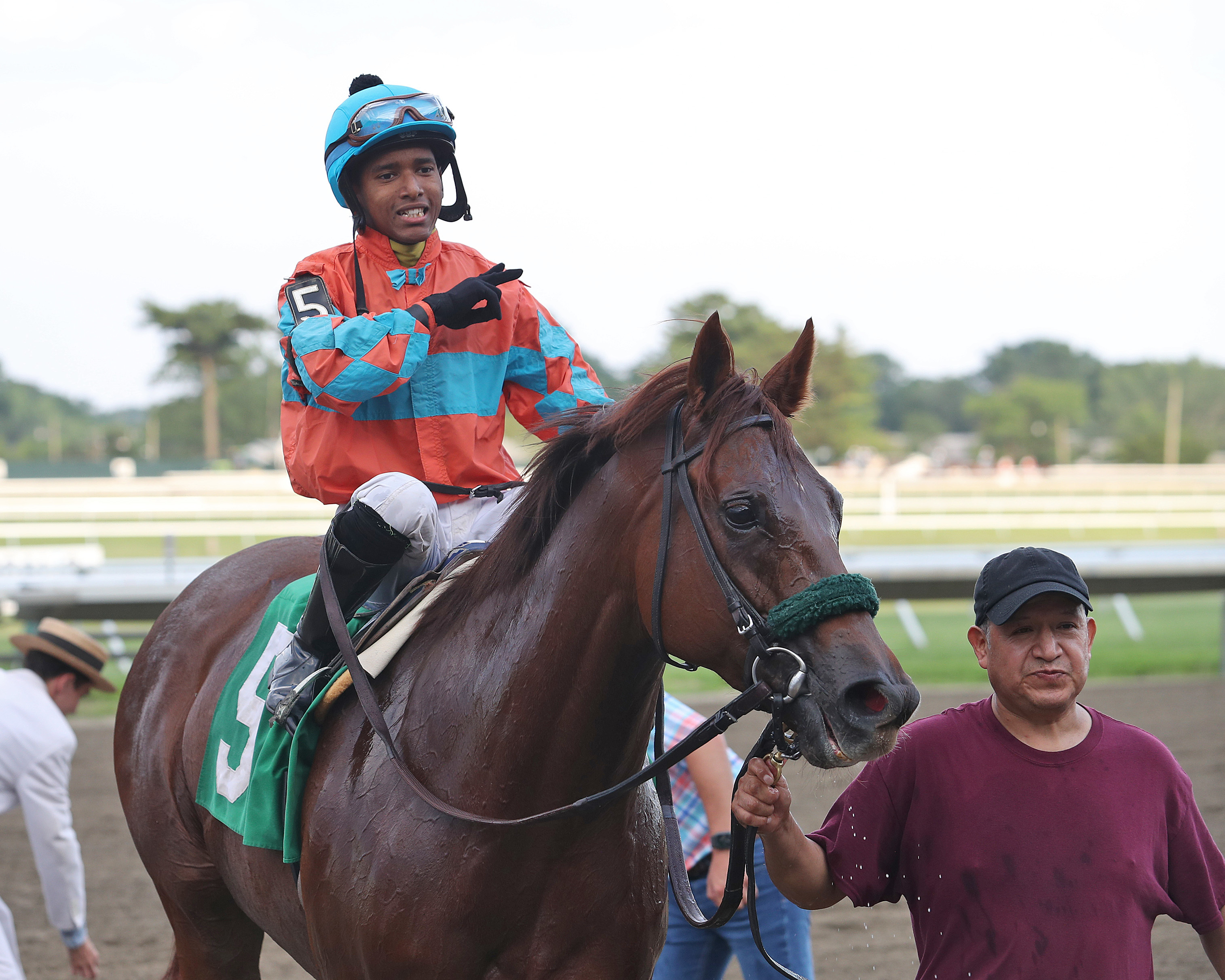
Jockey Tomas Mejia has been suspended for 10 years and fined $5,000 by stewards at Monmouth Park in New Jersey for possession of a buzzer, the term for an electrical device that is typically used to urge a horse to run faster, according to ruling dated Sept. 15.
Mejia was photographed on his way to the winner’s circle after winning a race on Sept. 3 with an object in his hand ending in two prongs. The prongs are indicative of a buzzer, usually a jerry-rigged device using small batteries to surreptitiously deliver a mild electrical shock to a horse on the neck during a race. It is illegal in all racing jurisdictions to possess a buzzer.
The suspension will begin on Sept. 10, 2021, and run through Sept. 9, 2031.
Monmouth stewards held a hearing on Wednesday morning to review the matter. New Jersey racing officials had said earlier this week that stewards were in possession of photos that were “irrefutable” in showing the device. Several photos that were circulated on social media over the past week showed the prongs of the device, but not the entire device.
Monmouth’s stewards first summarily suspended Mejia on Sept. 10. He had ridden two other winners after that Sept. 3 race, which was his first mount after returning from injuries suffered during a spill at Monmouth on July 25.
Under a system known as reciprocity, Mejia will be banned in all other racing jurisdictions during the suspension.
Mejia, 26, began riding professionally late in 2018, and has racked up a decent number of wins while riding in the mid-Atlantic. According to Equibase, he has 110 career wins from 1,101 starts, a 10 percent strike rate. This year, he has ridden 42 winners from 350 mounts.
The use of buzzers in racing has a notorious history, and regulators have increasingly treated the possession of the devices as serious violations. The late Roman Chapa, who died earlier this year, was suspended for five years in 2015 for possessing a buzzer, his third suspension.
Monmouth is operating under rules this year that prohibit riders from using the whip in any fashion to encourage a horse. Many jockeys have been critical of the rules, the strictest in the nation, but other riders have said that they have adjusted their riding styles to comply with the regulations.