
Kinder, gentler winter -- and meet -- expected
OZONE PARK, N.Y. – It may not be the most wonderful time of year for New York racing, but here’s hoping this winter isn’t as bad as the previous one.
In a word, last winter at Aqueduct was brutal.
There were 17 weather-related cancellations and 15 equine fatalities during the four months (Dec. 3 through March 28) of racing over the inner track. The fatalities led to new safety initiatives being introduced, though one of them, a ban on running horses back within 14 days, was lifted after only a short time. There was only one fatality over the last two months of the meet.
Some questioned the safety of Aqueduct’s inner track, but numerous tests – including those done by noted track aficionado Mick Peterson – revealed there were no issues with the surface.
The New York metropolitan area took a beating last winter with cold and snow throughout the season. Weather prognosticators are actually forecasting milder conditions this winter, which would be music to the ears of Glen Kozak, the New York Racing Association’s vice president of facilities and racing surfaces.
Kozak doesn’t subscribe to the theory that the inner track doesn’t perform well when the temperatures are warm. He says the bigger problem is when ice gets into the cushion of the track and then melts, which brings out the moisture and makes for an inconsistent surface.
“Consistency is what the issue is,” Kozak said.
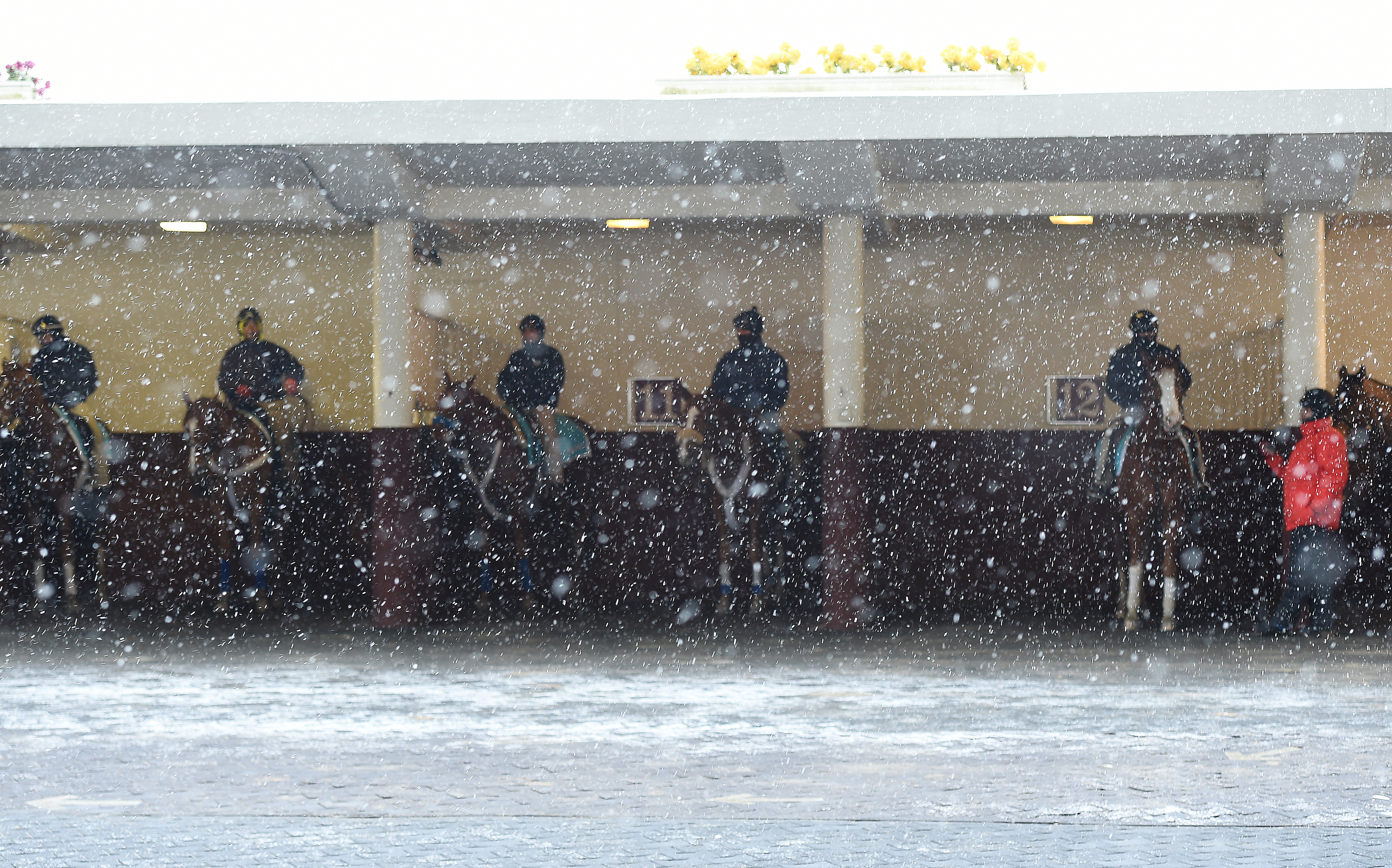
Starting last Wednesday, the inner track opened for a 105-minute period each morning for horsemen who wanted to get their horses accustomed to the inner track. Starting Tuesday, the inner track became the only track at Aqueduct open for training.
With a reduced horse population this time of year, NYRA received approval to reduce Aqueduct’s winter schedule. There are 64 cards of racing scheduled for the inner track compared with 70 last winter. Starting on Jan. 7, racing will be conducted four days a week – Thursdays through Sundays – with the final day of the inner track scheduled for March 26. Aqueduct’s main track will open on March 31.
NYRA hopes to help boost field size by offering horsemen based at Parx free shipping to run at Aqueduct during the seven weeks that Parx is not racing – Dec. 23 through Feb. 13.
NYRA still offers a substantial stakes program during the winter – 34 stakes worth $4.475 million – including a trio of graded stakes for 3-year-olds pointing to the Triple Crown trail. There is the Grade 3, $200,000 Jerome on Jan. 2, followed by the Grade 3, $250,000 Withers on Jan. 30, and the Grade 3, $400,000 Gotham on March 5, all which offer qualifying points toward the May 7 Kentucky Derby. Those races are also stepping-stones to the Grade 1, $1 million Wood Memorial at Aqueduct on April 9.
There are three sprint stakes restricted to 3-year-olds, and two Grade 3 opportunities – the $150,000 Toboggan on Jan. 18 and the $200,000 Tom Fool Handicap on March 12 – for older sprinters.
Brothers Jose Ortiz and Irad Ortiz Jr. were one-two in the inner-track jockey standings last year and figure to be there again at the end. Both will likely be making ample trips to south Florida on weekends. Junior Alvarado, Kendrick Carmouche, and Manny Franco are others who figure to win plenty of races this winter.
David Jacobson, Linda Rice, and Rudy Rodriguez are likely to vie for leading training honors during the winter meet.