

Keeneland September yearling sale turns corner with head of steam
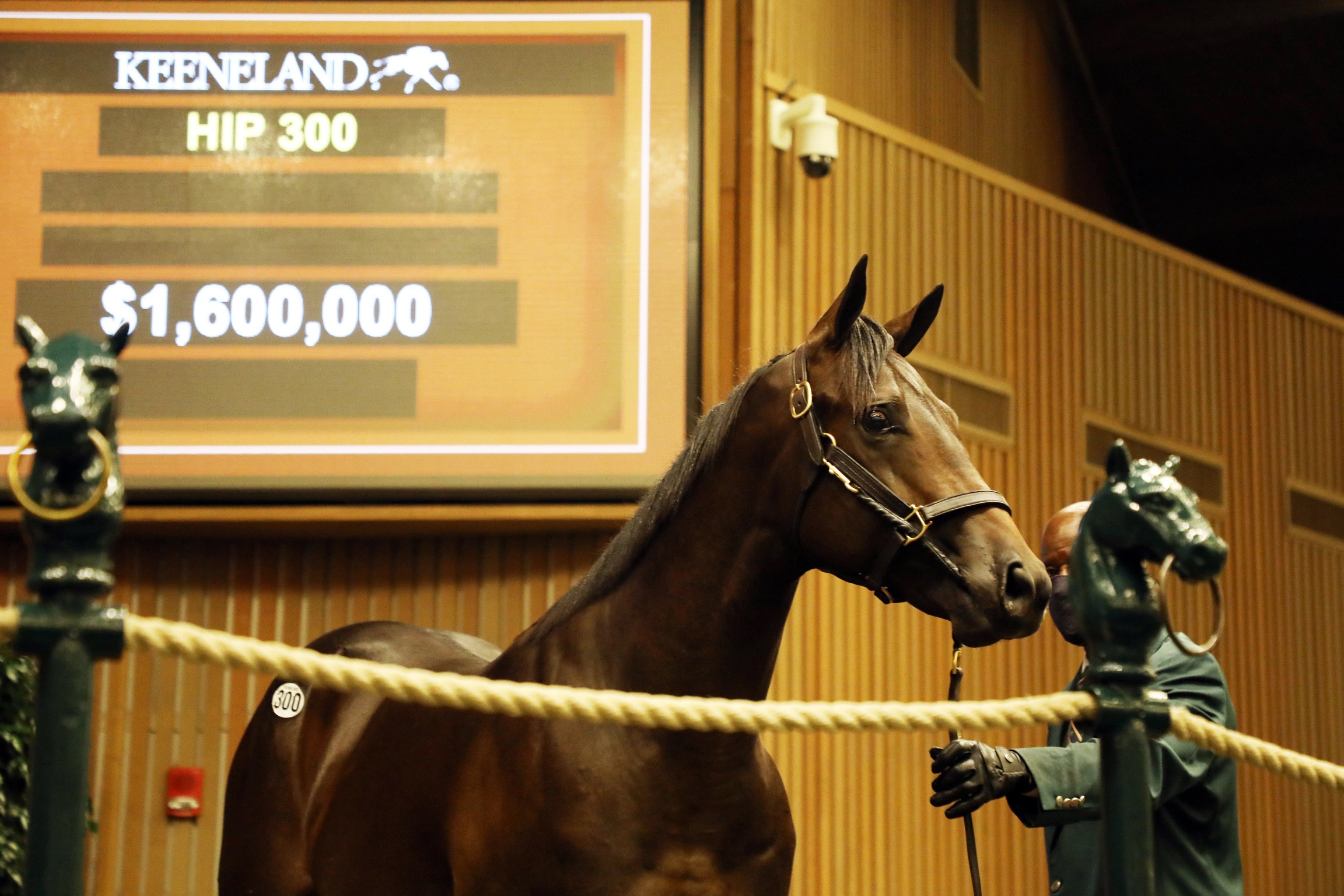
LEXINGTON, Ky. – After a strong first week to kick off its marathon run, the Keeneland September yearling sale took a breather with its dark day on Friday. The break preceded the three final books that sales officials hope will be strong – a prediction echoed by buyers who were bracing to continue competition in the bidding arena.
“We’ve gotten shut out a ton of times,” bloodstock agent Mike Ryan said. “Everybody’s very well prepared, they know what they’re doing. There’s a lot of very top horsepeople out there selecting horses.”
Keeneland September began its run Monday with a two-session Book 1, immediately followed by the two-session Book 2. Last year’s Book 2 began after the dark day. This year, Keeneland positioned Book 2 immediately after Book 1 without a break in order to show buyers more horses during the week and keep the momentum from the opening sessions.
Overall, 620 horses, including 15 seven-figure yearlings, have sold over those first four days for a gross of $200,419,000, compared to last year after four sessions, when 589 had sold for $160,583,000 in the pandemic-hampered marketplace. The cumulative average price through Book 2 was $323,256, tracking upward 19 percent from $272,637 at the same stage in 2020. The median sat at $250,000, up 25 percent from the same point in 2020. The overall buyback rate was 30 percent, compared to 40 percent.
“I think a lot of people love the format.” said Cormac Breathnach, Keeneland’s director of sales operations. “It’s speaking for itself in terms of the results. The format has been a part of that, and it has been rewarding. It has kept the buyers in town and kept them engaged. People are really aggressive about trying to fill orders. And there’s a wave of buyers that are yet to come in or that are just getting started, so we feel really good about the seven sessions to come.”

Keeneland September was set to continue with Book 3 on Saturday and Sunday, followed by a two-session Book 4 beginning Monday, Sept. 20. The sale was then set to conclude its 11-session run with a three-session Book 5, from Wednesday, Sept. 22, through Friday, Sept. 24. Last year, Keeneland ran six books over 12 sessions. The hope is that condensing the end of the sale into a three-session Book 5 will create a more vibrant lower marketplace, with more buyers in town and engaged through the final session.
Although the later books of Keeneland September typically don’t include seven-figure firepower, they were still likely to include future major winners. Recent graduates of the second week of the Keeneland September sale, all featured on this year’s catalog covers, include two-time Eclipse Award heroine Monomoy Girl ($100,000 purchase out of 2016 Book 3), Breeders’ Cup Dirt Mile and Pegasus World Cup winner Knicks Go ($87,000, 2017 Book 4), Pegasus World Cup Turf winner Colonel Liam ($50,000, 2018 Book 5), and Metropolitan Handicap winner Silver State ($450,000, 2018 Book 5).
“I know when we put the books together, the demand for Books 3 and 4 with a lot of quality stock was incredible,” Keeneland vice president of sales Tony Lacy said. “I think we’ve got a lot of depth, not only with sire power and pedigree, but physical.”
The bidding activity in these middle and lower markets, which play a large role in the final results of the sale, can be largely influenced by the preceding 2-year-old sales season. This year, optimism was strong as the juvenile marketplace rebounded from the pandemic-impacted 2020 season, leaving yearling-to-juvenile pinhookers flush and looking to restock. These pinhookers, along with some other buyers, were largely shut out of the competitive upper marketplace this year, which could lead to a trickle-down effect of increased bidding competition in the second week.
“We’ve got a lot of people that haven’t been able to buy a horse yet,” Lacy said. “I think pinhookers have been completely shut out, for the most part. A lot of the pinhookers that we’ve seen are buying for end users. So I think there’s a lot of pent-up demand in the back. And there’s a lot of Europeans that haven’t really gotten a horse yet – and they’re not going to go home till they fill their orders.”