

With horses heading to Kentucky, Santa Anita struggles with small fields
ARCADIA, Calif. – Several Southern California-based trainers have sent horses to Kentucky this spring, or plan to do so in coming weeks, at a time when Santa Anita has had difficulty filling races and officials are contemplating eliminating Thursdays for the remainder of the spring-summer meeting.
Southern California-based trainers Bob Baffert, Richard Baltas, Phil D’Amato, Ron Ellis, Bob Hess Jr., Peter Milller, Jeff Mullins, Doug O’Neill, Shelbe Ruis, and John Sadler have had runners at Keeneland since the meeting began there on April 4.
While California trainers have sent horses to Kentucky’s leading race meetings for decades, this spring there is a larger-than-normal group of horses who were shipped from California. On Sunday, trainer Mark Glatt said he plans to send approximately 15 horses to the Churchill Downs spring-summer meeting, which begins April 27. Miller said on Saturday he will have an expanded group in Kentucky this spring and summer in addition to the 15 already based there.
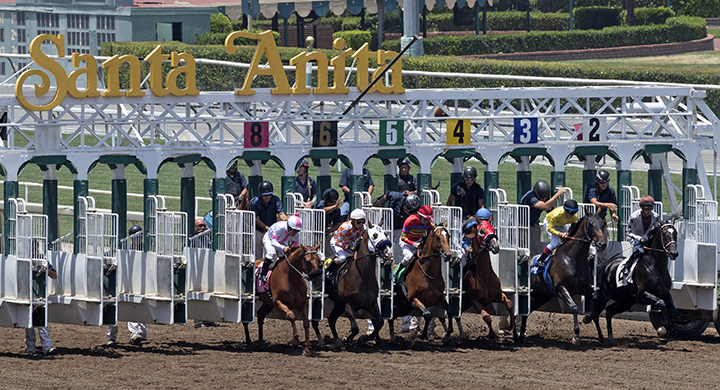
The departure from Santa Anita of runners from several leading stables is taking a severe toll on the available group of horses at Santa Anita in an already difficult year. There were 47 runners in eight races at Santa Anita on Sunday, a day that would typically have had nine races. On Sunday, there was one four-horse field and four races with five runners.
Miller said he plans to keep a string of horses in Kentucky through the end of the summer.
:: Add Santa Anita Clocker Reports to your handicapping arsenal
Glatt said the purse levels at the Churchill Downs and an expected reduction in racing dates at Santa Anita are factors in his decision to move horses.
“We have to think about getting reestablished somewhere else,” he said. “I don’t want to. I’m a West Coast boy.
“As we race less, horses will leave for that reason. Our purses don’t compete with the better part of the country, and our expenses are higher. It’s simple arithmetic.”
Glatt said he is hoping to hear from Churchill Downs officials about securing stall space later this month. Even with the horses he is sending to Kentucky, Glatt said he will have approximately 50 horses in Southern California.
There are three days of racing at Santa Anita this week – Friday through Sunday – an abbreviated schedule that was put in place several months ago. There were 57 entries for eight races on Friday.
The track is scheduled to resume racing four days a week, Thursdays through Sundays, beginning April 25.
Tim Ritvo, chief operating officer of The Stronach Group, Santa Anita’s parent company, said on Sunday that there have been discussions about racing three days a week through the end of the meeting on June 23.
“Nothing has been finalized,” Ritvo said. He declined to elaborate, pending discussions this week.
Santa Anita has raced mostly four days a week since 2013. The Los Alamitos spring-summer meeting, which begins June 27, will have racing four days a week for its three-week run. The Del Mar summer meeting, which begins July 17, will race mostly five days a week.
Entries at Santa Anita also have been affected by the introduction of house rules enacted in late March regarding permitted medication levels. The rules were put in place following a series of equine fatalities that began in late December.
Racing was canceled for 13 days in March after a series of fatal injuries in late February and early March. Early in March, the main track underwent inspection and renovation.
When racing resumed March 29, a new set of medication protocols was put in place at Santa Anita, notably a 50 percent reduction in the permissible dosage of the antibleeding medication Lasix, a suspension of authorized thresholds on legal therapeutic nonsteroidal anti-inflammatory drugs, an increase in out-of-competition testing, and increased transparency of veterinary records when horses switch stables.
Those rules will be in effect through the current meeting and have led some horses, notably bleeders, to be retired or sent to other circuits, trainers have said.
Since racing resumed March 29, there has been one fatality – Arms Runner in the Grade 3 San Simeon Stakes on the hillside turf course March 31. Races on the hillside turf course have been suspended at least through April. Hillside races often draw large fields, and the absence of those races has had an impact on field size.