

Horseracing Integrity and Safety Authority first-year budget estimated to be $14.3 million
The first-year budget for the Horseracing Integrity and Safety Authority has been estimated at $14.3 million, according to a document the authority has distributed to racetracks and racing commissions.
The budget is listed on two spreadsheets detailing the estimated funding responsibilities of either individual states or racetracks to the authority, which expects to begin operations on July 1, in accordance with a date set in federal legislation. The authority is currently paying its bills through loans provided by supporters.
The funding responsibilities of racing commissions and/or racetracks to HISA’s operations has been a significant topic of speculation since the authority’s enabling legislation was passed late in 2020. Last week, the Federal Trade Commission granted its approval to rules calculating half of the funding responsibility for states or their racetracks based on the gross number of starts, with the other half determined by a calculation based on gross purses. The spreadsheet was distributed to racing commissions and tracks in the last several weeks.
As a result of that two-pronged calculation, states with high handle, high purses, and a large number of starts, such as New York, California, and Kentucky, have the largest gross responsibility to HISA’s funding. But other low-profile racing states that have a large number of race days and which are supported by generous subsidies from casinos, such as Louisiana, West Virginia, and Pennsylvania, also have gross annual commitments in excess of $1 million.
:: Get Daily Racing Form Past Performances – the exclusive home of Beyer Speed Figures
While the FTC-approved rules envision state racing commissions collecting and remitting the funds to the authority, the regulations require racetracks to pay the authority if the commissions decline to do so. Already, two racing commissions, in New Jersey and Maryland, have said they will not collect the fees.
“We don’t have the authority to do it,” said Mike Hopkins, the executive director of the Maryland Racing Commission, on Wednesday, after the commission voted down a proposal to collect and remit the HISA fees. “We just don’t.”
Hopkins said that he asked the state’s attorney general to review their regulations to determine whether the commission could collect the fees.
The FTC-approved rules do not designate how the funds should be raised or collected, only that the fees should be based on “covered races,” a term referring to any race under the jurisdiction of the authority. That has generated concerns among many horseplayers that racetracks will use increases in the takeout to generate their shares of the funding.
The authority, a non-profit, private company, is tasked with promulgating safety and drug-testing rules that will apply to all racing states in the U.S. The authority will also run a national drug-testing and enforcement program, but authority officials have said that they will not begin running that program until next year. Negotiations with the U.S. Anti-Doping Agency to run the program were abandoned late last year when the two sides could not come to agreement.
As a result, the $14.3 million budget figure is likely well below the budget that HISA will need once the drug-enforcement program is in place. For now, racing commissions are expected to continue to fund and operate their own drug-testing and enforcement duties until HISA gets its own national program up and running.
HISA officials did not respond to emailed questions seeking more clarity on the budget numbers contained in the spreadsheets, which were obtained from a state racing commission under a freedom of information request.
The $14.3 million budget figure is approximately 1.3 percent of the total amount of purses distributed in the U.S. Purses at U.S. racetracks are heavily subsidized by casino revenues, and racetracks that are located on circuits with subsidies are generally facing the highest potential bills.
The New York Racing Association, which operates Aqueduct, Belmont Park, and Saratoga Race Course, has a HISA funding responsibility of $1.6 million, although that figure represents slightly less than 1 percent of its total purse distribution of $164.0 million in 2021, according to the spreadsheets. Both NYRA and its horsemen receive generous subsidies from a casino attached to Aqueduct run by the casino company Genting.
Kentucky tracks or its racing commission would be responsible for $1.28 million in funding, a figure that, like New York, is slightly less than 1 percent of the total purse distributions in the state for 2021. All racetracks in Kentucky have posted double-digit annual growth rates in purse distributions over the past several years due to revenues generated by slot-machine-like devices that, under state law, can only be operated by racetrack license holders.
In addition to NYRA, several other companies with multiple racetracks are facing a HISA bill in excess of $1 million, according to the spreadsheets. Churchill Downs Inc., which owns Churchill Downs and Turfway Park in Kentucky, Fair Grounds in New Orleans, and Presque Isle in Pennsylvania, has an estimated HISA obligation of $1.4 million. Churchill Downs was instrumental in the passage of the bill creating HISA after the company dropped its opposition to the legislation early in 2020.
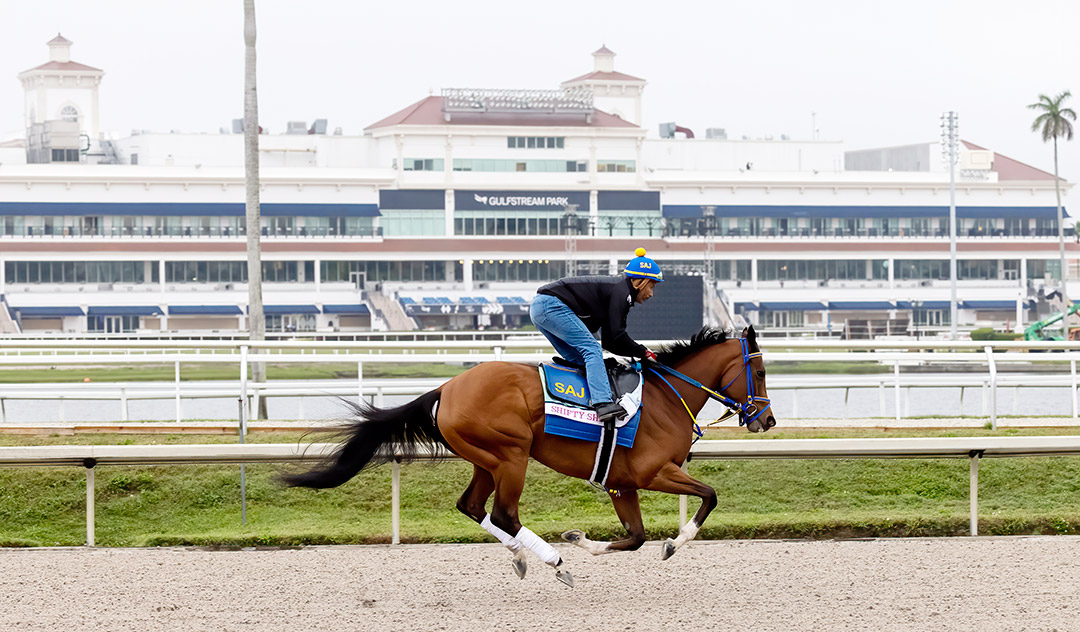
1/ST Racing, which owns Gulfstream Park in Florida, Laurel Park and Pimlico Racecourse in Maryland, and Santa Anita Park and Golden Gate Fields in California, faces the highest liability of any single racing company, at $2.7 million, according to the spreadsheets. Gulfstream Park, which runs year-round, would owe $1.03 million on its own, with the two California tracks contributing slightly less than $950,000. The Maryland tracks, which are supported by casino subsidies, would owe a total of $670,000.