

Horse shortage a concern as Del Mar summer meet approaches
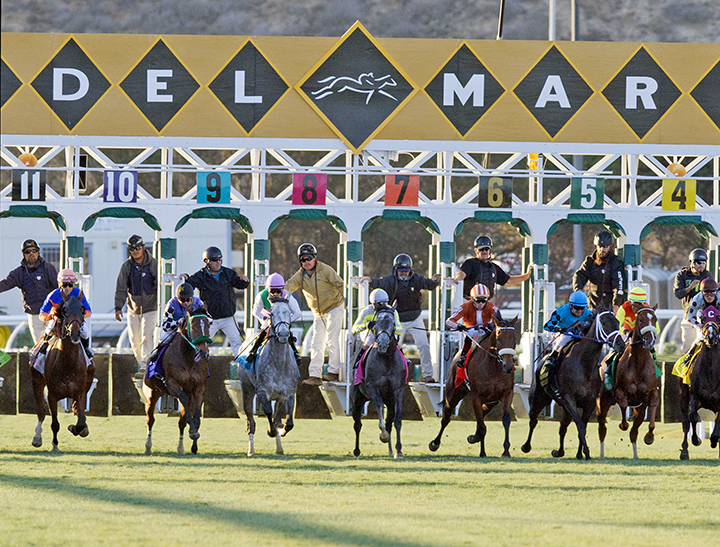
ARCADIA, Calif. – Del Mar may run fewer races per day during its summer meeting from July 17 to Sept. 2 after officials expressed concern on Thursday about the number of race-ready horses based in Southern California.
Speaking at a California Horse Racing Board meeting at Santa Anita, Tom Robbins, the track’s director of racing, stressed that Del Mar plans to run five days a week during the 36-day summer meeting.
“We realize times are different,” Robbins told the racing board. “We know it’s been tough in Southern California. We have a contingency plan, knowing our horse population is fluid.
“We want to get back to our regular program of five days a week.”
In an interview after the presentation to the racing board, Robbins said there is a possibility that some Wednesday and Thursday programs could have seven races instead of eight from past summer seasons and some Saturday cards could have nine races instead of 10.
Robbins emphasized that a decision on the number of races carded will be made as the season unfolds.
“We’ll play it by ear,” Robbins said. “The important thing is that we maintain five days.”
At Thursday’s meeting, the racing board approved summer racing seasons at Del Mar, Los Alamitos, and Cal-Expo in Sacramento.
:: MEMORIAL DAY SALE: Save 50% on Formulator PPs, DRF Plus access, and handicapping reports
The Del Mar summer meeting is the only meeting in California that races five days a week. Los Alamitos has scheduled four days of racing per week – Thursdays through Sundays – for its upcoming summer meeting from June 27 to July 14.
The current Santa Anita spring-summer meeting is operating on a three-day per week basis from Fridays through Sundays because of concern over the number of race-ready horses. Santa Anita lost 13 days of racing in March after a series of equine fatalities in late February and early March led to an inspection and renovation of the main track.
In mid-March, the track imposed greater scrutiny of horses allowed to train. When racing resumed on March 29, the track implemented tighter rules for medication use and added inspections for horses entered to race.
The disruption in the racing calendar, and the new parameters required for horses entered to race, led several stables to move some horses to Kentucky in early spring, while other horses were retired or sent to other circuits to race. The horse population at Santa Anita declined by approximately 200 runners in the spring, officials said at the time.
The horse population at Santa Anita has increased in recent weeks, with some stables returning from Kentucky. But scores of the horses that recently arrived are 2-year-olds who are weeks or months away from their first starts, leaving a lower number of race-ready horses.
Through Thursday, Santa Anita has averaged 7.06 runners per race since the start of the Santa Anita spring-summer meeting on April 12, compared with 7.67 runners per race at a similar time last year when the track had run 44 more races.
The Del Mar summer meeting, as well as summer meetings at Los Alamitos, the Alameda County Fair in Pleasanton and Cal-Expo in Sacramento, will be run under tighter medication guidelines, similar to those enacted at Santa Anita and Golden Gate Fields in late March. Santa Anita and Golden Gate Fields are owned by the same parent company, The Stronach Group.
The first half of the two-hour, 20-minute meeting was dominated by a highly contentious, and sometimes confrontational, public comment period in which a group of anti-racing advocates spoke against the continuation of horse racing and expressed outrage at the fatalities that have occurred this year at Santa Anita.
A small group of racing supporters also spoke during the 70-minute public comment period. At several times during the public comment period, racing board chairman Chuck Winner reprimanded speakers for the tone of their conversations, for speaking out of turn, and for spontaneous applause from audience members.
The entire episode played out before at least five television crews from local stations and was similar in subject matter to the public comment period at the racing board’s April meeting.
At the conclusion of the meeting, Winner said public comment periods would be the concluding item of future racing board meetings and not one of the initial items on the agenda.