
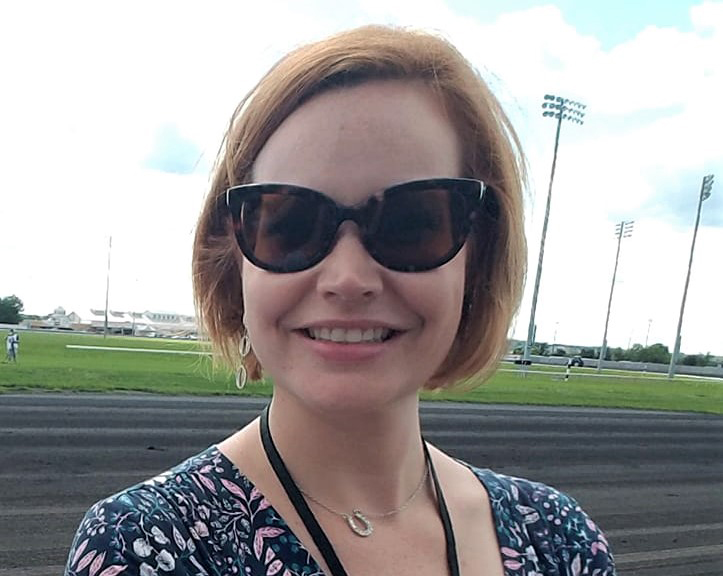
Harness: Profile of Executive Director of Agriculture M. Kelly Young

What kind of car do you drive?
A Chevy Equinox.
Favorite dinner meal? Snack?
The quintessential summer meal--fried green tomatoes, sliced red tomatoes and corn on the cob. For a snack, ice cream.
What is your favorite all-time track to visit? Why?
My favorite all-time was the Syracuse Mile at the NYS Fairgrounds. I have a lot of good memories watching the races as a kid, tallying the winners by sire, and celebrating my brother's birthday there each year. Later I worked there in publicity. That experience led to me pursuing this industry as a career. My favorite track that still races, however, is Goshen Historic Track in my hometown. I still get excited to walk in the gate every race day and sit in the stands when they cheer.
What is your favorite big event in racing?
The New York Night of Champions. After a season of racing, I'm attached to so many of the horses and their stories. I want the favorites to win and I want the underdogs to upset, all in the same race! I know how hard these 64 animals and their connections have worked all summer to get to the final and it is a night I look forward to.
How did you get started in harness racing?
I grew up on a breeding farm, Castleton Farm of New York, and I'm the fifth generation in my family in the business. My first job off the farm was working in the office at Historic Track, but working publicity at the Syracuse Mile really propelled me to pursue this as a career.
Was a position involving horses and farm life a given considering your upbringing?
I was planning to pursue medicine when I went to college, so you just never know where you'll end up. I graduated from college and the next week I started at The Horseman and Fair World magazine, which was the only place I wanted to work. My skills in racing line up better with the type of work I do behind the scenes and it's been nice to bring my skills to an industry that I feel so connected to.
You worked at the New York Farm Bureau for many years, sort of outside the racing world but came to your roots. Why?
I had a great opportunity to work for New York Farm Bureau and was a lobbyist for farmers at the state and federal level for a decade. I got a lot of experience in public policy, working on the breadth of laws and regulations that affect agriculture. I was proudest to get provisions written into the federal Farm Bill that helped New York farms and played a key role in writing and passing a farm-to-food bank bill. Certainly my time there helped prepare me for my current role.
You are now Executive Director of Agriculture & the NYS Horse Breeding Development Fund. What does that role entail?
The Fund is responsible for administering the New York Sire Stakes program, which involves encouraging agriculture through the breeding and racing of harness horses in the state and the support of equine research at Cornell University through the Harry M. Zweig Memorial Fund for Equine Research. We also have responsibilities for supporting county agricultural associations, 4-H and other educational initiatives.
► Sign up for our FREE DRF Harness Digest Newsletter
What is your favorite sport to watch? Team?
Other than racing, I'm not a huge sports fan. But I'll take tennis or basketball any day.
What is one thing about you most fans/bettors don't know?
I love partner dancing and have competed or taught ballroom, latin and swing dancing.
What is your favorite thing to do outside of the horse world?
I love traveling and exploring all kinds of destinations here and abroad. My children have curtailed traveling a little, my last long trip before they were born was to Italy, but they are getting to an age when it's easier to travel longer distances with them.
What is one word that describes harness racing for you?
Family.
What is the best advice you've ever gotten about harness racing?
Different paths can get you to the same winner's circle.
Do you have a favorite horse from your time in the sport?
Storm Damage. He was two years older than me and I grew up with him at Castleton Farm. He was handsome, full of himself and kind. I still talk with NYSS participants today who reminisce about their favorite son or daughter of Storm Damage.
What was your favorite moment in harness racing?
I was such a huge fan of Bunny Lake and following her on the racetrack was a highlight. She was a modestly-priced New York-bred yearling who became Horse of the Year for dedicated owners and a hard-working trainer-driver. That still embodies the hope and joy of racing for me.
Let's talk New York Sire Stakes. COVID-19 changed the formula a bit in terms of the number of legs. Do you see that as a permanent change?
Not at all, and we have been clear on that. We had to respond to the closure of our tracks and the slow recovery of casino revenue due to limits on their operations. It impacted us in 2020 and even more so in 2021, so we had to cut our usual 8 legs to 5. We consulted with trainers and owners and they told us they preferred fewer legs at the same purses over more legs with the money spread thinner, so that's what we did. The money horses raced for at each event changed only slightly in the Sire Stakes and did not change at all for the Excelsior Series. We fully anticipate being back up to at least seven legs in 2022.
Sire Stakes purses in New York are dependent on location and fluctuate greatly whereas in many other states each leg has a set purse. Is one system better than the other?
I think what's important is that horsemen know what the rules are where they are playing and then they can make their management decisions based on that. New York's laws and how our Sire Stakes funds are handled is different than other states and horsemen are very adept at figuring out the best way to take advantage of the quirks of each jurisdiction. Our law does not lend itself to guaranteeing the purses of each split, but rather guaranteeing the added money for each leg, and that plays out in the favor of the horses many times.
Purses for the finals in New York have fallen below many other states. Do you foresee any changes to bring them up to at least $250,000?
Those changes will be up to the Trustees of the Breeding Fund and they look at final purses carefully each year. But I will share that New York isn't in a race simply to have the highest final purses, but are looking at balancing a rich final and a program with tiers and legs that help a broad sector of horses earn money across the board. Agriculture is best served when many participants prosper.
New York offers three levels of Sire Stakes races -- NYSS and Excelsior A & B. Is the "B" series, which features low-end horses still viable for pari-mutuel tracks?
We actually have three tiers defined as the Sire Stakes, Excelsior and County Fair levels, and the Excelsior splits into A and B levels. There has been much conversation about the B level and what the future holds for it in the entire structure of the Sire Stakes program, especially with the size of the classes right now. There could be changes going forward, but if so, we plan to share those with horsemen well in advance so they know what will be available before purchasing a horse.
The NYSS finals were on September 10 at Yonkers. Briefly, what goes into putting on that event?
Months of planning for an event that serves the horsemen, owners and fans as well as possible. We have to take into consideration a detention barn that is a little over 24 hours, accommodations for owners attending and the enjoyment of fans watching live or via simulcast. COVID considerations continue to impact planning, so cooperating with the track and horsemen's association are important.
Do you think people realize that you won three John Hervey writing awards?
Haha, it certainly doesn't stop anyone from grabbing me in the paddock and giving me a piece of their mind! But personally, those were great honors and I take great pride in them. The stories of the people and animals in this sport is what is most compelling to me and it is always an honor to be the conduit of sharing those stories.
If you had the power to change one thing in the sport, what would it be?
A long view of where we are going. We are too focused on the immediate and we do a terrible job of planning for the next five and 10 and 25 years as a sport and controlling our destiny.
How do you view the future of harness racing?
One important difference I saw from working with farmers and working with horsemen is what they wanted for their children. Farmers repeatedly told me that they weren't putting pressure on their kids to return to the family farm, but they were preparing the business and looking ahead so that their children could take over if they wanted to someday. Racing and breeding horses is so often a family business, but I've had too many horsemen tell me that they have discouraged their children from pursuing it. Until we can't wait to prepare the way for the next generation, I think our future will remain precarious.
Time for the stretch drive:
Best Driver Ever?: For me, its Wally Hennessey, the King of the New York Sire Stakes.
Best Trainer Ever?: Del Miller, for his influence across a broad spectrum of the sport.
Favorite TV Show?: Little House on the Prairie.
Trotters or Pacers?: Trotters.