

Harness: Kentucky's Lasix ban creates a mess of issues
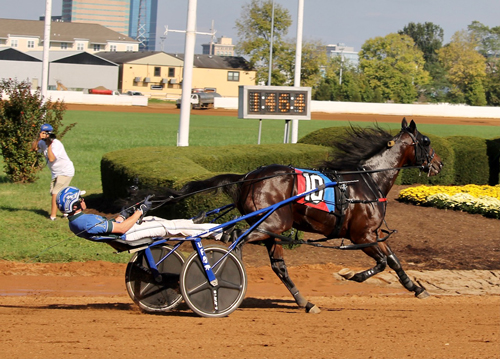
Once in a while a decision comes down that is so mind-boggling that it defies logic. Thus is the case of the sporadic Lasix ban in the state of Kentucky.
For those not in the know, and until recently I fell into that group, Lasix is not permitted in stakes races for Standardbreds in Kentucky. If you wondered what the "All entries pursuant to 810 KAR" on the bottom of your program means, well, it is a catch-all rule for medication which, among other things, covers Lasix.
For some unknown reason this rule doesn't apply to overnight races, so Lasix was perfectly acceptable in five of the 12 races on the Red Mile program on Sunday, October 10 but prohibited in the seven races with huge purse money on the line. This rule resulted in 27 horses on the card who normally race with Lasix going without the medication for this start.
There are a number of issues at play here, the first of which is the lack of information provided to the betting public. First of all, every race should clearly state which horses are coming off Lasix on the bottom of the program page. Second, how is the betting public supposed to know what to expect from horses coming off Lasix? They aren't privy to whether a horse gets 10cc of the medication or the minimum 3cc. A horse on 3cc would likely be fine going one start without it, while a horse who normally gets 10cc might be in line for a very bad performance without their meds. Finally, what Pandora's Box does the rule open up as trainers may try to find Lasix substitutes that could be more harmful to the horses?
We combed the backstretch in search of opinions and answers from a number of trainers.
"It is defrauding the public. And for what reason? It becomes a guessing game for the public as to which ones really need it, which ones can be treated differently, which ones are very bad bleeders," said trainer Ron Burke. "We've had almost no breakdowns on the track. Why is the rule needed?"
"I don't really like it. Some horses bleed and Lasix is the best thing for them," said trainer Jim Campbell, who expressed concern over the alternative solution issue. "What it will really do is that as it spreads some of the trainers will find other methods of treating it and you'll see horses improve by four or five seconds and schmucks like me will have to give up the bad bleeders to other trainers."
Trainer Nancy Takter agreed about the potential for the Lasix ban creating a worse problem.
"I think it is stupid," said Takter on the Lasix ban. "I don't give more than 4cc and 3cc is the minimum, so mine should be fine, but it just makes no sense because some of these guys are going to find a workaround which will be worse for the horses."
Trainer Tom Cancelliere was mostly concerned about the differing rules from state to state and the issues of taking a horse off Lasix and putting them back on.
"I don't like it, but the biggest problem is that it isn't uniform, and you have to put the horse on and off Lasix," said Cancelliere. "Plus, what happens here if you take the horse off and bleeds badly? Then you are in bad shape next time."
Trainer Per Engblom felt the timing for the Red Mile Grand Circuit meet made it more of an issue because late in the season is when 3-year-olds will often add Lasix because of the rigors of the racing year. That said, he was also one of a few who felt that with time everyone would get used to the change.
"Right now, it feels a little weird but I think in a few years we'll all get used to it," said Engblom.
Trainers Marcus Melander and Brett Pelling weren't necessarily against the ban of Lasix but both questioned why it was good for some horses but not others.
"I don't use Lasix a lot, so I'm probably not the best person to ask, but I think it is strange that you can use it in regular races but not stakes," said Melander.
"I don't really mind the rule," said Pelling. "What I have an issue with is why the overnights can race with Lasix and stakes can't."
► Sign up for our FREE DRF Harness Digest Newsletter
While the main reasoning for the Lasix ban appeared on the surface to be simply the Standardbred tracks going along with Thoroughbred rules to play "nice" with the Commission, Pelling shed some light on the issue as he said a Kentucky Racing Commission representative told him the reasoning for the rule was because Lasix is "injected," and the public perception is negative when it comes to injections. We both speculated that perhaps if a dissolvable pill could be created, perhaps that would change everything.
Another sticking point on the Lasix issue is age. Engblom, Campbell and Takter all freely offered up that they had no issue with banning Lasix for 2-year-olds. Takter went even further mentioning that perhaps 2-year-olds shouldn't even be allowed to race until July or August to help preserve their careers. Her reasoning was two-fold in that today's horses are ready to go fast from day one whereas years ago they would build up their speed and not "burn out" as quickly. The burnout factor was the second point, as a shorter 2-year-old year would allow more horses to race at a high level as 4-year-olds and beyond.
For the record, three horses coming off Lasix won stakes races on October 10, and 12 of the 27 horses mentioned above finished in the money, so perhaps not having Lasix wasn't an issue for many of the horses. Of course, we could also point to a horse like Lou's Pearlman, who added Lasix on August 21 and won five straight races but finished a well-beaten sixth at 4-1 despite setting slow fractions in the Tattersalls. Regardless of the outcomes, the rules are inconsistent and the public was left in the dark.
Now, if the Commission wants to do the right thing in these stakes races, inform the public which horses are coming off Lasix and let us know how much Lasix they got in their prior start.
On a similar note, another important piece of handicapping information left off the Sunday program at The Red Mile was whether any races would be participating in a detention barn. Shouldn't the public be told if the horses are going to be secluded to a special barn and kept under supervision?
It took a survey of most of the Red Mile property to find out that there actually was a detention barn in place for the Kentucky Filly Futurity. Hopefully, at the very least, when the past performance lines come out, it will be notated in the future.