

Harness: Investing in the future of our sport
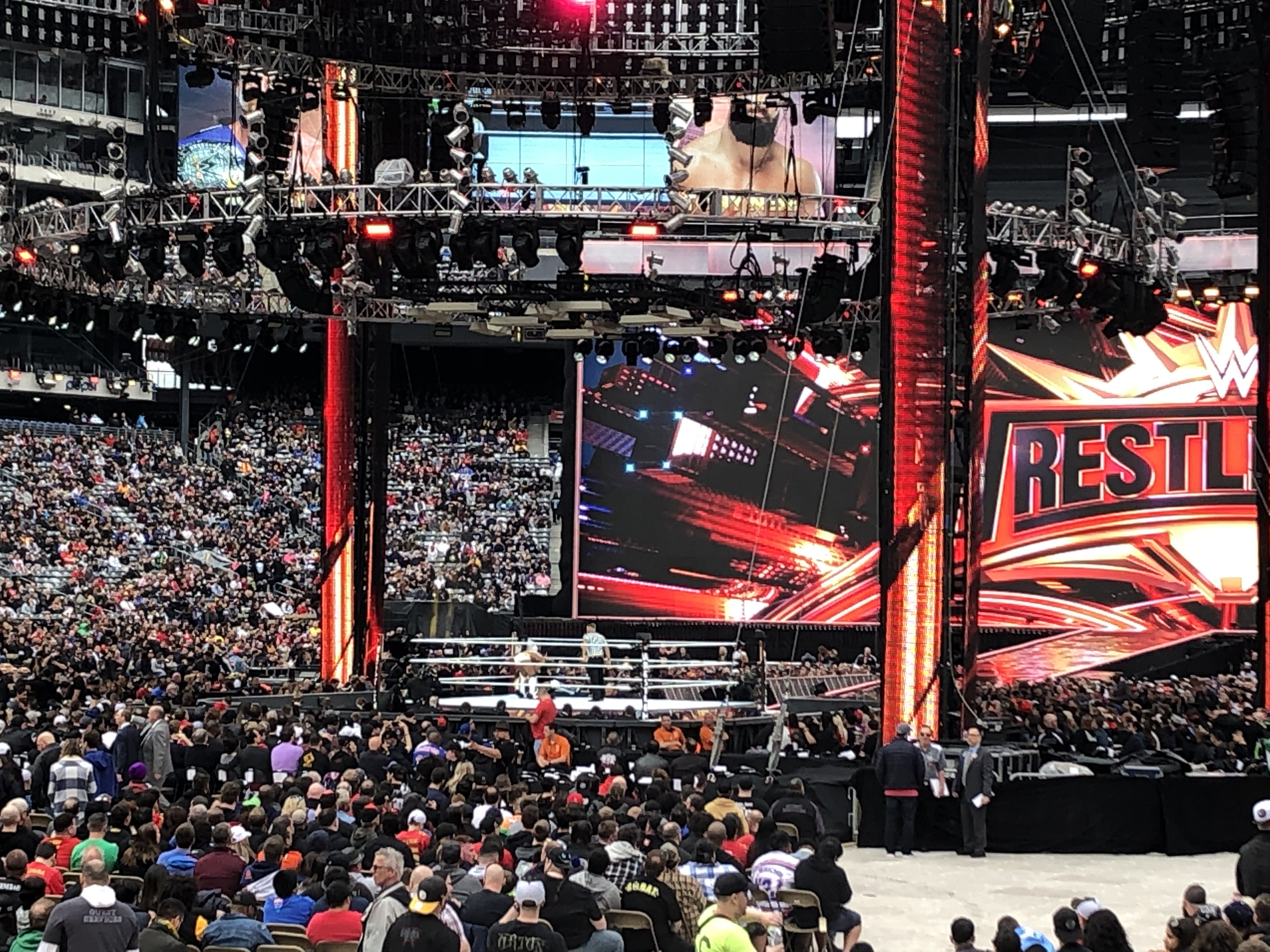
It has been just over seven days since the weekend of Wrestlemania, which took place a stone’s throw from The Meadowlands Racetrack at MetLife Stadium. In fact, for the main event, one of the wrestlers’ entrances included a helicopter landing in the parking lot of the Pegasus Restaurant at the old Meadowlands Racetrack facility.
The Wrestlemania event itself was the single highest grossing entertainment event in the history of MetLife Stadium, at $16.9 Million, according to Forbes.com.
I attended two events connected to Wrestlemania last weekend. The first was WWE Axxess, which took place at the Brooklyn Cruise Terminal as well as Wrestlemania itself. Wrestlemania is such a world-wide phenomenon, that between Wednesday April 3rd and Tuesday April 9th, there were 47 different wrestling events in New York and New Jersey that fans could have attended. They were comprised of both the conglomerate, WWE and smaller Independent wrestling circuits that even I have never heard of.
What does this have to do with harness racing? Well, in the 1960’s and 1970’s, the “sport” of professional wrestling was much like harness racing. It was a business based around territories, without a huge television presence and relied on fans within each territory to attend local events. Marketing efforts were underwhelming to say the least, with blurbs about wrestling shows appearing in local newspapers.
This all changed on July 14, 1984. On that day, Vince McMahon’s World Wrestling Federation (WWF) took over the time slot on TBS that was home to Georgia Championship Wrestling and World Championship Wrestling (WCW). This led to the advent of Wrestlemania, held the following year, and wrestling was changed forever. McMahon recognized the value of television airwaves in the mid 1980’s, much like harness racing did at the time. If you recall, the Breeders Crown could be seen on ESPN networks in the 1980’s and the 1990’s. Harness racing was building a brand much like McMahon was with what was then known as the WWF. In fact, in 1983, The Hambletonian at The Meadowlands produced handle that equated to 31% of the Kentucky Derby Day handle.
But along the way something changed. McMahon realized that business needs to adapt as society around it changes. He went so far as to record and broadcast an announcement that he believes his fans are “tired of having their intelligence insulted.” McMahon essentially stated that the outcomes of matches were pre-determined and what the fans were watching was not a sport, but sports entertainment. In the years following came the Attitude Era, the Monday Night Wars, and wrestling became bigger than perhaps even McMahon could have ever realized. Now, Wrestlemania is consistently breaking revenue records at every location it visits. The Rock, a former WWE Superstar, is the highest-paid actor in Hollywood and the WWE is worth billions of dollars. Beyond that, there are other major wrestling companies like New Japan Pro Wrestling, Ring of Honor, All Elite Wrestling and others that are thriving within the industry.
In terms of adapting, McMahon, recognizing the value of a video-streaming product, created the WWE Network. A video streaming service that hosts all of his pay-per-view events live and also contains literally every piece of wrestling history you could ever hope for. Every episode of live television for the past 25 years, every pay-per-view since WrestleMania I and every documentary the WWE ever created, is available to subscribers at the click of the button. It costs just $9.99 per month and now has over two million subscribers just five years into its operation. How much forward thinking went into this? Well, McMahon knew he wanted his own network back in the year 2000.
Bringing this full circle back to harness racing, I ask this question, where is the adaptation? I can make a legitimate argument that harness racing has in fact gone backwards since the mid-1980’s. The only race that is televised nationally is The Hambletonian. There is no other television presence. Not only is there no “harness racing network” that can be streamed online, but some tracks you cannot even find replays of, unless you have an active Advance Deposit Wagering account somewhere. The simulcasting system still operates as it did when it was originally created. There are even racetracks that do not broadcast in high-definition.
I am not sure what harness racing is waiting for. The world around the industry is moving past it at the speed of light. The amount of opportunities available to promote your business are seemingly endless. But harness racing just doesn’t seem interested in doing it. I understand that everything costs money, but while enterprises like the WWE look at spending money on these types of initiatives as reinvesting in their company, harness racing just views it as a cost.
To solidify my point, the United States Trotting Association twitter account has 7,526 followers. For the past week they have averaged around five tweets per day, none of which have gotten more than 24 “likes.”
I am admittedly nobody. I have no budget to tap into to promote myself, yet I have 50% of the followers the U.S.T.A. has and one of my tweets from Wrestlemania was retweeted by a WWE Superstar, resulting in over 4,300 likes.
The WWE has over 10.5 Million followers on twitter. The number one harness brand in the country, The Meadowlands, has 9,901. If you think that is an unfair comparison, I assure you that on July 13, 1984, The Meadowlands and harness racing had far more fans and customers than a territorial wrestling promotion. McMahon adapted, invested money from his revenues, several times skating on very thin ice, and built a monster of an enterprise that the entire world knows is an acrobatic and physical soap opera with pre-determined results to its matches. One industry adapted, the other did not. The results speak for themselves.