

Harness: Creating Classic races for 3YOs & Up
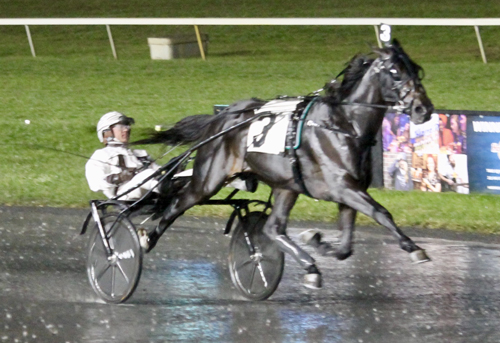
Since inception, the Breeder’s Cup Thoroughbred championship events have always been for 3-year-olds and upwards, providing sophomores a weight allowance of generally three pounds, though a filly challenging colts and older males would be allowed more.
In our Breeders Crown championships, we have separate divisions for 3-year-olds and older horses. Theoretically, the aged races are for 3-year-olds and up, and while over the years a couple of 3-year-olds have tested their elders, most stay within their own divisions.
At age 3, CR Kay Susie defeated the Open Mare trotters in Delaware, Ohio and Put On A Show unsuccessfully contested her Older Male Colt rivals in 2012.
OK, so how do the Thoroughbreds do it? In 2016, 3-year-old Arrogate cemented his sophomore status defeating 5-year-old California Chrome in a thrilling Breeders Cup Classic, while the year before
American Pharoah avenged his Travers defeat with an authoritative Classic win at Churchill Downs. Other notable 3-year-old Breeder’s Cup Classic winners include Curlin (2007), AP Indy (1992) and Sunday Silence (1989). In all, 3-year-olds have been victorious in 12 of the 35 Breeder’s Cup Classics.
In checking the nine Breeder’s Cups staged in 2018 for the various distances and track surfaces, we noticed the following appearances by the sophomore set:
The third race seven furlong Filly and Mare Sprint included a trio of 3-year-olds including the winner Shamrock Rose.
Next was the fourth race five-and-a-half furlong Turf Sprint which featured two 3-year-olds, one of which, World Of Trouble, garnered second.
The fifth race Dirt Mile included a quartet of 3-year-olds. One of them, Bravazo, finished third behind 4-year-old race winner City Of Light, who just annexed the mega-million dollar Pegasus World Cup at Gulfstream Park.
The sixth race mile-and-three-eighths Filly and Mare Turf featured five 3-year-olds, including Wild Illusion, who was a respectable second to morning-line favorite Sister Charlie, a 4-year-old.
The seventh race six furlong Sprint featured but one 3-year-old in Promises Fulfilled, who was unplaced behind the 6-year-old winner Roy H.
The eighth race one mile Turf included six 3-year olds including the winner Expert Eye and the third-place finisher Analyze It.
The ninth race mile-and-one-eighth Distaff featured three 3-year-olds including the winner Monomoy Girl.
Next up, race 10, the $4 million mile-and-one-half Turf Classic had but two 3-year-olds including the filly Magical Ire, who finished second to even-money morning line choice, the 4-year-old Enable.
Lastly came the $6 million Classic (Race 11) at one-and-a-quarter miles which included six 3-year-olds. None of them finished in the top three. Triple Crown champion and 2018 Horse of the Year Justify had been scheduled to attempt to emulate companion Triple Crown champion American Pharoah, but sustained an injury in early summer and was retired. It would have been interesting to see him go against the 5-year-old winner Accelerate.
Of late, Standardbred 3-year-olds have tested their elders in the late season TVG races at The Meadowlands. Last year Tactical Landing and Six Pack finished one-two in the Open final. The Breeders Crown 3-year-old filly champion Percy Blue Chip unsuccessfully challenged Shartin N and company in the Open Mares TVG class, while in 2017 What The Hill avenged his Hambletonian calamities beating the older boys in the TVG final.
It is recalled that as a 3-year-old Rainbow Blue was deliberately entered in a late-season Mares Open for her final start as a sophomore and thoroughly thrashed the older ladies.
Years back, the likes of Scott Frost, Shadow Wave, Bullet Hanover, Most Happy Fella and True Duane all challenged the older boys in those American Classic’s at Hollywood Park and as recently as 1976, 3-year-old Oil Burner bested Rambling Willie and company in that year’s Classic edition. Niatross during his late-season sophomore histrionics made short work of the older guys at Hollywood Park in 1980.
Thus, just like our Thoroughbred cousins, there is ample precedence for 3-year-olds to tackle older foes, though the question would be if there was only a 3-year-old & up race and no exclusive sophomore division, could the “Crown Classics” be funded?
Breeders Crown funding commences with mandatory stallion nominations to which the produce of individual stallions receive initial eligibility. Individuals are then sustained first via the May 15th yearling payment. Horses of racing age are then re-nominated via the Feb 15th payment of their individual year then sustained with the accordant payments through March and April, though each age division may differ slightly in the number of sustaining payments. Lastly, supplementary fees (if any) and starting fees complete the purse pots.
As stated above, sustained 3-year-olds can enter the aged divisions, which actually are for 3-year-olds and up, although most stay at their own level. Sustained fillies and/or mares can enter the male divisions and on occasion the Aged Trot has been combined for both sexes.
What would happen if there were only “Classic” divisions for 3-year-olds and up in terms of sustaining payments is certainly open to debate. The stallion nominations, yearling nominations and 2-year-old nominations would remain as is. The aged nominations would remain as is. The question is whether enough 3-year-olds get nominated to ensure that the then combined purse remains adequate.
Many a leading trainer on the Thoroughbred side has been quoted as saying the Breeder’s Cup Classic might be the most important stop on our calendar after the Kentucky Derby. Would our Standardbred conditioners think likewise? That’s hard to say, but one gets the impression the existing spectators would relish the idea of true championship Breeders Crown Classic events. And if that is the case, it’s likely that the Crown Classics concept could really catch on.
Breeders Crown COO Moira Fanning said owners were canvassed and indicated they wouldn’t race 3-year-olds versus elders unless the purse were triple what it generally is ($250,000 to $500,000 depending on the division) and getting there might take some doing. Owner Marvin Katz mentioned that he would stake if they were combined but would have reservations about entering.
But then there’s the concept about being “good for the game”. No visiting team wants to play in Green Bay at night during December and January, but they do because the networks demand it and it’s good for the game.
Breeder’s Cup Day has been since inception the day America and/or the world goes to the races. Could we do likewise? That is the question. Personally I think we should, but how to get there is not something this old mind can’t figure out.