

Harness: Coronavirus wrath could have a lasting impact on the industry
By the time Spring rolls around the Harness Racing world is usually enjoying the start of stakes racing at Yonkers Raceway where the top older pacers gather for the Borgata (nee Levy) and Matchmaker series. Yet as the seasons change on March 20 we are left in limbo due to the Coronavirus, not just in terms of when we’ll see the best the Standardbred sport has to offer but also when it comes to the normalcy of a steady racing schedule.
The list of tracks that have suspended live racing grows by the day, and from The Meadowlands to Buffalo, there really is no telling when action will resume. We can however be thankful for what remains. Cal Expo, Northfield, Miami Valley, Rosecroft, Saratoga and Rideau still give fans of the sport something to look forward to on a daily basis.
While the races at Yonkers kick off the stakes season in some ways, many believe the Dexter Cup at Freehold on the first Saturday in May, which highlights 3-year-old trotters, is the true start of Grand Circuit harness racing.
The Hambletonian Society manages payments for the Dexter Cup and President John Campbell told HarnessRacing Weekend Preview that they would meet via teleconference on Sunday (3/22) to discuss the stakes schedule. "There are obviously going to be adjustments to the stakes schedule," said Campbell to Kathy Parker.
At issue is how to prepare for stakes races when there is no way for a trainer to know what stakes may remain, when tracks may open, and when to have their horses tight for a peak effort. Whether training in the Northeast or Florida, trainers are treating things as mostly business as usual as of this moment.
“Fortunately the 3-year-olds haven’t started racing yet, so as far as preparation for stakes season it hasn’t really affected us yet. We are going to continue to train them down and they are a month or so away from qualifying anyway,” said trainer Linda Toscano, who stables at Magical Acres.
“We’ll just forge ahead and get them ready to the best of our ability, because when it does open up, I really doubt that they can change the whole stakes calendar. We’ll just take it one day at a time,” said Toscano, who admits there will be a financial toll if things don’t go as planned.
“It is seasonal when you train young horses,” said Toscano. “It’s a situation where you are used to carrying a stable through April, but then we have to make money. Same thing with the owners. They’ve invested a great deal of money and only get one shot at this. They only have one 3-year-old year.”
Trainer Nancy Takter, who runs her operation on her father’s Millennium Farm in New Jersey along with fellow trainer Per Engblom, is a bit isolated from the hustle and bustle of training centers. She’s been to The Meadowlands to qualify or race a few but wasn’t planning to compete with her stable until April.
“I’m aiming to qualify most of them the first or second week of April, so hopefully we have a track to do that,” said Takter. “We have a really good training track. We’ve trained on it in 1:49, so really we can maintain our horses. Between Per and I, we have enough horses that we can have our own races to keep them sharp. So I’m really not that freaked out about it.
“They’ll be ready to roll when it’s time to go, that’s for sure,” continued Takter about the preparedness of her stakes horses like Manchego, Tall Dark Stranger and Kissin In The Sand.
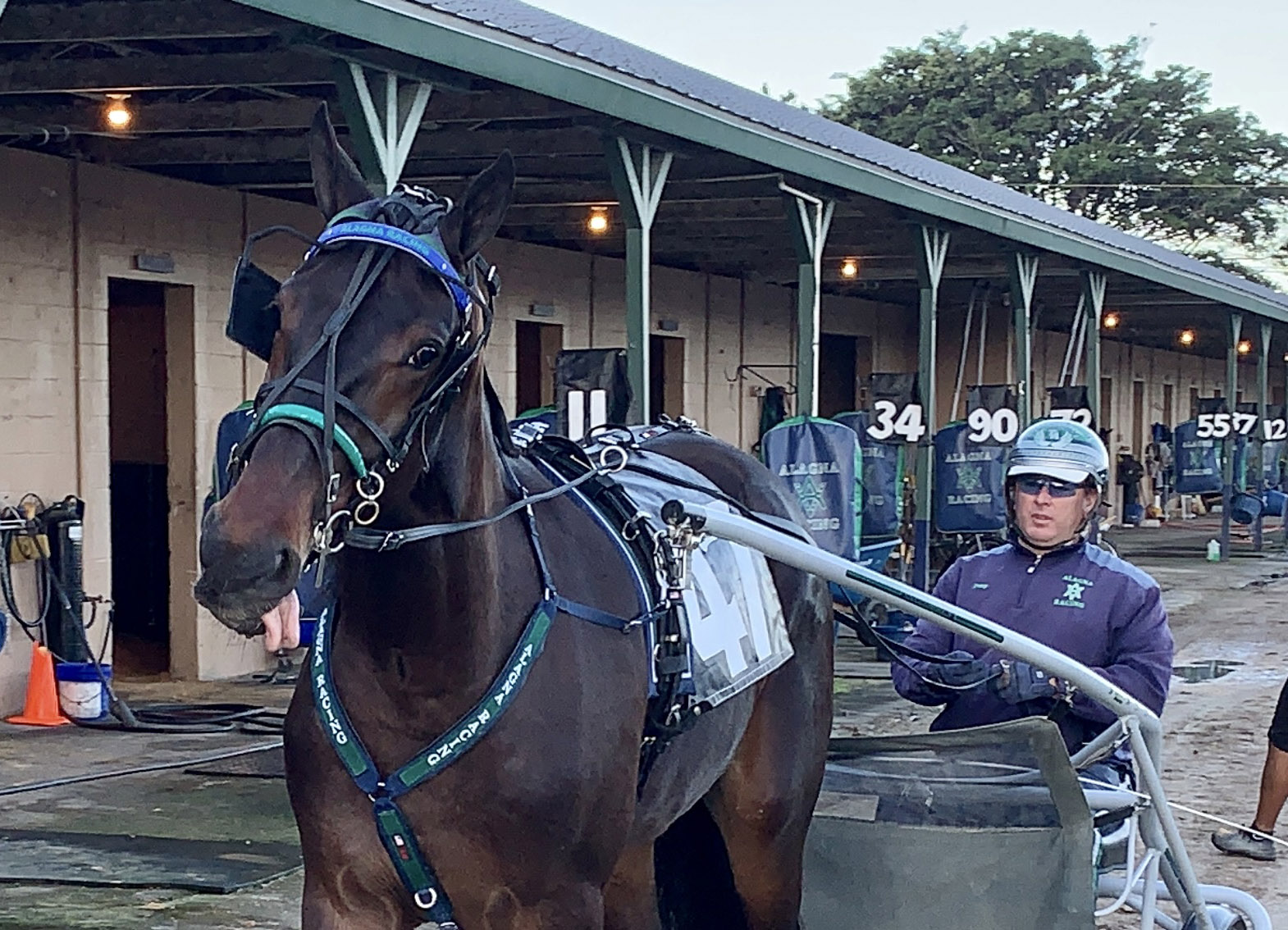
Tony Alagna has about 100-head down at Sunshine Meadows in Florida and the only main change he has planned involves travel arrangements for his team of 3-year-olds.
“Normally they would go up the first week of April, but with the current situation they are better off here. We’ll just keep putting miles into them like we normally would,” said Alagna. “We’ve been blessed. Everyone is healthy and we aren’t going to try to shuffle people around to risk anything.
“I’m sure in the back of everybody’s mind the big races start in the beginning of June but it isn’t quite as important as the health of the nation.”
Thankfully, trainers like Takter, Alagna and Toscano have a good six or seven weeks before they have to qualify for state Sire Stakes races and even longer before major sophomore races like the North America Cup hit the schedule in June. For local horsemen who make their living in overnights at tracks like Monticello, Plainridge, Freehold and others, the situation could be more dire. When you are racing for average purses well under the $10,000 range, missing even a week could make a huge difference in paying the bills. Staring at the possibility of two, three four or more weeks without the opportunity to earn money could be catastrophic.
“Hopefully sometime in April,” said trainer Stacy Chiodo on Facebook when posed with the question as to when racing might resume by fellow trainer Taylor Gower. “[I] don’t know how many can survive any longer than that.”
Realizing the situation some trainers and caretakers could face, owner Adriano Sorella made a touching proclamation on Twitter. “I've seen many concerns for people in our industry. Also concerns if we are not racing, will trainers and caretakers get paid. As an owner, I will not take a training rate cut. In addition, I will speak to the trainers and have paddocks and win tips added even if we are NOT racing,” said Sorella.
As brutal as the blow to the industry has been from the Coronavirus, perhaps no family in the sport continues to be hit harder than the Fuscos. The 55-year-old Carmine Fusco, a long-time trainer with 2,531 career wins, fell victim to the deadly virus on March 18, just days after his sister Rita was taken from the family and hours before his mother Grace succumbed to the virus. Four more family members remain hospitalized due to the pandemic.
Fusco became the second harness racing mainstay to test positive and die at the hands of coronavirus. John Brennan, SOA of New York and USTA Director, died on March 10.
“The way this has affected us is that we all know somebody and in our case we all know two people who were affected by it,” said Toscano. “It is a little on the scary side. Without being an alarmist, you have to be prepared.”
The future is clearly uncertain for not only harness racing but also many industries around the world. We must bear down in these tough times and hope that we can come out of the trenches sooner rather than later.