

Harness: Changing the amount racing to reflect the current climate
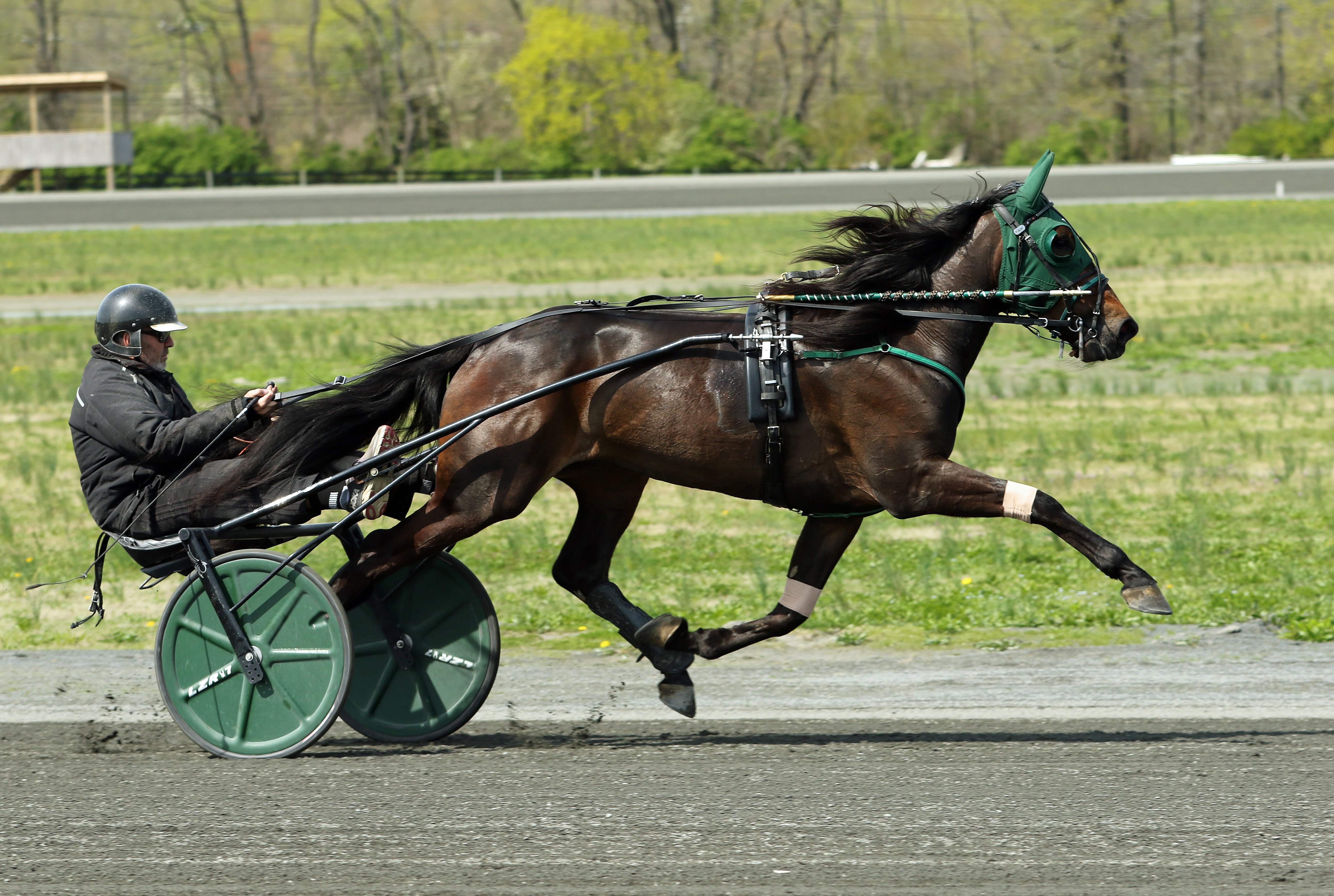
Trainer Noel Daley may be old school in terms of the sports' conditioners. In speaking with him last week about his returning 3-year-old trotting filly Anoka Hanover's schedule, Daley said, "I'm going to qualify her at Harrah's Philadelphia. I'm not sending her to The Meadowlands to qualify in 1:51-1:52. That's just crazy."
While some of the larger stables appear more eager to send their returning stars to The Meadowlands to get closer to race speed, Daley goes back to a time when qualifiers required passing a timed test that assured the Judges and the racing public that the horse could go fast enough in a pari-mutuel race.
The message I got from Daley was not whether he believed his horse could go fast enough, but the opinion that when money wasn't on the line, "What's the point?"
While Daley was concerned about the longevity of his horse and not putting too many hard miles in when money wasn't riding, it raised the overall question as to what many trainers are actually doing in pari-mutuel races these days. Take a quick look at Monday's (4/19) finals of the MGM Borgata and Blue Chip Matchmaker as a case in point for what happens when the big money is down comparatively speaking to what occurred in a large majority of the series' five preliminary legs.
Just the picture of the first turn in the Borgata is all the evidence any racing fan would need to understand what a "contested" pace looks like in contrast to legs that were more reminiscent of qualifiers, with horses getting easy leads and tucks abounding.
Give credit where it is due as drivers Yannick Gingras, Tim Tetrick and Dexter Dunn, arguably the best of the best, had their horses firing into the first turn. Dunn, who is rarely seen using the whip before the stretch drive, was desperately calling on Western Joe to keep his position into the bend under assault from Tetrick with Backstretch Shadow and Gingras, who put eventual race-winner This Is The Plan into an all-or-nothing four-wide march.
What the early action proved to me is just how good our horses are and how impressive our drivers can be when everything is on the line. The preliminaries were examples of what racing has become when trainers, drivers and owners recognize the opportunity to earn money while not pushing horses to their limits.
As someone that routinely watched qualifiers back in the 1970's and 1980's hoping to find a diamond in the rough only going 2:06 when capable of pacing in 2:02, today's trials have a completely different feel. What's surprising as an industry is that our horses are going as much as 15 seconds faster in a mile just to qualify, and that somehow we still expect them to race weekly and at 100 percent every single time. Clearly the connection between the horses' well-being, the trainers' well-being and the publics' well-being has been severed. Our horses must go faster to win and that requires maximum efficiency every time out. That wasn't the case back in the 1970's and 1980's where a slower mile naturally gave more horses a chance to win.
It was not a shock that trainers like Daley and many drivers tend to be far more cautious when racing horses in overnight events with an interest on preserving them for a longer season. In this sense trainers want to maximize earning power. Drivers want to maintain the connections to top trainers. Left out in this equation are horseplayers, whose only interest is to get a decent run for their money even when blindly unaware of the motives of both trainer and driver.
Some have suggested slowing down the races as an answer that might make each individual race more competitive. It's hard to imagine any positive benefit to our horses should they be forced to pull drivers around in wooden sulkies. as opposed to today's more aerodynamic bikes. On the other hand, one has to wonder whether it would be in the horsemens and horseplayers best interest if horses didn't race as often, or for that matter only raced for wagering purposes when they were ready to compete at 100 percent.
To me the basic question becomes: Does this industry as a whole want to do best for all parties involved each and every day or is it just something we have reserved for major stakes racing?
If it's clear that our horses are no longer capable of racing at these speeds competitively on a week-to-week basis, why do we stubbornly card the same races week-in-week-out?
It's hard to blame the multiple drivers I spoke with prior to the Borgata preliminaries from suggesting they were trying to win races when clearly post and competition would force them to intentionally be compromised. I've been around long enough to understand no one wants to be quoted saying "I'm going to take it easy with him this week and race from behind." From a perspective of integrity, it's comical that the industry as a whole can justify what it is essentially sanctioning as normal behavior.
If ever there was a time to reflect upon the quality of racing we expect people to bet on, it should be now. The horses have changed and it's imperative that we do everything in our power to limit their starts and treat them more like thoroughbreds. Just look at the times in thoroughbred racing over the last 50 years and look at ours. It hasn't become obvious how the dynamics of our races have shifted yet we continue to stay with the same conditions and same formats that no longer yield the same outcomes for those watching and wagering.
In the Northeast it's perhaps time for The Meadowlands, Pocono, Yonkers and Harrah's Philadelphia to create a "single" condition sheet where there is no overlap for individual classes. Let each track card as many claiming races as they can but when it comes to conditioned events, limiting options may be the motivational tool that inspires horsemen to only enter a horse that is ready to win.
In the end it's not necessarily about having fewer races or less opportunity. It's about maximizing the talents of our horses while assuring the betting public that 100 percent of the field is not just saying they are trying to win but actually is.
To make it work the number of races carded for specific classes should be reduced each month and purses in each should be dramatically increased. Money has to be the motivating factor, but it can't be used just to benefit owners, trainers, drivers and breeders. Bettors must benefit in the end.