
Harness: Bettors deserve a fair shake with disqualifications
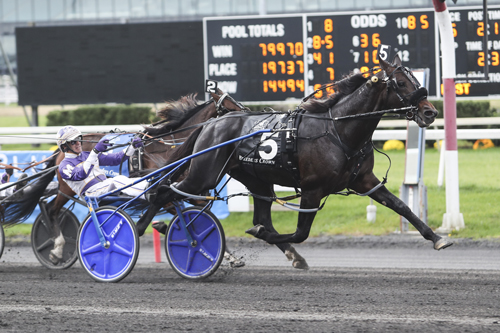
There have been a few interesting rulings announced in the weekly "Fines and Suspensions" release on the USTA website that have received what I consider a low level of coverage and perhaps deserve such. The idea that two significant stakes races found horses to be in excess levels of substances in their bodies that they were disqualified in post-race testing generally brings some individuals in this sport to the forefront. On these two occasions, those vocal in the past have been eerily silent.
Purses will be redistributed, and the offending trainers will take their minimal suspensions and the sport will go on as it has for decades. These infractions, considered minor to some, will impact the winning owners, who will lose some purse money, and help others who will gain.
It was noted last week that Tim Tetrick, who turned an incredible last-ditch 10-win afternoon at Harrah's Philadelphia into 2021's leading purse-winning driver title, may in fact lose that position when purse adjustments are made from the recent disqualifications. Once again though, lost throughout the analysis is the very fact that minor or major infractions of the rules make no difference to bettors who get no reconfiguring of the posted results on the tote board. In the case of gamblers there's no second chances, no appeals process and certainly no money back from anything that happens after the race becomes official.
In the past it would have been hard or near impossible for players to retain their losing tickets forever in the hope that a racing commission may turn their second- place finishers into winners in the future. Yet that isn't exactly the case for many of today's gamblers. Given the wide swarth of players wagering online through hubs that retain records for months and perhaps years, there is technology available to credit players after the fact and give them the exact amount of money they would have received had the disqualification taken place on the day of the race.
If we're in the business of correcting our mistakes and moving forward with an understanding that we need the gamblers to grow, there's just no reason why these USTA postings can't be read by horseplayers with notifications to them of how the order has changed in a race and all of those who wagered to win or on exactas will get something back to at least recognize the revision.
It shouldn't be lost on the horse-owning and racing public that in one of those races that found a post-race dq in the end, there was a long pre-official inquiry where the race winner was taken down for an alleged infraction that many believed to be dubious. The reshuffling of the order of finish could ultimately give the actual third-place finisher the victory and the 50 percent purse distribution. It's safe to say that none of those who bet the horse that afternoon will see an extra penny. For them it was a loss when the race became official that would not be reversed over time.
► Sign up for our FREE DRF Harness Digest Newsletter
Given how often ADW's offer bonus money to players who wager a certain amount at a given track, it seems maybe the USTA could join in the process of at least offering refunds, perhaps with a codicil that money must be re-bet at the same track in a fixed amount of time. Given how effective Sports Wagering hubs have been at offering money-back guarantees, logic would state that any free money will support a greater churn in the handle.
JAYWALKING: It was refreshing to see The Meadowlands make changes in its stakes program to get more action out of drivers in elimination races. While a change by itself doesn't guarantee behavior will radically be altered, nevertheless it's the exact reaction we need to stimulate those in the business to put more effort into elimination races. Post position draws in finals matter and perhaps the modifications that offer an NBA draft-like weighted draw will spur the activity and make elimination races a touch more exciting this year and in the future.
While many of the sports' leading trainers have slipped off for the winter to warmer climates, those who brave the elements up north will deal with adverse conditions for the next few months. Cancellations of full cards have become commonplace, and I'd like to see horsemen get the benefit of their efforts as opposed to the burden with nothing to show for it. When a full card is cancelled, why can't the entire card be rescheduled within a week's time with the purses for each race doubled? Instead of saving the money for races, say later in the summer, why not give the money back to those who had to deal with the elements and had to turn the truck around on icy roads?
Maybe it's just me, but how has touting become so commonplace and respectable? Back when I started in this sport "tout" had a bad connotation and quite often I would have to say I'm not a tout but just a handicapper.
Watch any news or sports program these days and the long range of opinion pieces with "experts" allowed to publicly voice the outcomes with such perceived accuracy, whether it be of elections to be held three years later or a sporting event, is comical to me, yet believable to many. In the old days the racetrack tout had to wait just minutes to see if he was right or wrong. Today, given free voice to analyze "current data," the now-called "professional" can magically forecast what a mass population will do three years from now with certitude?
At least in horse racing we're asked to review what horses have done within the last week and make judgments what they will accomplish this week. Our data is current and our races are current. To poll a population in 2021 and ask what they will do in 2024 and consider that data meaningful is something even the worst of touts years ago wouldn't want to risk their reputation on.
Somewhere upstairs the late Gerry Mastellone, linemaker and author of "The Green Sheet" at Yonkers Raceway for decades, is looking down bewildered at what's on TV. "You've got to be kidding fellas," he would say.