
Harness: Are stakes payments necessary?
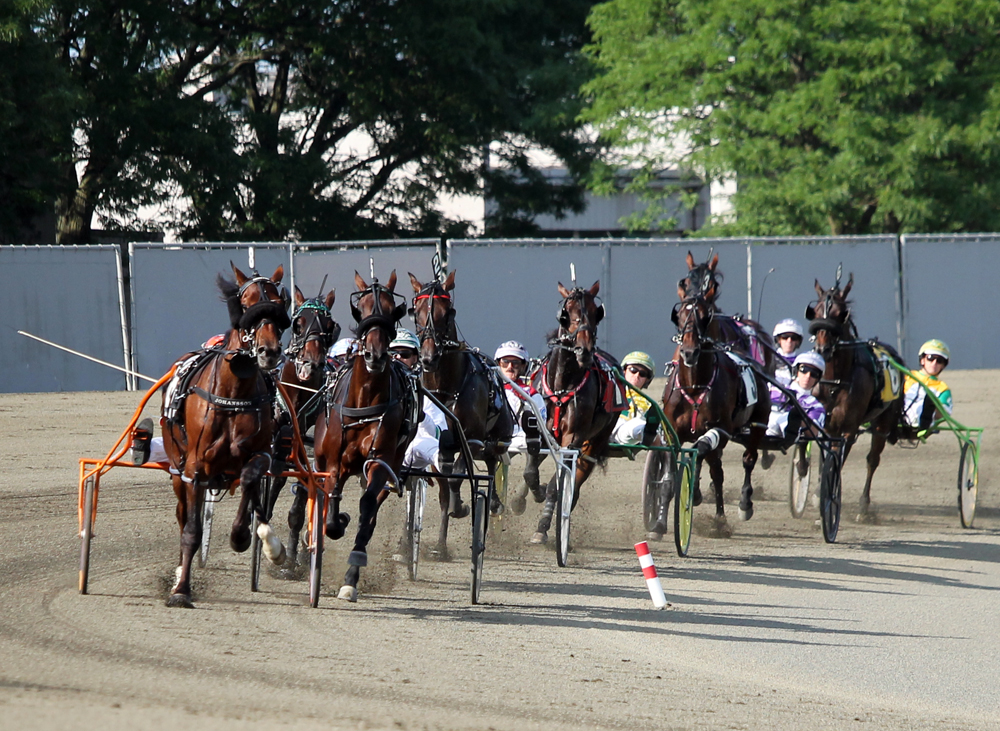
The title of this column is a question I've been wrestling with internally and has led to a multitude of additional queries on whether payments are really necessary in harness racing or just ingrained as part of the system never to be altered.
How did the system of stakes payments begin?
By definition alone stakes races are contests where at least a portion of the prize money is put up by the owners of the competing horses. According to Britannica.com, the earliest races were match races between two or at most three horses where the owners would provide a purse by way of wagers.
It seems our current system has its roots in the ole "my horse is better than your horse" notion from back when horses where the main source of transportation. Two likely rich people would put up money and the rest was up to the horses. While we've gotten away from match races in 2022, in many cases we are still talking about wealthy people who are putting up money to race against each other. In some ways this is no different than the pari-mutuel wagering system where individual bettors are basically playing against their fellow bettors.
What is the purpose of stakes payments?
The concept could be to create large pots for horses to compete for throughout the year, similar to a bunch of people who get together and play poker and put aside a small percentage of each pot during the night so they can play one hand at the end of the night for a large sum and allow one person to walk away with a windfall. Or you can compare it to a bowling tournament. The players put up money, perhaps a sponsor adds money, the bowling alley takes some money to host, and away the tournament goes.
Along the lines of creating a large pot, since there is clearly some skill to training and yearling selection, the idea of making payments could certainly be to reward those who are able to perform better each year. That said, the thought-to-be-best yearlings at sale time aren't always the leading earners come stakes season. One could definitely argue the skill level of picking yearlings, just as they could whether poker is a game of skill or luck. There are certainly elements of both in horses and poker. The question is which characteristic is more dominant, and that is difficult to answer.
"I always explained my job to people as I run a poker game where we hold the funds until the track contests the races and then we distribute it," said Tom Charters, former head of the Hambletonian Society and current Executive Vice President. The Hambletonian Society currently administers 147 stakes races at 13 North American tracks according to its website. Included in the list is of course the most prestigious race in the world -- The Hambletonian -- for 3-year-old trotters.
Perhaps the thought process is for everyone to have a stake in the game. Breeders make the first payments, owners make a bunch of payments and tracks contribute added money to create a large pool. It certainly makes some sense for everyone to put up money, but is it really everyone? This is no way is suggesting they should, but what money do drivers or non-owning trainers put up? So, everyone really isn't invested, unless you count time as an investment, and perhaps that is a viable contributing asset.
Is it possible that stakes payments simply exist so that the purses can be large enough to attract public attention? Or large enough to attract new owners to join the sport? While at some point both were likely legitimate reasons, only the latter really applies in 2022 since the 'Average Joe' hardly pays attention to racing and likely wouldn't know the difference between the importance of a $200,000 race or a $500,000 race. Purse is simply not a marketing tool for the public anymore. While it is probably in the millions, even I couldn't tell you what the purse is for the Kentucky Derby or a Breeders Cup race. And no one is going to tune in because it is $1.5 million versus $500,000.
From a different perspective, Nick Salvi, Stakes Coordinator for The Meadowlands and President of the American Harness Racing Secretaries, made a strong point that the higher payments for Grand Circuit stakes, considered the upper-echelon of the spectrum, help to give them more value to the horses.
"To me the Grand Circuit stakes are of substantially more value to a horse's overall body of work, particularly the ones that everyone wants to win," said Salvi, who conversely also recognizes that the numbers of some stakes are taking a hit as owners and trainers seek the most cost-effective spots to race and earn money. "You can buy a horse and race them regionally now and make great money without having to pay what it costs to race on the Grand Circuit. I keep a chart of our nominations each year and watch the ebb and flow of those. The older stakes hold up pretty well, and stakes like the Haughton are very expensive to race in. The younger horse stakes, because more people are taking the regional route because it makes more sense dollar for dollar . . . we lose some of those horses to the Sire Stakes."
What would change if stakes payments were drastically reduced or eliminated?
Without a doubt the most complained about part of the sport -- the cost of stakes payments -- would disappear. Talk to any major owner in the days leading up to February 15 or March 15 payments and all you hear about is the tens and hundreds of thousands of dollars it just cost them to make their horses eligible to races. Smaller owners are also affected by the system because they are often forced to pick and choose which stakes to enter due to costs.
"We usually start with 70 2-year-olds, 40 to 50 3-year-olds and a bunch of aged horses. As a barn we probably spend about $2 million in a year staking," said Mark Weaver, part of the Weaver Bruscemi team that works exclusively with trainer Ron Burke. "I would love for the stakes payments to be less but I don't know where the money would come from. Some races offer value and some don't. You have to pick your spots."
Tom Charters added that almost everyone picks and chooses stakes on at least some level. "Bob Key was the last of the people who would check the 'stake all' button," said Charters.
More importantly for the industry's health and survival, purses for stakes races would drop substantially without payments from owners and breeders. Whether that is acceptable or avoidable by reallocating funds is another story. Certainly with less earning power the yearling prices of horses would logically take a major hit and that would be a hard pill to swallow. But let's investigate further by examining some specific races and seeing how they would be affected. We'll select races from the same age and gait to make it an apples to apples comparison.
Meadowlands Pace
The 2022 Meadowlands Pace had 659 nomination payments by breeders in May of 2020 at $50 each for a total of $32,950 (there was one supplement on August 15 for $125). All of the remaining sustaining payments were on the owners: March 15, 2021 ($400); February 15, 2022 ($500); March 15 ($2,000); April 15 ($2,000). Then it costs $2,500 to enter the elimination and $5,000 for the final (you do get 1% of the final purse if you don't finish in the top 5 in the final. That was $6,000 in 2022).
It is worth noting that prior to 2014 the February 15 payment was $1,000 instead of $500 and the cost to enter the elimination and final was $6,000 instead of $2,500 and $5,000. According to numbers provided by Salvi, with the exception of 2019 when it hit a high point (51) since the fee changes, the Meadowlands Pace has averaged only in the high 30s in terms of horses eligible to enter the eliminations each year.
Back to the present, along the way there are opportunities to supplement a horse that wasn't nominated originally, but assuming your horse was paid from the start in 2022, the cost to make it to the final was $12,450. Here was the purse breakdown: $285,000 (1st); $142,500 (2nd); $68,400 (3rd); $45,600 (4th); $28,500 (5th); $6,000 (6th to 10th). So, best case scenario was a $272,550 profit and worst case was $6,450 loss. If you entered the elimination and didn't qualify your deficit was $7,450.
► Sign up for our FREE DRF Harness Digest Newsletter
The 2022 Meadowlands Pace had $300,000 of added money from sponsors. So if no payments were required from breeders or owners, and we eliminated the 6th to 10th payments since there is no more entry fee, the prizes would range from $150,000 to first to $15,000 for fifth, all profit to the owners. Of course that assumes that the cost of the elimination purses aren't removed from the added money, which really shouldn't happen since a large chunk of that money would be paid out if the race was a regular overnight race. A typical overnight for top 3-year-olds at The Meadowlands would go for approximately $30,000 and the eliminations went for $50,000, which could clearly be reduced to $30,000 if necessary.
The question becomes: Would you rather pay $6,450 to $7,450 for a chance to receive an extra $135,000 (winner) to $13,500 (fifth) or pay nothing for a smaller prize?
According to Charters, as a rule of thumb from the USTA, the standard added money for tracks is often about 30% of the total purse. "The Hambletonian is at least 40% but no more than 50%," said Charters. "The Hambletonian is lucky in that it almost always has the most horses and thus creates the biggest pool."
Max Hempt Memorial
The 2022 Max Hempt (Pocono) is scheduled for August 20 but is easy to figure out since it doesn't require eliminations, though it does have two consolation races which might complicate the numbers slightly. All payments for the Hempt take place in the year it is run. It costs $3,750 to maintain eligibility and then declining fees of $3,000, $1,500 and $750 depending on which race you get into based on earnings classification. The bottom line is it costs $6,750 to race for $300,000 in the final, $5,250 to race for $200,000 in the consolation and $4,500 to compete for $100,000 in the second consolation.
Total payments into the Hempt after April 15 were $217,000. All of the purses for the Hempt are guaranteed, so assuming that 24 total horses enter (eight in each race) on August 20, another $42,000 would be added to the pot. Removing the $259,000 in payments from the $600,000 would leave $341,000 available if the stake was solely reliant on the track's stakes account. If the money was split between three races -- let's say $200,000, $100,000 and $41,000 -- it would still survive but with a smaller purse scale.
Again, would you rather put up $6,750 to race for a winner's share of $150,000 or put up nothing to race for a $100,000 return? Pony up $5,250 to potentially get a $100,000 check or nothing to get $50,000? Are these not at least questions worth asking?
Carl Milstein Memorial
This Northfield Park stake is worth mentioning because it doesn't require any payments. The Milstein is an invite-only stake where 3-year-old pacers race for $300,000 with no financial commitment required. The track simply puts up the money and the horses/drivers/owners/trainers compete for it. This race is the other side of the spectrum and a potential different way to handle major races.
How would lower stakes payments affect participation?
A major issue which needs to be addressed is whether eliminating or lowering payments significantly would increase participation. Logic would clearly state if 660 yearlings make a payment for the Meadowlands Pace initially and that number is cut by a third to 210 by the following March, and even further to just 16 entering the elimination, a reduction in cost has to result in more interest. Consider the numbers that race in Sire Stakes. The cost to make a horse eligible as a 2- and 3-year-old in New York is just $1,300. For that you get to race in six to eight legs each year for purses ranging from $20,000 to $100,000. The average purse (as of July 21) in the 3-year-old colt pacing division this year is $48,468. In the four races contested so far 38 horses have raced, and that is New York only, compared to 17 in the North America Cup and 16 in the Meadowlands Pace. While it perhaps isn't a perfect example, lower costs equals more horses. Or does it?
"In the early 90s we revamped the Breeders Crown and reduced the guaranteed purses for 2-year-olds to $300,000 and result was fewer payments," said Charters. Indeed, from 1991 to 1993, only the 2-year-old colt pace in 1991 went for more than $366,000 while on average the same finals have gone for $600,000 each over the last decade.
I'm not sure that the elimination of all payments makes sense, mainly because of the aforementioned point that lowering purses dramatically will have a major impact on the economics of the industry. Yearlings will sell for less money and it could deter future investors from entering the sport at the highest levels. That said, a simplification and reduction of payments combined with perhaps a reallocation of purse funds could provide the perfect happy medium.
Here's a suggestion using the Meadowlands Pace as an example:
May 15 Yearling Nomination - $50; March 15 2YO Payment - $450; March 15 3YO Payment - $500; Elimination Entry Fee - $1,000 (supplement fee for ineligibles - $25,000).
For a total cost of just $2,000 you could enter the Meadowlands Pace. Using the 2022 numbers and assuming no additional horses pay in despite the reduced costs (somewhat unlikely), there would be $158,000 in additional payments added to the $300,000 in "sponsor" money. Now you'd be paying $2,000 for a chance to get a $229,000 first-place check (no 6th to 10th payouts due to reduced fees). Isn't that more appealing for the average owner?
Nick Salvi confirmed that reduced payments wouldn't necessarily affect the $300,000 of sponsor money for a race like the Meadowlands Pace and even agreed that perhaps reduced payments are not a bad thing assuming the final purse could be kept at a reasonably high level.
"If the final purse was lowered to $500,000 instead of $600,000 it isn't necessarily a bad thing," said Salvi. "My personal thoughts are that the Meadowlands Pace is one of a few special races and needs to be treated as such and go for a lot of money. That race is a stallion-maker race. But it is a well-made point that if you make the payments lower it will nudge the total payments back up towards the number you got before reducing the payments. Those are things that you just have to try and see if they work. When you are messing around with something like the Meadowlands Pace, you are a little reluctant with trial and error because you want to keep it at the quality. But Jeff [Gural] is always willing to try something."
Just as important as making stakes affordable for the smaller owner, doesn't lowering payments also greatly reduce the investment a major owner has to post every year?
Trainer Nancy Takter pointed out that she often has to lay out large sums of money to post entry fees. "It is hard to get multiple owners to all send the money in on time," said Takter, who will have to lay out $60,000 on Saturday (July 30) to enter her horses in the Hambletonian and Oaks eliminations at The Meadowlands. She added that lowering stakes payments is interesting but she does understand that money is needed to guarantee the purses at a certain level.
Imagine if you had three top 3-year-old pacing colts and it cost $25,000 to stake each now but we could reduce that to $10,000? Yes, you'd be racing for slightly reduced purses but your costs, especially for the person who buys many yearlings, would be greatly reduced as well, especially during those early months of the 2-year-old and 3-year-old year when your horse could be an unknown.
Let's keep in mind that the biggest payments -- final sustaining fees and starting fees - for races like the Meadowlands Pace, North America Cup, Adios, etc. are made by very few horses compared to the numbers that first nominate as yearlings or even those made eligible as 3-year-olds. Eliminating large payments at the end of the process can only increase participation while having little effect on the final purse because so few horses are making those larger payments as the race gets closer.
Consider that in the 2022 Meadowlands Pace multiple owners paid part of the $2,500 elimination entry fee on more than one horse. At least one owner paid part of the fee on four horses! At some point, aren't you racing for too much of your own money?
Mark Weaver, who is co-owner of two of the 12 horses entered into the Adios eliminations that took place July 23 at The Meadows and who nominated more than 10 to the race, agreed that to an extent they are racing for their own money, but he also felt the system allowed for options and decisions for all types of owners and horses. "There are C, B and A-level stakes. People have the opportunity to race in smaller stakes like the Keystone Classic or Liberty Bell or in the Grand Circuit races. Right now we are deciding whether to pay $15,000 to start in the Hambletonian or $500 to start in Kentucky. It's basically poker. Do you want to sit in the $1/$3 game or the $10/$20 game?" said Weaver the day before Hambletonian entries were due.
Some organizations might balk at this thought but maybe siphoning a bit from the overnight purse account to fuel stakes makes sense? Granted the United States model for sustaining the industry isn't to rely solely on wagering income, but strong stakes cards do increase handle. These increases vary depending on the track, like The Meadowlands could see a $2 million bump in a single day while Yonkers or Harrah's Philadelphia might see a $300,000 bump, but people do respond to good racing versus regular overnights and the money seems to be available.
Consider that the average total purses per card for the U.S. in 2022 is $137,611 (according to ustrotting.com as of July 24). That number is up an astonishing $20,000 per card over 2021. Of course some of that is a result of certain regions having more money than in the past and continuing to grow, but maybe overnight purses have grown high enough for tracks that host major stakes to transfer some of that to the stakes account. Pocono, for instance, on a recent Tuesday raced for $157,000 over 14 races. If each race was cut by $100, how much affect would that have on the overnight races? Now take $1,400 and multiply it by 136 racing dates and you have $190,400 extra for stakes. Add a portion of that into the Hempt purse discussed above and we are inching closer to the current purse while reducing costs for all owners.
If a horse could remain eligible and compete in the North America Cup, Meadowlands Pace, Adios, Cane, Hempt, Little Brown Jug, Tattersalls, etc. by paying $15,000 instead of $40,000, wouldn't that increase participation and ultimately the quality of competition in each race? You'll notice no mention of the Breeders Crown in the list and that's by design. Since it is a series of races where a payment can gain you eligibility to later years and also one that doesn't race at just one track, the system doesn't work the same.
Some people may dismiss the entire concept as "crazy" talk from someone who has never staked a horse, bought a yearling or run a racetrack. Ultimately it's just an idea, one that may actually work and give the "little guy" a slightly better chance to play at the top levels. Everyone can agree that more participation leads to a healthier industry.