

Grass is greener as Fair Grounds begins meet
 RACE REPLAY IS NOT AVAILABLE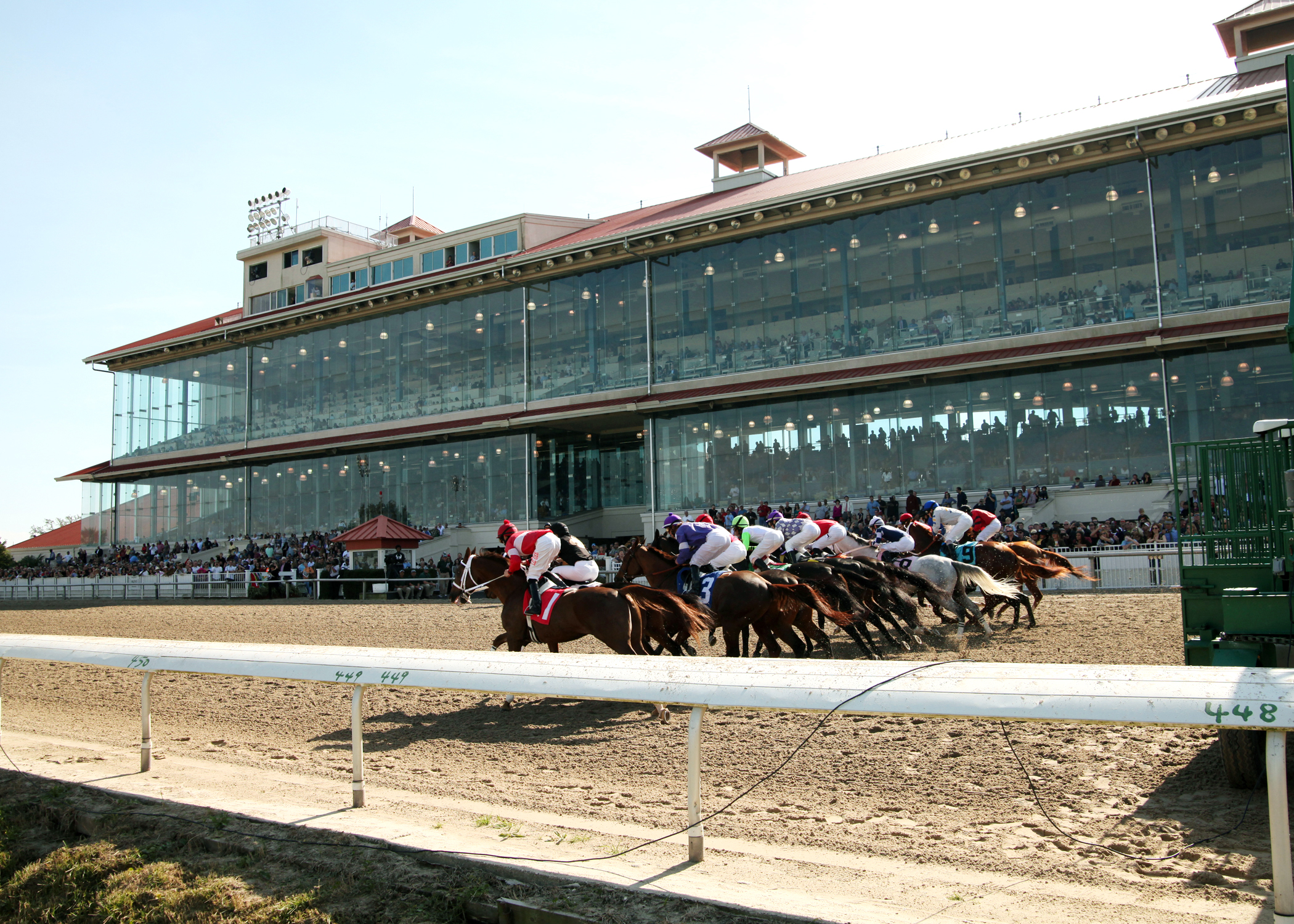
The Fair Grounds 2014-15 racing season ended with a bang, and the historic New Orleans racetrack hopes the energy from last March carries over to this November.
Fair Grounds launches an 81-day race meet Thursday on far firmer footing than it began one year ago. The track bottomed out during the 2013-14 season, when it twice cut purses, saw its lowest number of starters per race in recent history, and limped through the meet with a worn-out turf course that wasn’t draining properly. After the season, state and local legislators made clear to Fair Grounds’s parent company, Churchill Downs Inc., that the status quo was a no-go.
Fair Grounds’s average daily all-sources handle rose 10 percent from the 2013-14 trough, and the vastly improved turf course drove that improvement. Fair Grounds ran 230 grass races last season, up from 149 the previous year, and averaged 9.12 starters per race on grass. By March, the betting public appeared to have noticed the positive changes: All-sources average daily handle for that month rose about 24 percent compared with March 2014.
“We really just want to pick up where we left off last season,” said Fair Grounds president Tim Bryant.
Fair Grounds plans to hold overnight purses steady from last season while putting more money back into stakes. In all, 53 stakes worth $6.43 million will be offered during the meet, while the March 26 Louisiana Derby is back up to $1 million after being lowered to $750,000 this year. Other major stakes days are Louisiana Derby Preview Day on Feb. 20 and Road to the Derby Kickoff Day on Jan. 16.
While 400 to 500 horses intended for winter Fair Grounds stabling have yet to arrive, Fair Grounds’s stables will be full this winter, and stall applications were up from 2,400 for last season to 3,100 this year, according to Jason Boulet, who since last season has been promoted from racing secretary to director of racing.
“There was a lot of uncertainty last year, but we built some confidence from last season, and I think that’s where the extra stall apps come from,” Boulet said.
Roger Brueggeman, who trains almost exclusively for Midwest Thoroughbreds, is the big new outfit at this meet. Brueggemann has 40 stalls, and the other trainers at or near the maximum number of allotted stalls are Tom Amoss, Steve Asmussen, Karl Broberg, Bret Calhoun, Ron Faucheux, Larry Jones, Joe Sharp, Al Stall, and Mike Stidham.
For better or worse, Fair Grounds has culled outfits that didn’t start enough horses, according to Boulet. “There was the reputation we had trainers here to winter up, take their time, and prepare for spring,” he said. “We’re changing that philosophy. We need production.”
Fair Grounds’s horsemen must adapt to new, more restrictive Louisiana medication rules. In August, the Louisiana Racing Commission adopted medication protocols recommended by the Racing Medication and Testing Consortium that establish withdrawal times and threshold levels for permitted therapeutic drugs, and those rules took full effect Sunday. Medications like clenbuterol must be withdrawn much earlier than was the case as recently as March, and Fair Grounds takes entries seven days in advance of races to try to avoid accidental positives.
The jockey colony will number about 40 to start the meet, but last season’s leading rider, James Graham, is in California. Robby Albarado, Shaun Bridgmohan, Richard Eramia, Florent Geroux, Leandro Goncalves, Brian Hernandez Jr., and Miguel Mena all should win their share. Newcomers include Manny Esquivel and Jose Valdivia Jr.
Fair Grounds averaged an improved 8.35 starters per race last meet, which drove a decline in winning favorites, down to 34 percent after peaking at 41 percent two meets ago. The main track, in both sprints and routes, had an inside post-position bias during 2013-14, but that smoothed out last season. The turf course, once the province of outside closers, played evenly last season. And best of all, it could actually be used most of the time.