

Fasig-Tipton Saratoga: Optimism high as yearling sales season hits stride
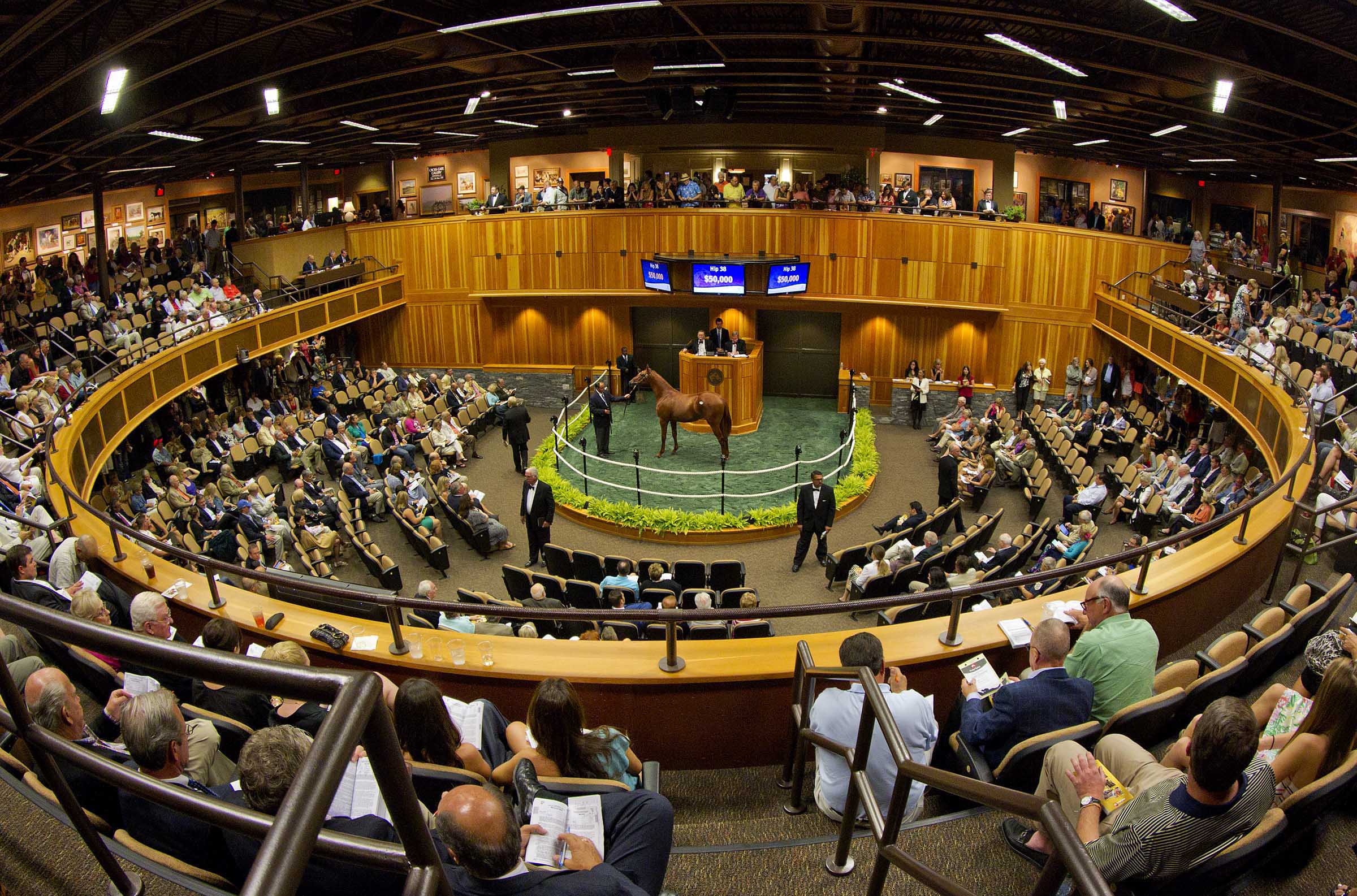
The domino effect caused by the coronavirus pandemic rippled with increasing speed through the Thoroughbred bloodstock industry in 2020, disrupting the North American juvenile and yearling sales seasons.
The travel and gathering restrictions put into place resulted in cancellations, postponements, or consolidation of sales, and the surviving auctions had declining figures amid a disrupted racing schedule and a climate of economic uncertainty.
The turn of the calendar to 2021 was welcome, and indeed, fortunes have been turning. The juvenile sales season, which concluded in June, came roaring back with a return to a normal calendar and market enthusiasm. The sales not only posted gains from 2020’s depressed marketplace, in some places they posted record-breaking figures. The Ocala Breeders’ Sales Co.’s April and June sales both posted a record gross, and the June sale had a record average.
Download the 2021 Saratoga Sales Preview
“While we expected a rebound from last year’s disrupted schedule, it was great to see the 2-year-old sales have broad participation at all price ranges,” OBS president Tom Ventura said. “The market was strong throughout the OBS 2-year-old sales season, with results at or near record levels across the board. With racing back in full swing and purses climbing at many racetracks, hopefully that bodes well for the upcoming yearling sales.”
OBS wasn’t the only company seeing record returns. The Fasig-Tipton Midlantic sale in May posted record figures across the board in its economic indicators, and the company’s boutique Gulfstream sale finished with strong figures as well. With pinhookers flush emerging from those sales and the market enthusiastic for young stock, there is hope that the success will spill over into the yearling sale season.
“You could go in there with a decent budget, and we were just getting blown out of the water with horses,” Zach Madden, a partner in Buckland Sales Agency, said of shopping this year’s robust juvenile marketplace. “We were there basically at every sale with a good amount of money to spend, and we could hardly touch a horse.
“Everyone had a tough year last year, whether it was the breeders or consignors or whoever, but my heart sank for [juvenile sale participants], because they got the brunt of the jumbling around and uncertainty,” Madden continued. “So they deserve the good fortune of this year. I hope most of them can come back and play with the yearling sales kicking off.”
The yearling sale season began with the Fasig-Tipton Kentucky July sale. It is set to continue with that company’s two sales in Saratoga in August – the boutique Saratoga selected yearling sale and the New York-bred preferred yearling sale. The focus of the North American marketplace in the fall moves to the bellwether Keeneland September yearling sale, which presents thousands of yearlings to all levels of the buying bench. Fasig-Tipton continues with a full slate of yearling sales on both coasts, and OBS hosts its annual yearling sale in October.
Last year, Fasig-Tipton’s three July and August yearling sales in Kentucky and New York were scrapped, and the company instead put together a one-off selected yearling sale in Kentucky in September. The return to a normal calendar means that sellers will be able to place a yearling in a sale that suits the individual, rather than being lost in the shuffle of a single large sale.
“In the era that we’re in with big stallion books, that really gives you an opportunity to spread,” said Mark Taylor, vice president of sales and marketing for perennial leading consignor Taylor Made Sales Agency. “Let’s say you’ve got a young stallion that was very popular . . . and maybe, at Taylor Made, we’ve got 12 we’re going to sell . . . you kind of pick the spot. If you’ve got a core group by a certain stallion, hey, here’s an early one, here’s an early maturer, we’re going to take that one to July. Here’s one that’s a New York-bred, let’s take her to New York preferred.
“And then you can spread out within the September sale that covers the whole market. You can say hey, this one’s got the best pedigree [and fits] in Book 1, and then you spread them out and give them the right place where they can shine.”

While the calendar provides more opportunities and the juvenile season has provided market momentum, there is a factor providing some uncertainty this season. Last year, The Jockey Club announced it was adopting a rule putting a cap of 140 mares bred annually on stallions born in 2020 or after. The first colts whose eventual stud careers will be governed by this rule are yearlings of 2021. Their residual values as future stallion prospects will be impacted by this cap, and, perhaps, that will factor in to their prices in the commercial arena.
On the other hand, in recent years as the Thoroughbred sales marketplace has climbed back from the economic crash of 2008, the emerging trend has been for buyers to form multi-pronged partnerships to purchase stallion prospects, thus spreading their risk, as well as decreasing their competition in the live bidding. This trend has already pushed prices on colts downward, to the point where the book cap may not be much of a factor.
“Honestly, I feel like we’re going to see more of what we have been seeing in terms of people that are investing in stallion prospects,” said Allaire Ryan, Lane’s End’s director of sales. “At the yearling sale level, people are doing it in such a way that it spreads their risk. They’re taking pieces of multiple horses and investing in partnership, which is fiscally quite smart. I think we’re going to see more of the same.”
Taylor agreed with that assessment, at least regarding the initial years of the cap for the top end of the marketplace. He speculated that the first effects could be seen in the middle marketplace.
“A lot of the big buyers come together and form syndicates, so they don’t butt heads on these horses – and it’s really hurt the commercial breeders, because it’s less likely you’re going to get that home run score,” Taylor said. “All the buyers just cut up a deal in the conference room . . . as opposed to five people going at it. So that’s kind of put a cap on some of these colts already.
“My gut feeling is a lot of the buyers that are buying these horses, they’re wanting to win Grade 1 races and they’re going for glory, and the economics are going to take a backseat,” he continued. “If you get one of those horses that gets to be a stallion in Kentucky, you’re still going to get paid. . . . On the flip side of that, it could help the middle market, because more stallions coming off the track are going to be viable stallion prospects now.”
If book limits do ultimately lead to lower prices on colts, Taylor noted that there could be less of an incentive to continue forming partnerships, ultimately leading to higher prices.
“If the prices do go down, you may see more of these guys saying, ‘You know what, I don’t need to be in a consortium anymore, I’m just going to buy the whole horse,’ ” Taylor said. “And then you might get more competition, and then maybe that drives it back up.”
The impending book cap is just one factor in the marketplace, along with the health of the racetrack product and the success of other market segments. All things considered, consignors have expressed optimism for this season.
“I think we’re always in a balancing act in the market in North America where we’re hoping purses are doing well and handle is good and we’ve got good racing,” Taylor said. “If racing is healthy, that’s the catalyst that drives yearlings. We’ve got some really positive indicators in racing, and then we’ve got some indicators of real concern, like California field size and those kind of things.
“Overall, I’m optimistic,” he concluded. “I think there’s a lot of pent-up enthusiasm, and I think going into [the summer sales], people are ready to get back to work and source yearlings. So I’m optimistic.”
This story appears in our special edition previewing the 2021 yearling sales season. You can download the complete special edition as a PDF by clicking here.