

Derby field shows rising influence of modern racing partnerships
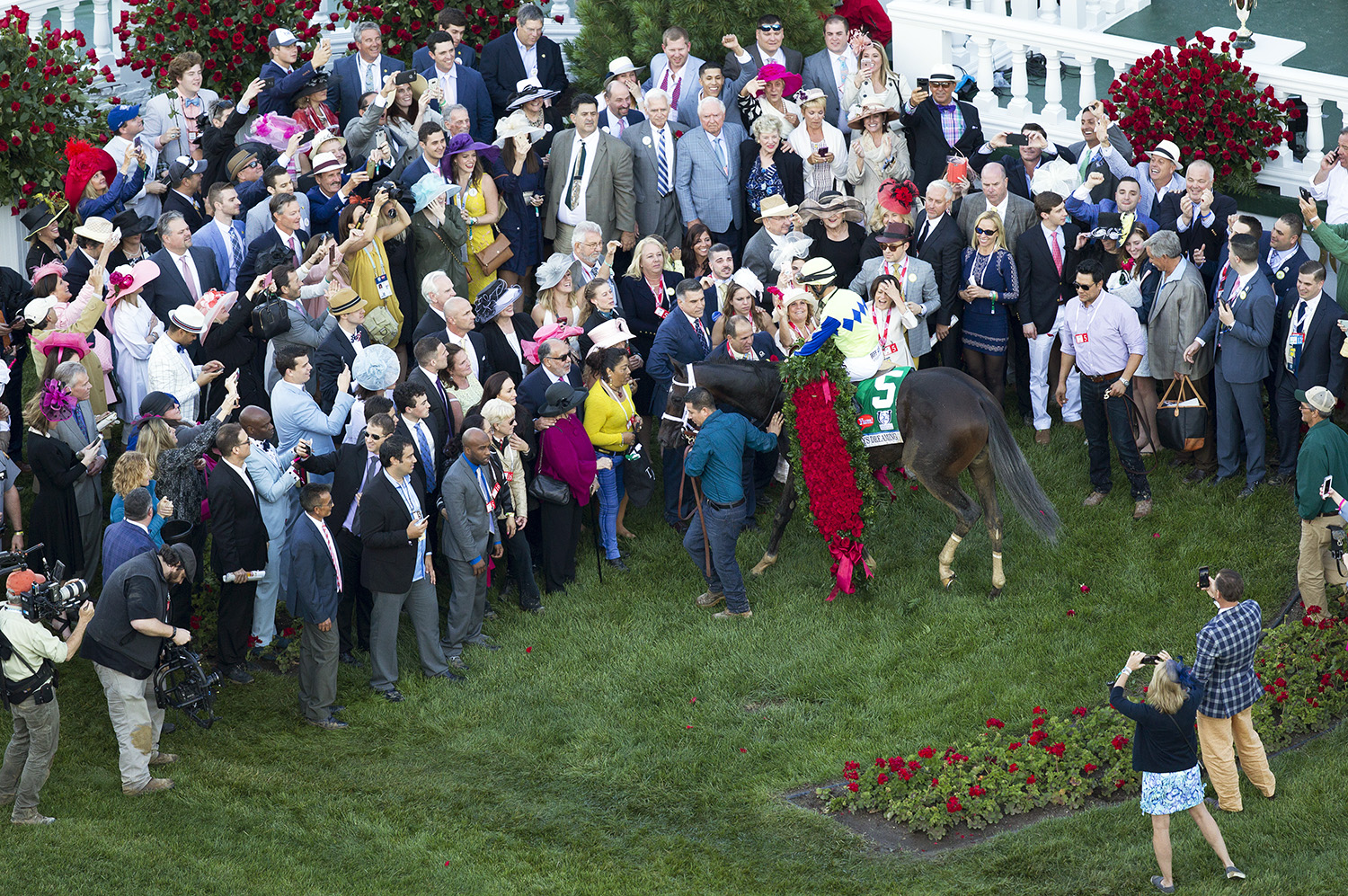
Trivia question: Who owned the winner of the 2017 Kentucky Derby, Always Dreaming?
If you guessed Anthony Bonomo and Vincent Viola, the two Brooklyn-born friends who were usually in front of the television cameras in the lead-up to the race last year, you are only partially right.
Here’s the actual list: MeB Racing Stables, Brooklyn Boyz Stables, Teresa Viola Racing Stables, St. Elias Stables, Siena Farm, and West Point Thoroughbreds.
If you got all those names, that’s still worth only partial credit. Now name all the partners in the stables, along with the individual investors in the racing syndicates, like West Point, that had a share.
Stumped? Well, get ready for another mind-bender.
If last year’s Derby-winning ownership group sent a handful of typesetters to the madhouse trying to fit all those names on one line in the official souvenir program, this year will likely lead to the involuntary confinement of all those who survived. This year, nine of the 20 horses currently projected to start are owned by partnerships, and that list is top-heavy. Eight of the top 10 horses who are projected to start are owned by partnerships, and those conglomerations include one or more syndicates, such as China Horse Club and West Point Thoroughbreds, which can each have dozens of individual investors.
“This partnership thing is getting crazy,” said Jack Wolf, the founder and one of the managing partners of the racing syndicate Starlight Racing. “But it’s here to stay.”
Wolf should know. In early March, Starlight bought into two horses, Justify and Audible, and cut those stakes into shares for individual investors. Two months later, Justify, undefeated after impressively winning the Santa Anita Derby, is the early-line favorite for the Derby at 7-2, and Audible, the Florida Derby winner, is the fourth choice at 8-1.
“We’ve got some happy clients,” Wolf said.
:: Get both the Kentucky Derby and Oaks Clocker Reports for just $19.95!
Partnerships of the past
A partnership winning the Derby is certainly nothing new. In 1991, longtime friends William Condren and Joseph Cornacchia partnered with B. Giles Brophy as BCC Stable and took the roses with Strike the Gold. Condren and Cornacchia won their second Derby together in 1994 with Go for Gin. In 2003, Sackatoga Stables, a partnership of down-homey upstate New York racing fans, famously rode their Magic Bus to Churchill to watch Funny Cide get draped in roses. Partners took the 2008 Derby, the 2009 Derby, and the 2011 Derby, when Team Valor, a racing syndicate, won with Animal Kingdom. Even the storied Phipps Stable got in on the act, when Orb, owned in partnership with Stuart Janney, took the Derby in 2013.
But going way back in the Derby record books, you can count the owner of the Derby winner on one finger for decades at a time. And when you couldn’t, it was likely that the partnership was struck early on in the horse’s life, perhaps in the smoke-filled aisles of a yearling-sales arena, or perhaps even before it was born.
That is all changing, and quickly. Today’s partnerships are being formed later and later in horses’ careers. Whereas in the past many horse owners looked with partial disdain on a mere whiff of needing someone at their side to split the expenses and share in the rewards, more and more owners these days are willing to raise some ready cash from buyers who are more and more eager to strike when the iron is hot, even if it means paying a hefty premium to get in on the action.
The birth of a new model
Blame Sol Kumin for the recent run of Derby partnerships.
Kumin, a Wall Street investor and co-founder of a hedge fund, has been making a splash in Thoroughbred racing since buying into his first racehorse in 2014. And he has been doing it in an unconventional way, by focusing the brunt of his investments on horses who have already proven they can run. It’s paid dividends. He’s never bought into a horse that has already won a Grade 1, yet has 27 Grade 1 wins on his résumé.
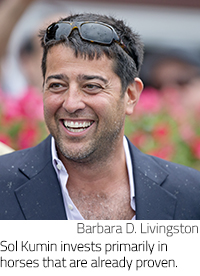 “He’s really made a powerful impact on our business,” said Terry Finley, the managing partner of the aforementioned racing syndicate West Point, which is named after his alma mater. “You have to give him big props. It’s been very advantageous to everyone. And I’m not afraid to copy a guy on something that has been so successful.”
Or work with him. One week ago, West Point bought into Kumin’s Derby contender My Boy Jack, a horse who was purchased by Matt Bryan’s Don’t Tell My Wife Stable as a yearling for $20,000, with Kumin brought on board shortly thereafter. My Boy Jack, winner of the Lexington Stakes at Keeneland in his last start, is in the Derby field, but he is 30-1 on the early line. Another partner in the horse is Kirk Godby.
Kumin is also a partner in Justify and Audible, having bought a 15 percent stake in each of the horses. So Kumin is coming to this year’s Derby with stakes in three horses, two years after striking gold by buying into eventual 2016 Preakness winner Exaggerator four months before the race.
Kumin says he likes to play at the top of the game, with horses in the best events. To do that, he says, you need to put your bets on horses that have proven they can run. He says that 75 percent of his investments are on horses that have “hard data on them,” with the other 25 percent spread out at yearling sales and 2-year-old sales. Furthermore, Kumin splits his investments so that 75 percent of his money is invested in fillies, which typically have a much greater chance at retaining residual breeding value than colts, which tend to be either strikeouts or grand slams at the end of their racing careers – with a lot more strikeouts.
Kumin bought his stakes in Audible and Justify in late March, “a little late” for his preferences and his business model, he said.
“I’m trying to do it earlier,” Kumin said. “I want to take some shots a little earlier on. I want to be doing that in January and February. There’s still a premium then, but you also still need things to kind of go right to get there.”
Kumin is congenial, overwhelmingly positive about horse racing, and enthusiastic about all aspects of the game. Nevertheless, he ruffled some feathers late last year by openly suggesting that he should be high in the running for the sport’s Eclipse Award for Outstanding Owner, given the number of graded stakes won by horses he had a share in.
The lobbying rubbed some the wrong way. There’s no criteria to guide voters in the owner category, though the number of graded stakes wins generally ranks high on the list. And there’s certainly no prohibition about counting partners as individuals, though when partners have won, it’s generally been when they have been the owners of a horse for his entire racing career. What bothered most of his critics was that Kumin bought into the horses in the midst of their success, not before.
Kumin was asked whether he feels the same, emotionally, about a horse like My Boy Jack, whom he bought as a yearling, and Justify, whom he has owned a stake in for two months.
“It feels a little bit different, I’ll be honest,” Kumin said. “But it’s less about the percentage that you own and more about how much time you have with them, how well you know the trainer and your partners. And then you start to feel closer the more time you spend with them. It’s building your experiences with the horse, and I know this sound cheesy, but building your relationships with them. You’re spending more time at the barn, you’re spending more time in the mornings with them, more time with your family with them, and that’s when it starts to feel different. The fact that it’s 15 percent or 30 percent or 50 percent or whatever, that starts to matter less.”
Established groups, new tactics
Though Kumin has made his own impact, West Point and Starlight are bringing a whole new dynamic to the Derby game. Both outfits are run the same way: the general partners in the operations put up their money to buy horses at the yearling and 2-year-old sales, and then they offer stakes in the horses to their investors. It’s a long-haul game, usually, with investors buying into horses that are not, as Kumin would say, “proven commodities.”
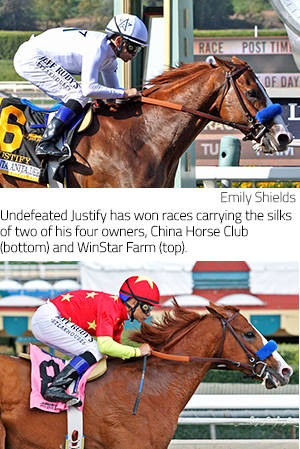 But now they are playing Kumin’s game – or, in the cases of Justify, Audible, and My Boy Jack this year, playing with him as a partner. Both Finley and Wolf, the managing partners in West Point and Starlight, said that their purchases of the stakes in the Derby contenders earlier this year followed the same script as the yearlings and 2-year-olds they buy: the general partners put up all the money and then market shares of the stakes to investors afterward. Both declined to reveal the prices of the stakes.
Wolf was asked if his investors were excited to buy up shares in Audible and Justify in early March. “Yes,” he said, without hesitating. “Yes and yes.” Starlight sold shares from its stakes in the horses to 10 investors, Wolf said.
The stakes bought by Starlight include only the horses’ racing rights, Wolf said, with the original partners retaining the breeding rights. That works in some ways for both sides: buyers of late shares don’t pay the enormous amounts that might be necessary to account for the bonanza that the Derby winner reaps in the breeding shed, while the original partners keep what may be most valuable to them. One of the original partners in Audible and Justify is WinStar Farm, the commercial breeding and racing operation.
Finley said that West Point had to “get creative” to strike the deal for the 30 percent stake in My Boy Jack (which includes breeding rights). In fact, it was Kumin’s agent, Brad Weisbord, who contacted West Point to see if the syndicate wanted to get in on the action, Finley said. But West Point also had its ears up for any deals that might be out there, given its experience last year, when the group snagged what Finley called “a really small share” in Always Dreaming in March, prior to his win in the Florida Derby.
“We certainly are always going to be looking for deals like this in the future,” said Finley, about securing a stake in a Derby horse. “The secret is not to push it. It if happens, it happens. You have to be ready for a deal, because you are not going to sit down at the beginning of the year and say, ‘This is how it will happen.’ You have to be creative, and open to the opportunity.”
Kumin said the deal made “business sense” given his preference for keeping his money tied up long-term in fillies.
“With a colt, I’m always going to be looking to take a little money off the table,” Kumin said.
Finley said that his group paid “a pretty good premium” for the My Boy Jack stake. Still, seven West Point investors felt the lure of the Derby was just too strong to pass up, despite the cost.
“Everyone has Derby fever,” Finley said. “So you are absolutely going to pay a premium. What you are trying to do is not pay too much of a premium. But I can tell you this: We’re going to bring the most people to the Derby, so we’re going to have the biggest impact on the economy of Louisville. And we will have the most fun. I guarantee it.”
Not all roses and champagne
With Finley’s group, that’s probably a decent bet. But not all partnerships work out. There are mines everywhere in the partnership game, especially if the horse doesn’t perform well, not just in the Derby, but in its post-Derby future. That premium for a Derby horse can look like a bad deal when it runs up the track at Churchill and struggles to live up to expectations later in the year.
“There are definitely examples of times it didn’t work,” Kumin said. “Most of the time it’s when the horse isn’t any good. You see a lot of stress in those situations.”
Other problems can crop up, some of them seemingly petty. But that’s a hazard when you have dozens of investors in a horse. Sometimes there’s no clear line of authority. Sometimes people think they have a bigger say than the percentages would indicate.
Perhaps the biggest dust-up in recent partnership history occurred one year ago. In March of 2017, China Horse Club – the international racing syndicate that has stakes in Justify and Audible – bought a 50 percent stake in the 3-year-old filly Abel Tasman just prior to her starting in the Santa Ysabel Stakes at Santa Anita. In that race, the filly’s jockey, Joe Talamo, wore the silks of the other partner. The mix-up got her jockey and her trainer, Simon Callaghan, fired. The horse was transferred to Bob Baffert, and in May she won the Kentucky Oaks for her new connections – while wearing China Horse Club’s silks.
The experience left a bitter taste in Callaghan’s mouth. “‘China Horse Club’ may have brought new money to our sport but that is all it seems,” he tweeted after he was fired.
More recently, New England Patriots tight end Rob Gronkowski bought into the colt named for him after the horse won four straight races in England to earn an invitation to this year’s Derby. Just days later, the colt contracted an infection and was removed from consideration from the race. While Gronkowski the tight end now has to find a new Derby rooting interest – at a substantial cost to his pocketbook – Gronkowski the horse is being pointed to the Belmont Stakes five weeks after the Derby.
But if there are doubts about whether partnerships are ultimately good for the game, it may help to pull up a video of the 2017 Derby, in the aftermath of Always Dreaming crossing the finish in front. There’s Terry Finley, the West Point graduate and ex-airborne ranger, the guy who had a tiny, tiny piece of the winner – perhaps a fraction of a percent. He’s on the rail at Churchill Downs, surrounded by his wife and kids, amid hundreds of cheering people.
And he’s weeping.
