

Derby Angles: Hersh on post position
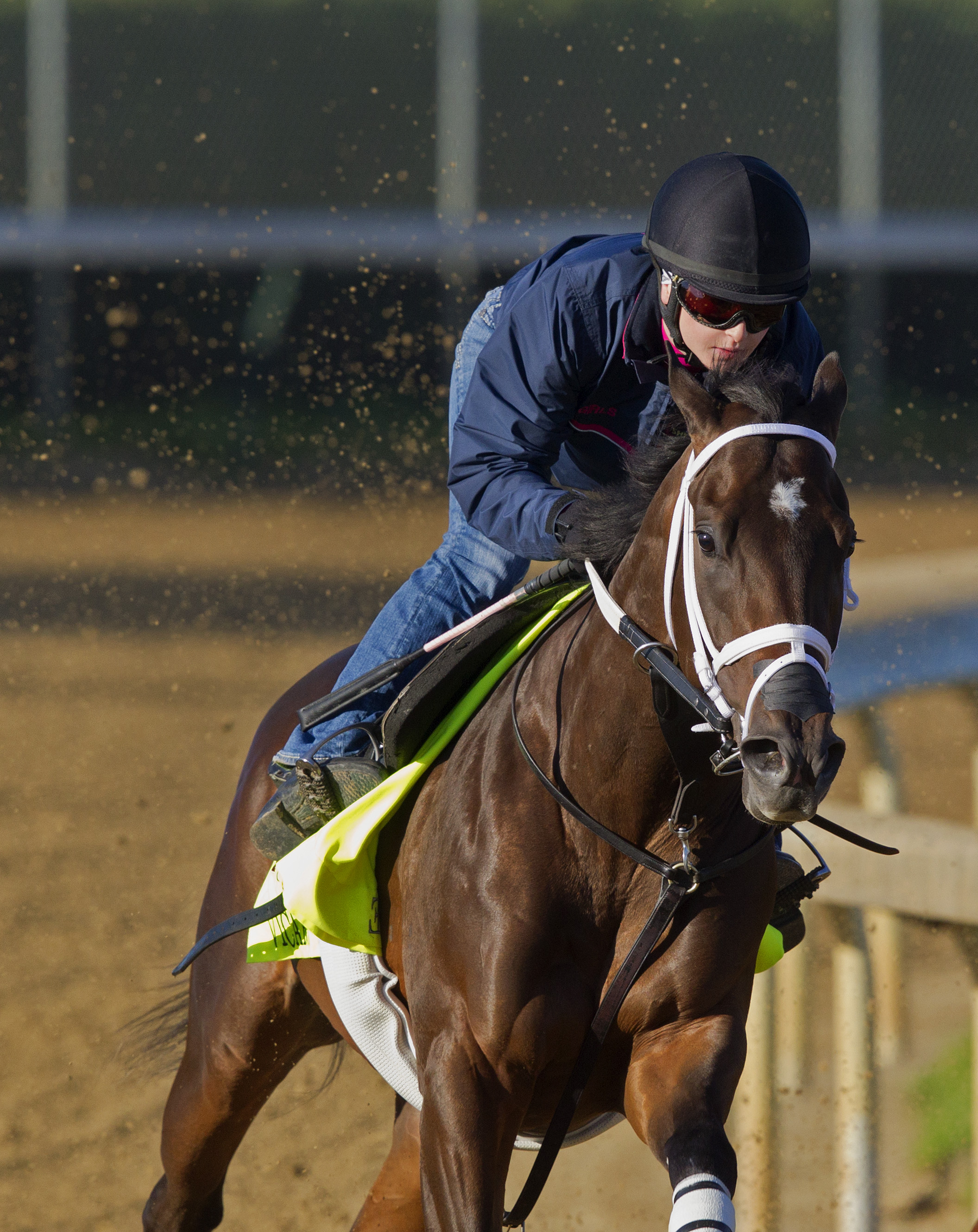
Derby Angles features DRF handicappers looking at individual handicapping factors and how they may play out in this year’s Kentucky Derby. The five-part series began with Dan Illman’s take on pedigree and continues with Dick Jerardi on Beyer Speed Figure Patterns, Dave Litfin’s look at “trips,” Marcus Hersh on the impact of post position, and Brad Free’s pace projection.
It’s a little-noted fact: The 2013 Kentucky Derby was a landmark edition in modern Derby history. Why? The horses that broke from posts 1 through 5 finished, second, third, fourth, fifth, and sixth, the best showing ever by inside-drawn horses in a 20-horse Derby field. Yes – ever.
It’s not like the right horse can’t win or race competitively from an inside draw, but generally speaking, outside posts are favorable to inside draws when the Derby attracts a full field, as is always the case in this era.
And the conventional wisdom that post 1 spells Derby Doom? That’s spot on. The last horse to win the race from post 1 was Ferdinand in 1986. There were only 17 runners that year, and, like 2013, it was one of those Derbies where the inside posts fared unusually well, with posts 1-4-9-8 accounting for the first four finishing slots. Even Risen Star, who proved himself clearly the best Triple Crown runner of 1988 with excellent wins in the Preakness and Belmont, could only finish third after breaking from post 1 in the Derby.
:: KENTUCKY DERBY: Posts, odds, and comments
It seems too tidy to be true, but in the last 20 years, the average winning Derby post position is 10. Right, smack in the middle of the field. Remove two outliers on each end, and the median winning post position is 10.25.
Beyond the winner, though, we find many more Derbies with outside-dominant high placings than instances like 2013, where the inside draws reigned supreme. In 2011, when Animal Kingdom won from post 16, posts 11-18 swept the first six spots. Giacomo’s 2005 Derby was similar, with the first seven home breaking from posts 10-20. Charismatic won from post 16 in 1999, followed by posts 18, 10, and 13. In 1995, it was Thunder Gulch from post 16 followed home by posts 14, 15, 10, and 18, and in 1974, victorious Swale led a top four that included post 19, 14, and 20.
It’s better to be on the far outside than in the first couple posts nearest the fence, though post 20 itself has produced only two winners in Derby history, Clyde Van Dusen in 1929 and Big Brown in 2008. The widest draws, of course, are under-represented in full Derby history: Before the last decade, 20-horse fields were the exception, not the norm, and the average Derby field size is only a little more than 13 starters.
Moreover, we are on a recent run of outside supremacy. Big Brown was followed by Mine That Bird in post 8 and Super Saver in post 4, but since then it’s been Animal Kingdom in post 16, I’ll Have Another in post 19, and Orb in post 16.
[DRF Live: Get live reports and handicapping insights from Churchill Downs on Saturday]
There are clear reasons for middle and outside draws being preferable to the inside. First, the 1 1/4-mile start gives horses and riders the long length of the Churchill homestretch to find position and avoid suffering the sort of compromising ground loss that negatively impacts wide draws in typical two-turn races with a much shorter run to the first turn.
Second, think of the paucity of good options presented from a far inside draw. A speed horse that doesn’t want to race behind rivals must come out running full bore, and thus is likely to be caught up in a compromising pace. Stalking, mid-pack types face a crush of horses drawn to their outside pressing inward to gain position closer to the rail before the turn comes, and they risk being steadied, checked, or simply intimidated. True closers are taking back and will wind up at the pack’s tail - right with stylistically similar horses drawn on the far outside, and thus gaining no advantage because of their post.
So, how to apply historical post-position data to this year’s Derby? For starters, there is no runner in post 1: With the scratches of Hoppertunity and Pablo Del Monte, the 19 remaining horses will line up in posts 2-20. But that doesn’t change much. Getting one stall away from the rail is a good thing for inside-drawn Vicar’s In Trouble, but he still faces the same scenario as he would have from the rail.
Vicar’s In Trouble is no Risen Star, and while he’s highly unlikely to win, or even hit the board, his draw should have an effect on the pace of the race, since it’s hard to imagine jockey Rosie Napravnik having any option with this speedy colt besides leaving the gate full blast and trying to make the front or, at worst, sit second or third.
Posts 3, 4, and 5 are occupied by pressers/stalkers Harry’s Holiday, Uncle Sigh (who could show more speed with blinkers added) and Danza, and the past tells us that these three could be in big trouble, showing just enough pace to get caught in the crush of the first quarter-mile.
Sitting in post 6 is the favorite, California Chrome, who will almost certainly have to use some of his brilliant speed to avoid getting hung wide by the three presser-types just inside him.
Wildcat Red has the 11 hole and will be running hard to go with Vicar’s in Trouble and California Chrome.
All the best closers are drawn outside: Medal Count has post 14, Intense Holiday 16, Commanding Curve 17, Candy Boy 18 (yes, he’s taking back off the pace this time), and Wicked Strong 20.
Wicked Strong is the race’s likely second choice, and jockey Rajiv Maragh faces a tricky task finding a spot in front of the deeper closers and behind the leaders and pressers without being stuck wide on the first bend.
Pablo Del Monte’s absence alters the post dynamic by removing the truest speed horse drawn the extreme outside, and now Chitu, in 13, is the pace horse farthest out. Still, between him, Vicar’s in Trouble on the rail, and several front-end types drawn in the middle, we could be headed for a slugfest on the lead.
Prediction? The run of outside closers will continue in the 2014 Derby.