

Closing statements made at Baffert hearing
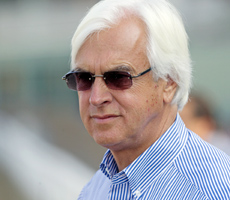
Attorneys for Bob Baffert and the New York Racing Association on Friday morning gave closing arguments in a five-day hearing that was called by NYRA to consider a ban of the Hall of Fame trainer.
In the lengthy closing arguments, both attorneys summed up their major points in the hearing, which was held before O. Peter Sherwood, a retired former New York State Supreme Court justice. Under protocols adopted by NYRA last fall to hold the hearing, Sherwood will submit a recommendation to a panel appointed by NYRA, which will then be able to use its “discretion to adopt, modify, or reject any or all” of the hearing officer’s report.
The protocols do not provide a timetable for when Sherwood must submit his recommendation. Attorneys for both sides have a week to submit “exceptions” to Sherwood arguing a limited number of legal points or proposing “alternative . . . findings of fact, conclusions, or disposition” by NYRA’s panel.
NYRA issued a statement of charges to Baffert late last year calling the trainer’s conduct “detrimental to racing” because of a history of medication violations and what Hank Greenberg, NYRA’s lead attorney, called an “avalanche of extraordinary, critical coverage of this great sport” after Baffert acknowledged that Medina Spirit tested positive for the regulated corticosteroid betamethasone after winning last year’s Kentucky Derby.
Greenberg argued in his closing arguments that NYRA should be allowed to suspend Baffert because the trainer “has caused damage to the brand and has caused damage to the sport.” NYRA issued a suspension of Baffert last year, but a judge ruled that the suspension violated Baffert’s due-process rights, leading to the adoption of the hearing protocols.
:: For the first time ever, our premium past performances are free! Get free Formulator now!
“NYRA has no alternative from a business perspective, as well as a from a moral perspective, as well as from its commitment to Thoroughbred racing, to be concerned about incidents in other states like Arkansas, California, and Kentucky,” Greenberg said, referencing six medication violations in those states in 2019 and 2020. Baffert was not suspended in any of those cases.
In his own closing argument, Craig Robertson, one of Baffert’s attorneys, leaned heavily on Baffert’s own testimony and that of two Hall of Fame jockeys, Mike Smith and John Velazquez, who vouched for the trainer’s horsemanship. He also called NYRA’s effort to suspend Baffert outside of the regulatory system “unprecedented,” citing cases in which other trainers have been allowed to run at NYRA’s tracks despite lengthy suspensions from the state’s racing commission while their appeals make their way through the courts.
“In other words, if you’re someone other than Bob Baffert, NYRA will respect the regulatory system and respect reciprocity,” Robertson said. “But if your name is Bob Baffert, no respect for the regulatory system, no respect for reciprocity.”
During his testimony on Thursday, Baffert expressed contrition for several statements he made in interviews with media outlets just after acknowledging Medina Spirit’s positive, and Robertson pointed out that Baffert apologized for those statements a week after making them.
“You can judge his credibility,” Robertson told the judge. “I submit to you that you cannot be around this man without realizing that he is a good man, that he is an honest man, and that Bob Baffert is not a cheater.” He cited Baffert’s own words of being filled with “raw emotion” in explaining the inflammatory statements the trainer made in the interviews.
But Greenberg dismissed those notions, saying that Baffert has “got a playbook” that he has utilized throughout his career.
“When something goes wrong, and a violation occurs, here’s what you do: Escape the facts, blame others,” Greenberg said. “You escape responsibility by saying the other guy did it. . . . Again and again and again, it’s excuses. . . . It is all of a piece. It is consistent. It is the [modus operandi]. It is the business model. This is what the respondent does.”