

Classic start to stud careers for Bodemeister, Maclean's Music
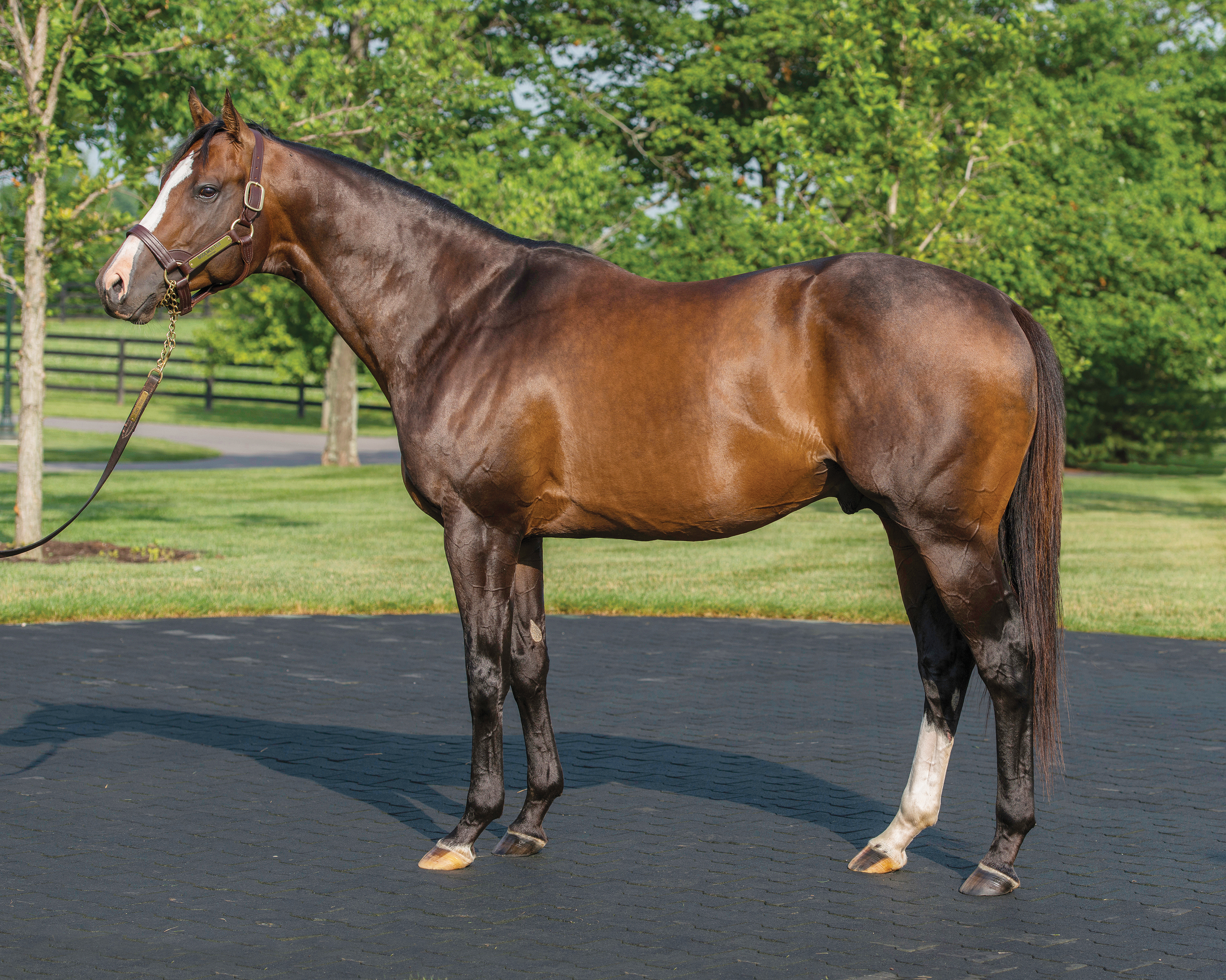
Since 2000, nine stallions have gotten off the mark with a winner in the Kentucky Derby, Preakness Stakes, or Belmont Stakes in their first crop, and two of them did it in 2017.
Always Dreaming did it first, winning the Derby with WinStar Farm’s Bodemeister, followed by Cloud Computing’s win in the Preakness for Maclean’s Music of Hill ‘n’ Dale Farm.
That duo joined a distinguished group that includes Maria’s Mon (Monarchos, 2001 Derby), Distorted Humor (Funny Cide, 2003 Derby, Preakness), Street Cry (Street Sense, 2007 Derby), Birdstone (Mine That Bird, 2009 Derby, and Summer Bird, 2009 Belmont), Medaglia d’Oro (Rachel Alexandra, 2009 Preakness), Curlin (Palace Malice, 2013 Belmont), and Uncle Mo (Nyquist, 2016 Derby).
Conventional wisdom would suggest a young sire that nets a classic win on his first try would see a skyrocketing book of mares in his sixth book, the season after his first crop of sophomores was on the Triple Crown trail. However, results from the first seven sires to achieve that feat this century show that the number of mares bred tends to stay relatively steady, though the quality of mares doesn’t necessarily stay the same.
:: KENTUCKY STALLIONS 2018: View or download the complete edition ::
Four of the seven stallions bred more mares in their sixth book than they did in their fifth. Three saw a growth of 24 or fewer mares, with the lone outlier being Curlin, who saw his book grow by 98 mares from 54 to 152.
Instead, the biggest growth came from books four to five, the year after a sire’s first juveniles hit the track. Of the nine stallions in the first-year classic club, eight saw an increase in the mares they bred between those two seasons, and all eight in that group even bred more mares in their fifth season than in their debut books.
These two threads may be more linked than they appear. Making the gate for the Kentucky Derby often requires a campaign that includes some degree of success as a juvenile, especially prior to the establishment of the Derby points system when entry was based on graded stakes earnings. The Preakness and Belmont do not have the same guidelines, but often feature horses with some juvenile form. Stallions often experience a healthy bump in breeder interest after a successful juvenile season, once the first wave of runners proves themselves viable on the racetrack.
Before Cloud Computing took him to the classic ranks in spring 2017, Maclean’s Music was North America’s top freshman sire by number of winners in 2016, with 20.
“I think the momentum with that horse built right along,” said John G. Sikura of Hill ‘n’ Dale Farm. “People started to see a buzz about the horse. They sold well, they started to run, and based on his performance Cloud Computing was obviously his best horse, but he had stakes winners and fast horses all over. They were very versatile, and he really caught fire. Racing performance really had a lot to with the response of commercial breeders saying, ‘I’d better breed to this horse. He’s a horse on the rise.’ ”
Economics can play a role in the number and quality of mares that a stallion attracts the year after siring a first-crop classic winner. Eight of the nine first-year classic-winning stallions had their advertised fees increased during their post-classic season, and seven of those had their fees at least doubled. This can change the clientele supporting the horse, pricing out some previous supporters while others might feel the increase justifies sending higher-level mares.
“The first two seasons, a lot of the mares were our own, because you’re trying to do something very unorthodox, taking a one-start maiden winner and competing in the toughest market in America,” Sikura said. “This year, it’s been the most interest there’s ever been in the horse. There are higher-quality mares because the stud fee raised, and also the recognition that he’s a classic sire. What he accomplished was hugely significant. He had a bunch of really good horses, including a classic winner. We’re really proud of his success, and people have responded.”
Bodemeister and Maclean’s Music might face challenges topping their pre-classic book sizes simply because they were already quite active. Bodemeister covered 192 mares in 2017, while Maclean’s Music saw 181 mares, both in the upper half of the nine stallions during their fifth season.
“He’s always been hot,” Elliott Walden of WinStar Farm said about Bodemeister. “He’s a horse that people jumped on when he first went to stud. That’s one of the things about Bodemeister that’s going to help him in the future.
“Typically, I’ve seen a pattern with freshman stallions that come out well – their books in years three and four don’t really support the book of the first year. It’s not as good. Bodemeister’s quality in his books of mares stayed consistent. Bodemeister is going to have a consistent number of yearlings and consistent quality of mare books through his first four years, so I think that’s really going to carry him the next three years.”
This will be the second turn at marketing a first-crop classic sire for Walden, who was with WinStar when Funny Cide won the Derby and Preakness for Distorted Humor. Medaglia d’Oro started at Hill ‘n’ Dale Farm, but was moved to Darley America between his fifth and sixth books.
While success can bring with it the spoils of a higher stud fee and higher-quality mares, Walden said it also can present its own unique set of challenges when marketing a stallion.
“One important thing with Bodemeister and with Distorted Humor, you’ve got to be careful that people don’t turn him into a one-hit wonder,” Walden said. “We have heard people say that Bodemeister was just, ‘Always Dreaming, Always Dreaming, Always Dreaming. What else has he had?’ ”
Though Pioneerof the Nile’s greatest runner came from his second crop, Walden said the farm faced a similar challenge in getting the targeted number of mares to the stallion’s book after American Pharoah’s 2015 Horse of the Year campaign. An increased stud fee was a factor, but Walden said much of the feedback he received from breeders keyed in on the stallion’s superstar, questioning whether he was capable of getting another elite runner while overlooking the other graded stakes horses he had sired.
Walden has taken a similar tack when discussing Bodemeister with breeders this season, reminding them of the success of Grade 2 winner American Anthem and sophomore Zulfikhar, a juvenile debut winner last year pointed to the Kentucky Derby trail by trainer Bob Baffert.
:: KENTUCKY STALLIONS 2018: View or download the complete edition ::