
California ownership sparks conflict-of-interest debate
DEL MAR, Calif. – A change in ownership related to the 3-year-old colt Fravel, who was scheduled to make his debut on Wednesday at Del Mar, brought renewed attention to the way California regulates racing compared to other states, and invited debate on potential conflicts of interest pertaining to the way the racing board is comprised in this state.
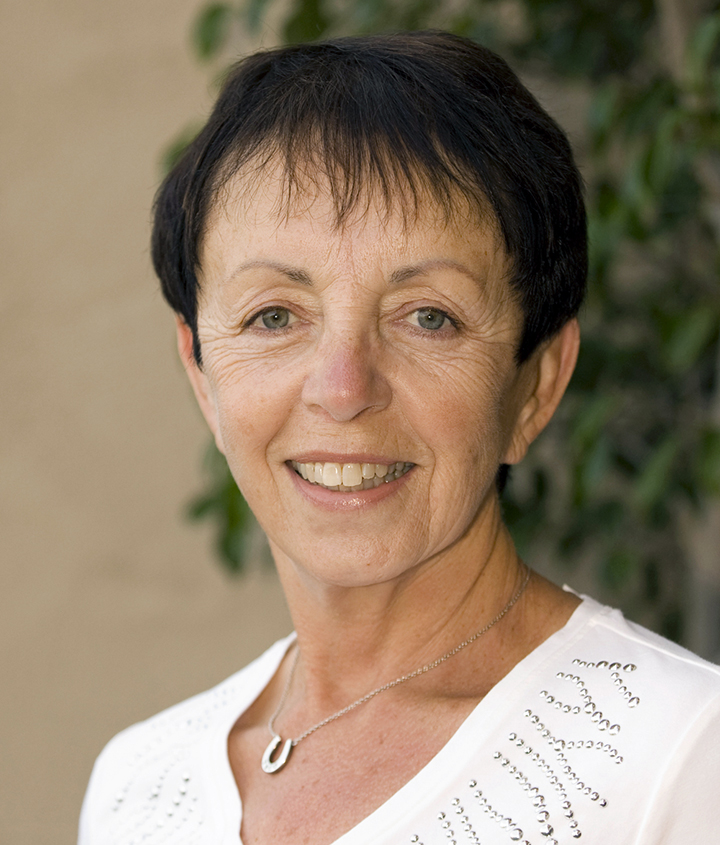
Madeline Auerbach, the vice-chairman of the California Horse Racing Board, is the majority owner of the colt Fravel, whom she bred. Tim Ritvo, the chief operating officer of The Stronach Group, which owns Santa Anita and Golden Gate, owned a minor share of Fravel for the past 1 1/2 years. But 48 hours after entries came out Friday, and concurrent with a statement from The Stronach Group to the Los Angeles Times that it was requiring employees to “avoid situations where there can even be a perception of a conflict of interest,” Ritvo divested himself of his share.
Based on CHRB rules, neither Auerbach nor Ritvo did anything improper.
Auerbach was required on financial disclosure forms filed with the state to denote that she owned Fravel in a partnership, and she did so, listing Ritvo as a partner, according to Mike Marten, the public information officer for the CHRB.
Auerbach also is one of two persons on the CHRB’s dates committee, which oversees the dates tracks are awarded each year. Being aligned with Ritvo on a horse was not, according to the CHRB, a conflict for Auerbach.
“Commissioners must recuse themselves if he/she has a financial interest in the matter before them, which in this case would be any regulatory matter relative to the horse itself or, depending on the circumstances, the individuals themselves,” Marten wrote in an e-mail.
As for Ritvo, “When the issue around this horse was raised, the individual immediately divested himself of any interest in that horse,” according to the statement from TSG.
“TSG is taking steps to stress with all its employees its strict conflict of interest requirements and the necessity of always bearing them in mind and seeking clarification where they are unsure as to any potential situation,” the statement said.
“I don’t think we did anything wrong, but I don’t want people to think we did, so I’m giving it back to her. We’re arranging for a bill of sale and are in touch with the stewards,” Ritvo said Sunday. “We bought into the horse as a yearling, just after kidding around because of the name when he was a yearling.”
The colt is named for Craig Fravel, the president and chief executive officer of the Breeders’ Cup, which Santa Anita will host again this fall.
“I think he’s a good horse and I think Fravel should be honored,” Auerbach said of why she gave the colt that name. “He loves racing. He’s wonderful for racing. He’s a strong figure who needs to be emulated.”
Both Auerbach and Ritvo said that more than a year ago Auerbach sold minor shares in Fravel to both Ritvo and Auerbach’s longtime friend Stacie Clark-Rogers, the wife of Mike Rogers, president of TSG’s racing division.
Both Auerbach and Ritvo on Sunday morning said they did not believe the arrangement had or would influence decisions in matters that come before the board.
“It’s not weird for me,” Auerbach said. “Commissioners have had partnerships with racetrack owners. My business is breeding and buying and selling Thoroughbreds. When I took this position, I investigated very carefully. I’m extremely ethical. It’s very important to me. We have ethics training, and it’s almost amusing to me what people need to be told is proper or not.
“If I can’t look at a situation and be honest, I recuse myself. I’ve done that whenever something comes up with CARMA,” Auerbach said, referring to the California Retirement Management Account, a charity that retrains and rehabilitates retired racehorses that she helped found. “You’ve seen me at enough meetings to see me hammer Stronach Group. To think that they having less than one-quarter of the one of the horses I have would influence me, that doesn’t register.”
Auerbach is heavily involved in racehorse aftercare, which is what brought she and Clark-Rogers together, as both do significant work in that arena. Auerbach said they had discussed for some time owning a horse together. Auerbach said after failing to sell Fravel at auction, she was in a room with Clark-Rogers and said, “Why don’t you buy a little piece?”
“Tim was in the room and said, ‘I want a piece, too,’ ” Auerbach said.
Ritvo – a former jockey and trainer – said he has owned shares of several horses over the years, including with his wife, trainer Kathy Ritvo, and as part of the Golden Pegasus Racing partnership with Keith Brackpool, a former executive with TSG who was a former CHRB chairman. Bolo, winner of the Shoemaker Mile, is the current star for Golden Pegasus.
After going into training, Fravel, a son of Auerbach’s late stallion Unusual Heat, was sent to trainer Richard Mandella, whose assistants include former jockey Alex Solis, one of the CHRB’s seven commissioners.
Solis, like Auerbach, on Sunday morning said he believed he had made fair decisions related to Santa Anita irrespective of the relationship.
“No, not at all,” Solis said when asked Sunday morning if he ever felt pressure to acquiesce to the wishes of TSG. “I always use my best judgment as to what I think is best for the sport. I try to do the right thing for the industry.”
The CHRB has full-time staff based in Sacramento, including its executive director, but the face of the board is its commissioners, all of whom are appointed by the governor and receive a $100 stipend per monthly meeting. It is a part-time position with full-time responsibilities, and those selected often are, like owner-breeder Auerbach, people who work in the sport or have significant investments in the sport. The current chairman, Chuck Winner, owns horses, as have numerous past board members such as Jerry Moss and John Harris.
California’s board is similar to that of Kentucky, whose racing commission includes owner-breeder Gatewood Bell, former jockey Pat Day, and breeder Bret Jones. Kentucky’s government documents on ethical guidelines for executive branch board and commissions says potential conflicts of interest must be disclosed “in writing or must be recorded in the minutes of a formal meeting of the board or commission.”
By contrast, New York has a gaming commission of full-time members that oversees racing, lotteries, and casinos. Its parimutuel law states that “no member of the commission shall participate as an owner of a horse or otherwise as a contestant in any horse race at a race meeting which is under the jurisdiction or supervision of the commission.” In addition, members cannot “have any pecuniary interest, direct or indirect, in the purse, prize, premium or stake contested for at any such horse race or in the operations of any licensee of the commission or state racing franchisee.”
In Illinois, if a racing board member owns horses, they “cannot race them in Illinois,” according to Dominic DiCera, executive director of the Illinois Racing Board.
“We had a member who desired to race her horses in Illinois, so she stepped down,” said DiCera, who said everyone associated with the board must take an annual ethics exam.
“This has been in place for awhile now,” he said. “We take it seriously as a regulatory body. It’s a priority.”
Auerbach believes having people on the board invested in and knowledgeable about the sport is the better of the two options.
If commissioners were forced to give up their business interests, “People who know horses would be precluded from working on the board,” she said.
“That’s the trade-off,” she said. “You get a $100 stipend. It’s tremendous work, tremendous pressure. With what’s gone on the past year, there’s no use to stay with it unless you’re dedicated to the game and want to do the right thing.”