

Byron King: In Derby, believe your eyes, not the clock
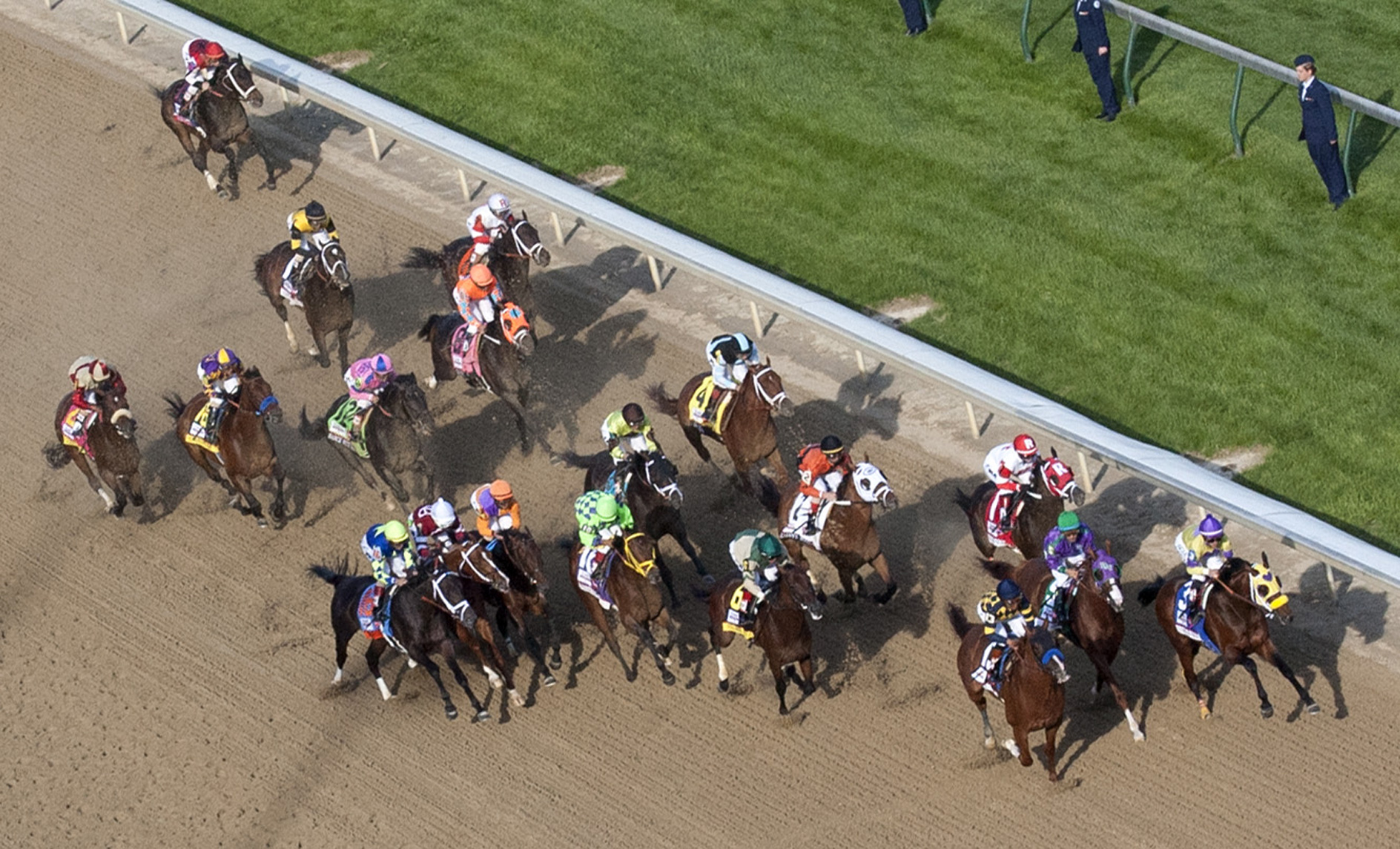
LOUISVILLE, Ky. – In the post-race analysis of the Kentucky Derby, many have noted how slowly the race was run, with the victorious California Chrome covering 1 1/4 miles in 2:03.66 over what had seemed to be a quick track.
So, for winning the Derby, America’s most prestigious horse race, California Chrome received a 97 Beyer Speed Figure, the lowest winning Derby or Preakness figure since Andrew Beyer has been making them.
My thoughts: The time and figure mean little in this case. My belief is that the slow time and therefore the low figure were skewed by the track condition for the Derby. After two hours and 43 minutes between dirt races leading up to the Derby, the track seemed dry to my ontrack eyes. That was reflected in the significant dirt kickback as the horses headed into the first turn.
Just as a dry beach is more tiring to run over than a wet, packed-down one, so is a dry racing surface. So, I say forget the time of the Derby and evaluate it on visual observations and the quality of the field.
I see no reason why California Chrome isn’t as good as – if not better than – other recent Derby winners. He dominated and blew the race open coming into the stretch, just as he had in winning his earlier races this year.
He was the best horse coming into the race, and I don’t think anyone could dispute that the best horse won.
No matter what one makes of the time, he should win the Preakness. He already won the deepest and best 3-year-old race of the year in the Derby, and before that, he triumphed in the Santa Anita Derby over Hoppertunity, who had been regarded as a leading Derby prospect before getting injured and scratched from the Derby.
Granted, California Chrome had a better trip than many of those behind him in the Derby, but that is only partly because of luck. As a horse with tactical speed, he usually gets good trips. It is the exception when he doesn’t.
Of those expected back in the Preakness, seventh-place Derby finisher Ride On Curlin will get attention off a perceived troubled trip. His jockey, Calvin Borel, tried to replicate his past Derby victories by taking him back and trying to fly up the rail.
Fly he did for a while, but this time, the sea of horses did not part, and coming into the stretch, Borel had to hit the brakes behind a tiring Vicar’s in Trouble, who would finish last. With Ride On Curlin’s momentum stopped, Borel angled him out in the stretch, and they hit the wire 6 3/4 lengths behind California Chrome.
One key point for those considering playing him back in the Preakness: If he had gotten through on the inside, he would have had a perfect trip, having not lost an inch of ground. So, though getting stopped certainly bothered Ride On Curlin, don’t be fooled into thinking he would have won or even hit the board if he had raced four to five wide in the clear. Losing ground would have set him back, too.
Though he hasn’t yet been mentioned as a Preakness possibility, General a Rod, 11th in the Derby, may prove capable of challenging if by chance he shows up in the race. He got the trip many feared California Chrome might get if he broke slowly. That is, he got shuffled back in traffic and had to play catch-up.
As a front-runner sitting 16th of 19 early in the Derby, General a Rod had no chance. He actually did okay to finish 8 1/2 lengths back.
Unless General a Rod shows up in the Preakness entries, my strategy will be to use off-the-pace horses beneath California Chrome in the exotics, with the reasoning being that California Chrome’s sudden burst of speed coming into the stretch usually breaks the hearts of the leaders.
That could make longshot Kid Cruz, a late runner who rallied to win the Federico Tesio Stakes at Pimlico, an exotics-crashing Preakness possibility.