

Breeders’ Cup prep positions
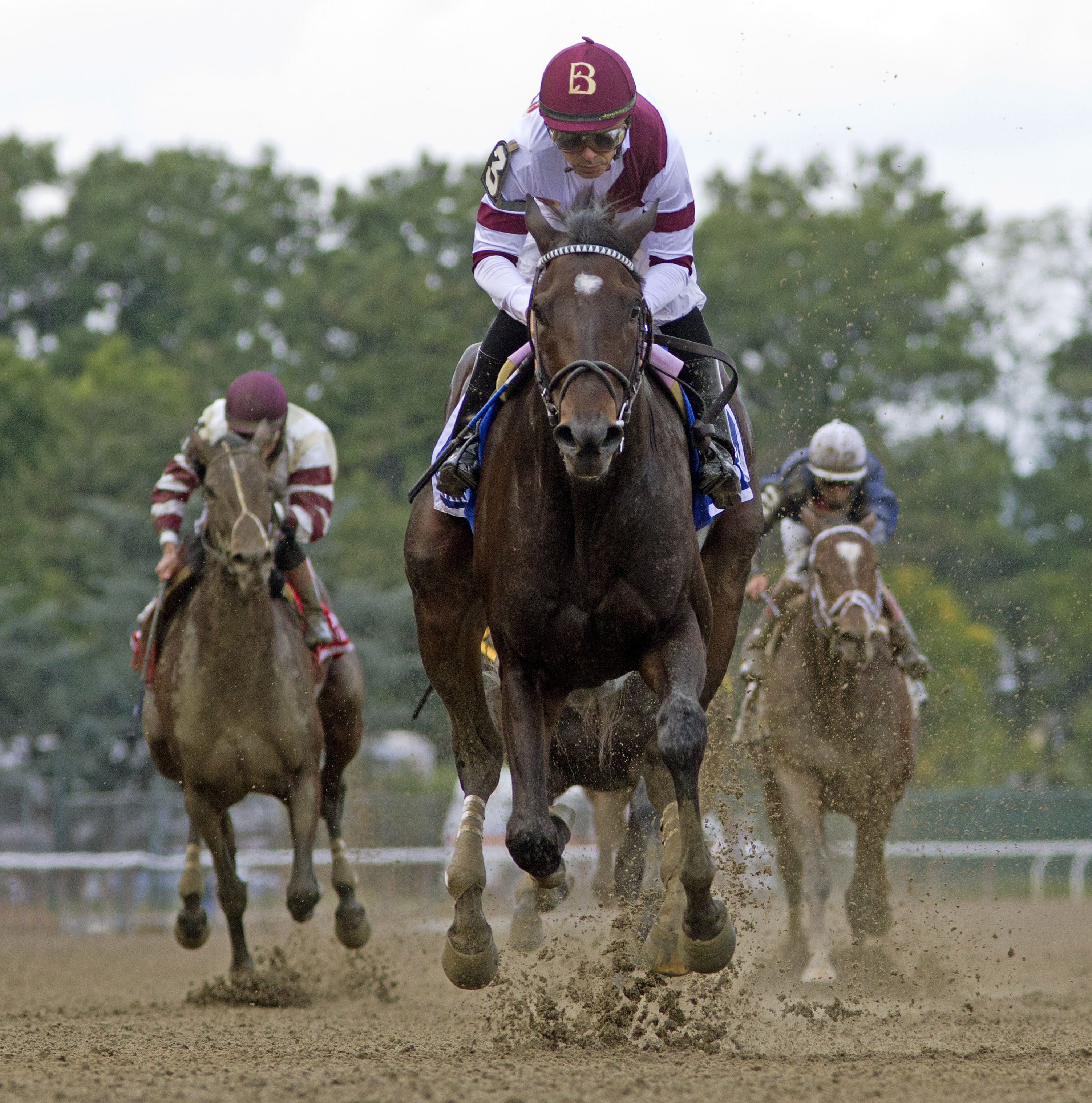
More than three decades into Breeders’ Cup history, one doesn’t hear as often about how the Breeders’ Cup, for all the anticipation it generates, has changed the fall-racing landscape from coast to coast, turning major stakes in New York, California, and Kentucky that once were season-ending goals into stepping-stones toward Breeders’ Cup races.
The Breeders’ Cup has the purses and the prestige. Its races aren’t the “championship” events the organization tries to call them, but they’re championship-making.
“By the time you get within two months of the Breeders’ Cup, you need to think more of the Breeders’ Cup than the race you’re prepping in,” said no less a racing traditionalist than trainer Richard Mandella, who ranks among the elite in Breeders’ Cup wins with eight.
So, when Mandella sends out Beholder on Saturday in the Zenyatta Stakes at Santa Anita, it will be with a start next month in the Breeders’ Cup Classic firmly in mind. That doesn’t mean Beholder won’t win – she’ll be an odds-on favorite – but many other participants in stakes-heavy cards at Santa Anita, Belmont, and Keeneland over the next two weekends are basically practicing for races on Oct. 30-31 at Keeneland.
There are 29 upcoming stakes at those three tracks that fit the definition of a Breeders’ Cup prep, and it would be nice and tidy if one could count their winners as the leading contenders for associated Breeders’ Cup races. But in the 265 BC prep races over the last 10 years at the three racecourses, only 28 winners returned to win a Breeders’ Cup race, a lowly 10 percent strike rate.
:: BREEDERS’ CUP 2015: See DRF’s top contenders
That doesn’t mean the stakes aren’t working as BC preps, but it does suggest that putting forth a winning effort can compromise a horse’s chances of peak performance on Breeders’ Cup weekend.
Take the Beldame Stakes, the historic fall New York race for older female route horses. It has produced five winners of the Breeders’ Cup Distaff in the last 10 years, only one of whom, Royal Delta in 2012, won the Beldame. Trainer Todd Pletcher won the Beldame five times between 2005 and 2013, but none of those horses came back to win the Distaff.
“It’s a delicate balance determining how much emphasis you’re putting on the final prep and how much on the Breeders’ Cup,” Pletcher said. “Can you maintain form in both races? You can’t always control how fast a horse is going to run, how much they’ll leave out there.”
:: Winning Breeders’ Cup preps
Pletcher, a seven-time Breeders’ Cup winner, is altering his approach this season. “In some cases, we’re going to bypass a final prep and come in with fresh horses,” he said.
Woodward Stakes winner Liam’s Map, who could run in the Classic or the Dirt Mile, won’t have a traditional prep race, nor will Distaff hopeful Stopchargingmaria. Rachel’s Valentina, the 2-year-old filly who won the Grade 1 Spinaway, might not race until the Juvenile Fillies.
This is the third Breeders’ Cup held in Kentucky in the last 10 years, but it’s the first time at Keeneland, and Pletcher points out how that changes the dynamic.
“This year will be a little more interesting because we’ll be able to prep at Keeneland, stay at Keeneland, and run back at Keeneland,” he said.
Rating the preps
So, which BC prep races over the last decade have proven the most and least productive?
The Thoroughbred Club of America Stakes at Keeneland is only a Grade 2, but it has the strongest link to Breeders’ Cup winners among all the late-round BC preps. Five times during the eight-year history of the BC Filly and Mare Sprint, the BC winner exited the TCA, three times a winner, twice a loser. Two of this year’s Filly and Mare Sprint favorites, Cavorting and Forever Unbridled, will come into the race without a start since Saratoga.
The Beldame is the other prep race with five BC winners in the last 10 years, while Belmont’s Jockey Club Gold Cup has an excellent record in the Breeders’ Cup Classic, producing four winners and two runners-up. Similar to the Beldame, three of the four Jockey Club Gold Cup horses who won the Classic lost the prep race.
Another Belmont prep, the Miss Grillo, has produced more than its share of BC Juvenile Fillies Turf winners, three in that race’s eight-year history, but the other Belmont 2-year-old turf prep, the Pilgrim, has yet to yield a winner of the Juvenile Turf. Other prep races that have produced three BC winners in the last decade are the Joe Hirsch Turf Classic (BC Turf), the Champagne (Juvenile), the First Lady (Filly and Mare Turf), and the Zenyatta (Distaff).
The one-mile First Lady is noteworthy because it leads to a race nearly a quarter-mile longer, and because the three times in the last 10 years that its winner started in the Filly and Mare Turf, including Dayatthespa last year, that horse won.
The Zenyatta ranks highest of any California prep thanks to two horses, Zenyatta and Beholder, and because three California prep races – the Awesome Again (Classic), Rodeo Drive (Filly and Mare Turf), and City of Hope Mile (Mile) – have combined to yield only one Breeders’ Cup winner in the last decade.
But Belmont, too, hosts BC preps whose participants have struggled in the Breeders’ Cup. A Sprint winner hasn’t come out of the Vosburgh in the last 10 years, while Gallant Bloom runners haven’t won a Filly and Mare Sprint.
When to prep?
The Phoenix Stakes at Keeneland over the last decade hadn’t produced a BC Sprint winner before Work All Week won both races in 2014; Vosburgh and Phoenix runners have poor BC Sprint records because five of the last 10 Sprint winners didn’t race in a late-round prep.
It’s somewhat similar with the other sprints on the Breeders’ Cup menu, the Filly and Mare Sprint and the Turf Sprint. Three times in its history a horse who last started in August or early September won the Filly and Mare Sprint, while Mizdirection won her two Turf Sprints following layoffs of about five months.
Since European horses fare so well in the Breeders’ Cup grass races, it should come as no surprise that races like the Turf (four times in the last decade) and the Filly and Mare Turf (three times) have regularly been won by horses exiting layoffs of six weeks or longer.
Oddly, however, considering the ongoing trend toward giving horses more time between starts, the number of fresh horses winning Breeders’ Cup races recently has declined. In 2005 and 2006, when the Breeders’ Cup consisted of only eight races, half of the winners didn’t start in a late prep, but in the last two years, only eight of 27 BC winners didn’t race the last weekend of September or in October.
Local flavor
Prepping over the track where the Breeders’ Cup is run has not recently proven advantageous, and despite grumbling from Kentucky and New York trainers about shipping to California the last three years, locally based horses didn’t win many of those races. In 2012, only two of 15 Breeders’ Cup winners had their prep at Santa Anita, and while that number rose to six from 14 races in 2013, it dropped back down to two again last year.
But horses coming from California to Breeders’ Cups in Kentucky fared poorly the last three times the races were at Churchill. In 2011, only two horses with a last-out California start won, one of those in the short-lived Juvenile Sprint. In 2010, none of the 14 Breeders’ Cup races was won by a horse who prepped in California, and in 2006, Californians went 1 for 8. The few California runners who ran well in Kentucky were dirt sprinters.
Trainers to watch
Mandella talks about late-summer focus on the Breeders’ Cup, not preps, with worthy horses, but seven of Mandella’s eight Breeders’ Cup winners won their prep. The only exception was Johar, who finished second before dead-heating in the BC Turf.
“He ran well in the prep, but I’d been pushing just to make the Breeders’ Cup, and I needed that race to develop him,” Mandella said.
Two of Mandella’s BC winners had non-traditional preps: Action This Day won the 2003 Juvenile coming out of a maiden race, while Beholder won the Juvenile Fillies in 2012 after being dropped into a first-level allowance race.
Five of Pletcher’s seven BC winners won their prep, while Shug McGaughey, on the other pole, has won five of his nine BC races with horses who lost their prep.
“I do hold the prep races in high esteem, and I go in and try and win, but I want the horses to be going forward to the Breeders’ Cup,” McGaughey said.
Which is not to say McGaughey babies his Breeders’ Cup-intended starters; Pleasant Home lost the Spinster before upsetting the 2005 Distaff, while Inside Information won the Spinster and the Distaff in 1995. “Both those horses had really hard races in the Spinster, and both came back to run lights-out,” said McGaughey. “I’ve maybe changed my philosophy over the years about how much time to give.”
Before he was injured, Ironicus was scheduled to run in the BC Mile without a start since Saratoga, a far cry from McGaughey’s first Distaff winner, Personal Ensign, who won the 1988 Beldame and came back three weeks later to beat Winning Colors by a nose in the Distaff. But Personal Ensign took the guesswork out of the equation: She never lost in 13 starts, preps or major goals. With most horses, the Breeders’ Cup calculus is not so simple.