

Baffert's attorneys press for dismissal of Gamine, Charlatan lidocaine positives
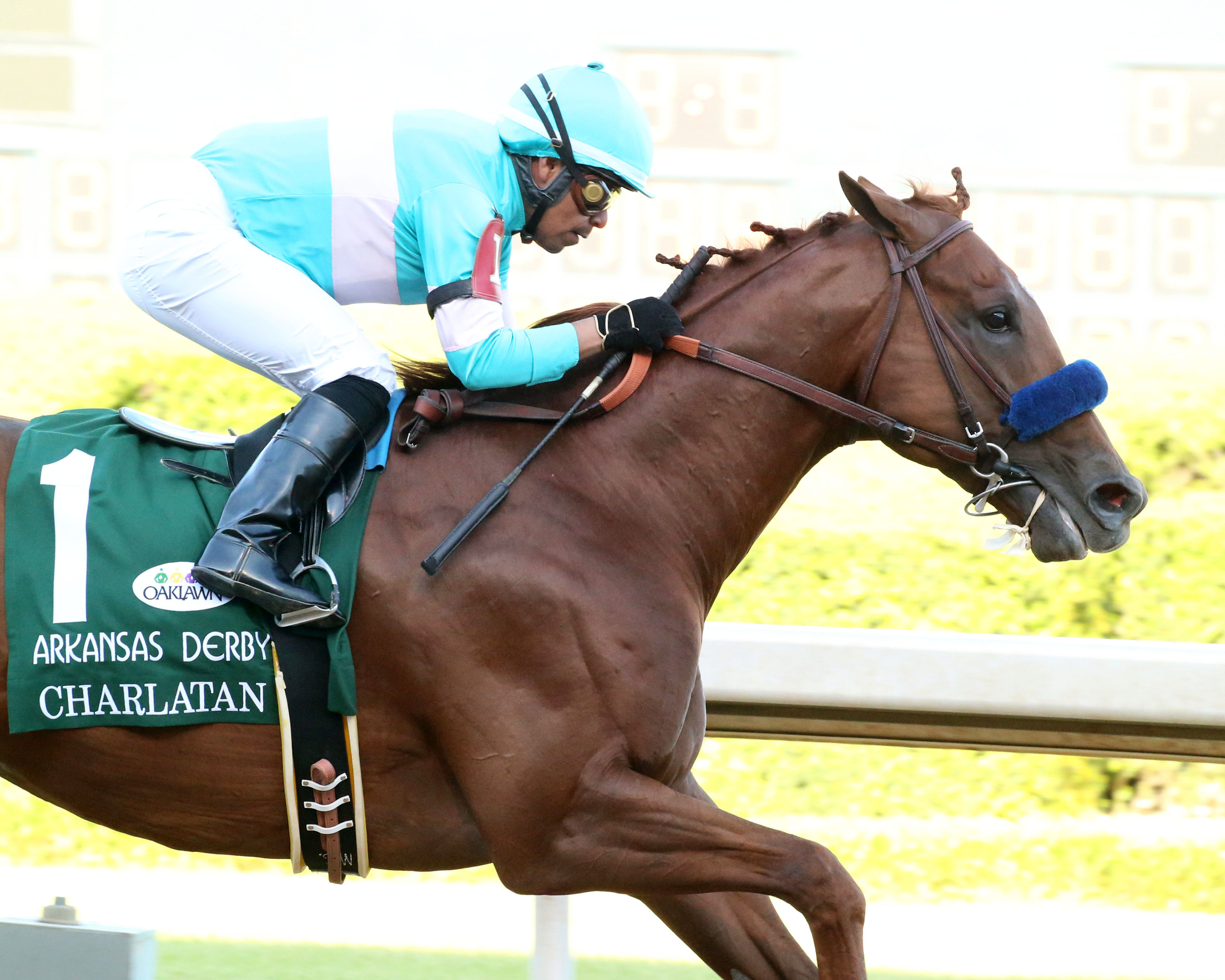
Attorneys for trainer Bob Baffert during a nine-hour hearing Monday pursued multiple lines of inquiry to cast doubt on the basis for penalties levied by Arkansas stewards last year after two of Baffert’s horses tested positive for a regulated therapeutic medication following races at Oaklawn Park.
Craig Robertson, a Lexington, Ky., attorney who has represented Baffert in past appeals of rules violations, attempted to persuade members of the Arkansas Racing Commission to dismiss the penalties due to what he characterized as breaks in the chain of custody of the samples, various problems with the testing and verification of the samples, and “arbitrary and capricious regulations” that did not adequately reflect the medication’s potential to impact a horse’s performance.
“We shouldn’t be here today,” Robertson said in his opening statement to the Arkansas Racing Commission during a hearing held in a conference room at a hotel adjacent to Oaklawn. “None of us should be here today. Because this case should have been dismissed a long time ago. And after you hear the evidence, you will feel the same way.”
Monday’s hearing stems from lidocaine positives in the post-race samples of the Baffert-trained horses Gamine and Charlatan after races on the May 2, 2020, card at Oaklawn. Lidocaine is a regulated painkiller, and Baffert and his attorney have argued that the horses were inadvertently contaminated through a medicated patch worn by Baffert’s assistant, Jimmy Barnes, who handled both horses on May 2.
Both hoses were disqualified as a result of the positives, and Baffert was issued a 15-day suspension. The hearing on Monday was the first day of Baffert’s appeal of the penalties. Baffert, a Hall of Fame trainer, is probably the most recognizable personality in U.S. Thoroughbred racing.
:: Bet horse racing on DRF Bets. Double Your First Deposit Up to $250. Join Now.
In testimony during the Monday hearing, Bernie Hettel, the chief state steward in Arkansas since early last year, testified that Baffert “was surprised” when informed of the positive tests last year. According to Hettel, Baffert told stewards during a hearing last year that he never administered lidocaine to the horses and does not have the drug in his barn. Hettel also said that during the stewards’ hearing, Barnes testified that he had changed his medicated patches on the day of the races.
Although Robertson did not dispute that the horses tested positive for lidocaine – both horses had split samples also test positive for the drug – he focused on alleged deficiencies in the chain of custody for the samples and argued that the legitimacy of the initial samples was in question due to the fact that Arkansas’s main testing laboratory at the time, Truesdail in California, had lost its accreditation in March 2020, prior to the races in question.
In a lengthy line of inquiry involving multiple witnesses, Steven Quattlebaum, a Little Rock, Ark., attorney also representing Baffert, argued that Truesdail was in violation of its own contract with the racing commission when it sent the samples from Oaklawn to a different laboratory, Industrial Labs in Colorado, after it lost its accreditation. Quattlebaum said that the decision to send the samples for testing to a different lab violated a provision in its contract with Arkansas that did not allow for “subcontracting.”
Quattlebaum also alleged that Truesdail’s technical services manager, Dr. Anthony Fontana, did not follow guidelines in certifying that Industrial Labs would be able to carry out the testing work consistent with the provisions in the Truesdail contract, and he alleged that the subcontracting relationship between Truesdail and Industrial was illegal under provisions issued by Arkansas’s governor in the wake of the coronavirus pandemic.
Byron Freeland, an attorney representing the Arkansas Racing Commission, attempted to establish that the contractual convolutions ensnaring the two labs were immaterial to the ultimate findings of lidocaine in the post-race samples. He frequently objected to the lines of questioning by Robertson and Quattlebaum as being “irrelevant” to the case.
Another subject getting outsized attention on the first day of the hearing was the fact that Truesdail referred to Charlatan’s sample as coming from a gelding, rather than a colt. Robertson argued that the designation introduced doubt as to whether the sample came from Charlatan.
However, Freeland obtained testimony from the laboratory operations manager of the Truesdail laboratory, Julie Nagihara, saying the erroneous designation was a “clerical error.” In addition, Petra Hartmann, the longtime director of drug-testing services at Industrial Laboratory, which tested the sample, said in response to a question from a commissioner that “the analytic profile [of the testosterone levels in the sample] was indeed consistent with an intact male and the analyst failed to make note of it.”
Robertson also introduced evidence showing that Oaklawn stewards had thrown out a case involving a medication in a similar category as lidocaine after it determined that the chain of custody had been broken. Attorneys for Baffert focused critically on the fact that Truesdail had opened the crate containing the samples from Gamine and Charlatan before repackaging them for shipment to Industrial, while Freeland countered that the samples within the crate were not handled in any way that would compromise their integrity.
The hearing is scheduled to continue Tuesday.