

Baffert's attorney cites lack of due process in response to NYRA suspension
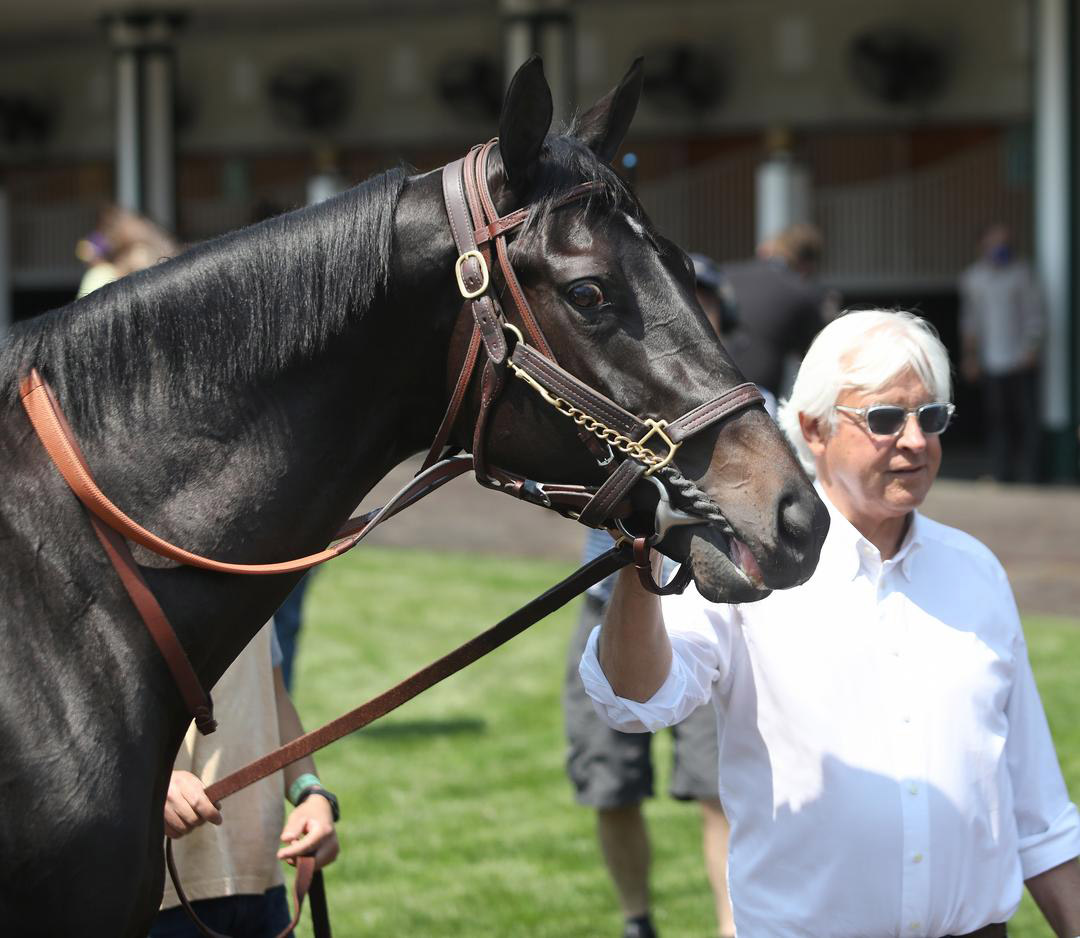
An attorney for embattled trainer Bob Baffert argued in court filings on Wednesday that a ban by the New York Racing Association is unjustified considering the trainer has not violated racing rules in New York and has not been afforded due process by NYRA.
Craig Robertson, Baffert’s attorney, filed the response on Wednesday, five days prior to a scheduled hearing on Monday to consider Baffert’s request for an injunction that would keep NYRA from enforcing the ban. NYRA banned Baffert on May 17, after the trainer acknowledged that his horse Medina Spirit tested positive for the regulated anti-inflammatory medication betamethasone following a win in this year’s Kentucky Derby.
If the ban remains in place, Baffert would be prohibited from entering horses during the prestigious NYRA meet at Saratoga Race Course, which begins on July 15. Baffert has frequently targeted some of Saratoga’s rich stakes races for his top-class horses, and some owners have already transferred horses out of his barn to New York trainers due to the ban.
:: To stay up to date, follow us on: Facebook | Instagram | Twitter
Robertson argues in the filing that NYRA does not have the authority to issue the ban, instead placing that power with the New York State Gaming Commission, which issues licenses to racing participants. Robertson made the same argument in his initial filings to contest the ban.
“If [NYRA] believes Baffert has engaged in conduct that warrants the suspension of his license, it needs to take that matter up with the gaming commission,” the response states. “The gaming commission has been noticeably silent throughout this process because, unlike NYRA, it is following New York racing law and waiting for the administrative process related to Medina Spirit that is currently ongoing in Kentucky to play out before taking any action.”
The filing notes that Baffert has not had a single violation in New York during his 46-year training career, and that he has started horses in New York for 30 of those years without facing a disciplinary action from the gaming commission in the state or from NYRA.
“Despite his distinguished New York racing career, without even a hint of wrongdoing, NYRA believes it has free rein to unilaterally void his constitutionally protected property rights and ban him from all activity in New York without notice and for an indefinite period of time based solely on unproven allegations of a minor infraction … in another jurisdiction,” Robertson wrote.
In its own filings, NYRA has argued that the enormous publicity surrounding the Derby positive would call into question the integrity of its racing product if it allowed Baffert to run horses at its tracks. NYRA’s filings have also underlined Baffert’s public appearances following his acknowledgment of the positive, during which Baffert had argued that he was being unfairly targeted and that he had never administered betamethasone to Medina Spirit. Shortly after those statements, Baffert acknowledged that the horse was given a daily skin treatment with an ointment that contained the substance to treat a skin rash.
Robertson argues in his filing, as he did in the first request for a temporary injunction, that NYRA has made no attempt to allow Baffert to argue his case. NYRA notified Baffert of the ban in a letter issued to the trainer 50 days ago, the response says.
“To date, Baffert has not been afforded a due process hearing,” Robertson wrote. “Courts have continually rejected NYRA’s efforts to either deny or limit a licensee’s right of access to racetracks without pre-deprivation due process of law.”
Baffert has also been banned from entering horses at tracks owned by Churchill Downs Inc. for two years, which would keep the trainer from participating in the Derby until 2024. Baffert has yet to challenge the Churchill ban. Churchill is a private company, and courts have ruled that private companies have broad legal rights to deny individuals from their facilities. In contrast, NYRA operates its tracks under a lease from the state and is overseen by a state agency with powers to approve many of its management decisions.