

Baffert, Zedan file suit against KHRC over split-sample testing
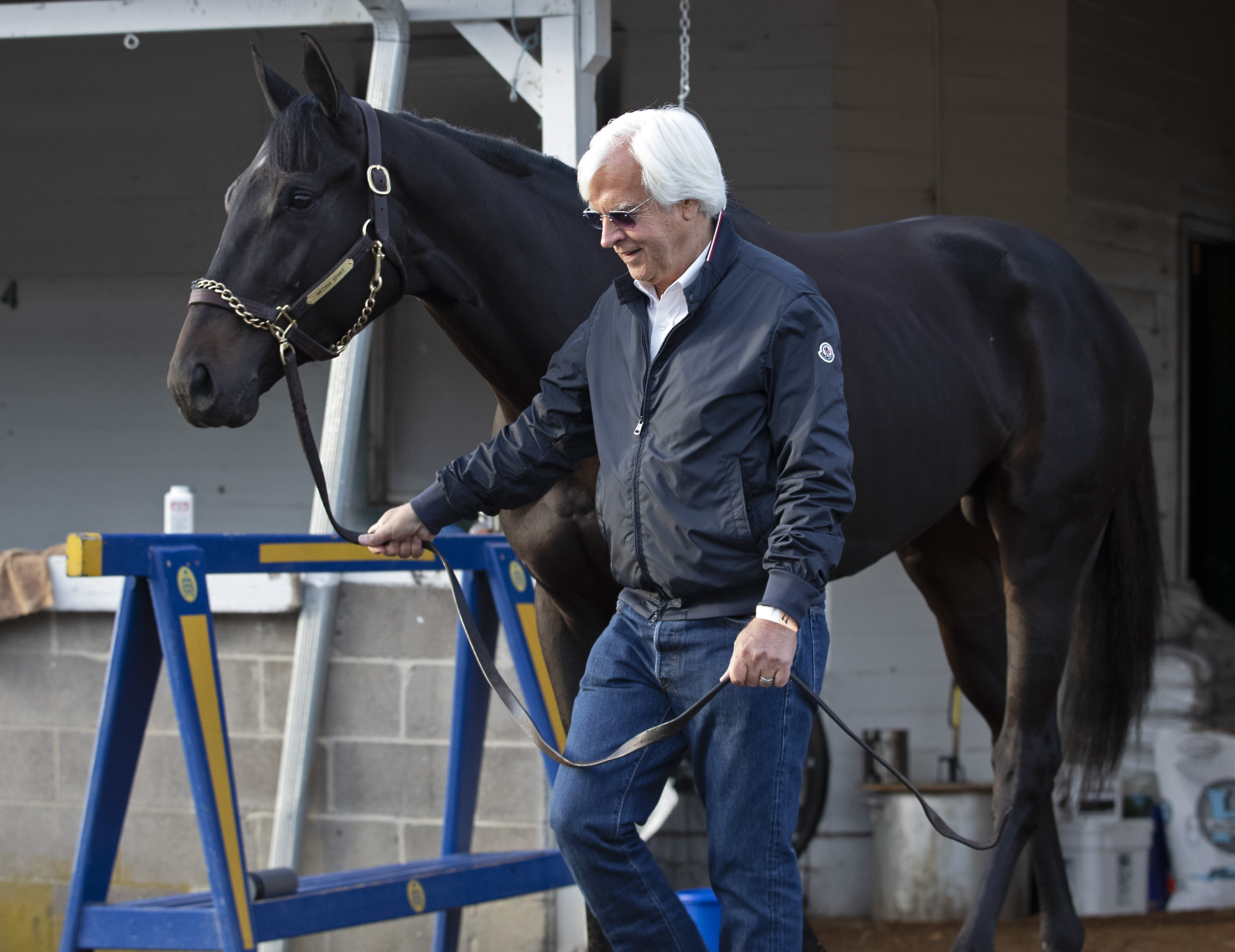
The trainer Bob Baffert and the owner Amr Zedan have filed a lawsuit asking a court to compel Kentucky regulators to allow testing of a urine sample collected from Medina Spirit after the Kentucky Derby, according to court records.
The suit, filed on Monday in Franklin Circuit Court in Kentucky, contends that the Kentucky Horse Racing Commission has violated the due-process rights of Medina Spirit’s connections by “refusing to allow a complete analysis of Medina Spirit’s split urine sample.” Baffert and Zedan contend in the suit that the KHRC is in possession of an untested vial of Medina Spirit’s post-Derby urine sample but will not allow it to be tested.
A hearing on the request for a temporary injunction has been scheduled for Friday morning.
The suit is the first legal action to be filed in what is expected to be a drawn-out struggle over the adjudication of Medina Spirit’s post-Derby positive for betamethasone, a regulated anti-inflammatory medication that is not allowed to appear in a horse’s post-race sample in Kentucky. Medina Spirit faces disqualification from his Derby win if the positive finding is upheld.
Attorneys for Baffert and Zedan have requested that the commission allow testing of the colt’s urine sample for substances other than betamethasone, under the belief that the horse tested positive for the drug through the use of a skin ointment, Otomax, that they have acknowledged was administered to Medina Spirit daily up to the day prior to the Derby. They contend that in the suit that testing for additional compounds contained in Otomax would support their case that the horse did not test positive for the drug through an injectable form.
According to lawyers for the connections, betamethasone was detected in the blood sample of Medina Spirit, and later confirmed in a split sample of the original blood sample. Some substances are more readily detected and quantified in blood rather than urine, and vice versa.
It is unclear from Kentucky’s regulations regarding split-sample testing if licensees can request that the sample be tested for other substances than the substances detected in the primary sample, or if the licensees can request testing of another biological form of the sample, such as urine rather than blood. The regulation states simply that “an owner or trainer may request that a split sample be tested by a split sample laboratory.”
Baffert and Zedan claim in the suit that they had asked the KHRC twice to agree to the additional testing of both samples in mid-May but that the KHRC ultimately refused on May 21. However, on May 24, according to the suit, the parties “reached a compromise” that would allow the “remnants” from Medina Spirit’s primary sample to be tested for the additional substances, but that the remnant sample was then “damaged/contaminated” during shipping.
“This has created doubt over whether those samples will be sufficient to allow plaintiffs to test them for the compounds in Otomax to prove that the betamethasone in Medina Spirit did not come from an injection,” the lawsuit states.
Like regulations in other states, Kentucky rules hold the trainer responsible for whatever is found in a horse’s system at the time of a race, but the rules also allow for mitigating circumstances in determining penalties. Attorneys for Baffert and Zedan have argued that the use of the skin ointment containing betamethasone should be a significant mitigating circumstance given that the KHRC’s regulation of betamethasone is based on the administration of the injectable form of the drug.
“Plaintiffs have demonstrated a substantial question as to the underlying merits of the case, and that there is a substantial likelihood that they will ultimately prevail since due process and the KHRC’s rules on mitigating circumstances require the type of protections that the KHRC has refused to provide,” the suit states.