

Baffert files lawsuit against Churchill Downs over ban
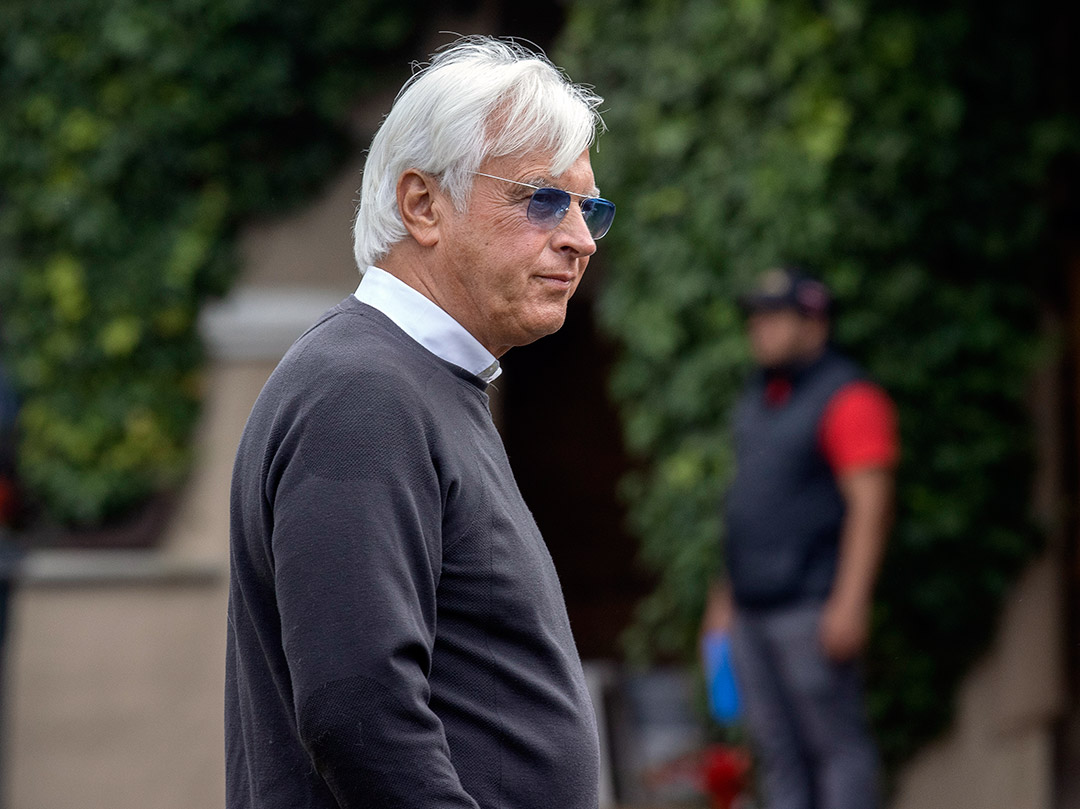
The embattled trainer Bob Baffert has filed a lawsuit in federal court in Kentucky alleging that Churchill Downs Inc. has violated the trainer’s due-process rights in banning him from its tracks through the 2023 Kentucky Derby, according to a court document.
In a suit filed in U.S. District Court for the Western District of Kentucky on Monday, Baffert’s attorneys claim that the ban has “unlawfully deprived and will continue to deprive Baffert of his right to due process of law … and his right to participate in horse racing in Kentucky under Kentucky law.”
The lawsuit seeks a ruling declaring Churchill’s ban to be unlawful and an injunction that would prevent the company from “further barring him.”
“CDI has, with malicious intent, caused significant damage to Baffert’s ability to conduct his customary business on a national scale,” the lawsuit states. “From context, it is apparent that CDI’s targeted sanctions have the singular aim of destroying Baffert’s career.”
In response to the lawsuit, CDI released a statement saying it will “fight this baseless lawsuit and defend our company’s rights.”
“The lawsuit filed by Bob Baffert is disappointing but certainly not surprising,” the statement said. “His claims are meritless and consistent with his pattern of failed drug tests, denials, excuses and attempts to blame others and identify loopholes in order to avoid taking responsibility for his actions. These actions have harmed the reputations of the Kentucky Derby, Churchill Downs, and the entire Thoroughbred racing industry.”
CDI, a publicly traded company, announced the ban shortly after Baffert acknowledged that his horse Medina Spirit tested positive for betamethasone, a regulated corticosteroid, after winning last year’s Kentucky Derby. Eight days ago, Kentucky stewards disqualified the horse and issued a 90-day suspension based on the positive. Baffert and the horse’s owner, Amr Zedan, have appealed the penalties.
Medina Spirit’s win gave Baffert a record seventh Derby victory. The ban by Churchill cited both the Medina Spirit positive and several other medication violations in Baffert horses in the years leading up to the Derby.
Although Baffert’s attorneys successfully argued a case in New York last year based on similar arguments of a violation of due-process rights, that case involved a ban issued by the New York Racing Association, a quasi-governmental entity. Churchill Downs, like other private companies, has far broader rights to exclude individuals than entities that are closely entwined with state agencies.
Baffert is being represented in the case by Clark Brewster, an attorney based in Texas who is also part of his legal team in the appeal of the Kentucky penalties, and by Mike Meuser, a Lexington attorney. In a statement released on Tuesday after DRF published an article about the lawsuit, Brewster said that “the facts are clear in this case,” and he accused Churchill executives of allowing a “false narrative” to guide their actions.
“The notion that Churchill Downs, which is not even tasked with regulating horse racing in Kentucky, could unilaterally ban a trainer by an edict coupled in a press release without having the facts or any semblance of due process should arouse outrage in any fair-minded person,” Brewster said.
The 90-day suspension issued by Kentucky stewards would go into effect on March 8 and run through June 5. This year’s Kentucky Derby is scheduled for May 7. A state judge in Kentucky on Wednesday is scheduled to hear arguments on a temporary injunction preventing the suspension from going into effect while Baffert appeals the penalties.
In addition to the ban, CDI last year modified a points system determining eligibility for this year’s Derby that makes any horse trained by Baffert ineligible to receive points. Baffert has several leading 3-year-olds in his barn, but none has earned any points toward eligibility for the Derby due to the modification.
The suit noted that Tyler Picklesimer, one of Kentucky’s stewards, is also employed by Churchill Downs as the director of racing at one of its properties, Turfway Park. In addition, the suit details the many tax advantages that CDI has been granted by the state of Kentucky and the multiple layers of state regulation overseeing the company’s racing and betting operations, in an attempt to more closely align Churchill with state regulatory bodies.
The lawsuit reiterates that Baffert and his attorneys believe that Medina Spirit tested positive for betamethasone after receiving treatments of a skin ointment in the month leading up to the race, rather than from an injection of the drug, the most common use of betamethasone. The attorneys have also argued that Kentucky’s regulations do not apply to the betamethasone compound in the ointment, betamethasone valerate, but rather to betamethasone acetate, which is the injectable form of the drug.