
Amid coronavirus chaos, the racetrack provides an oasis
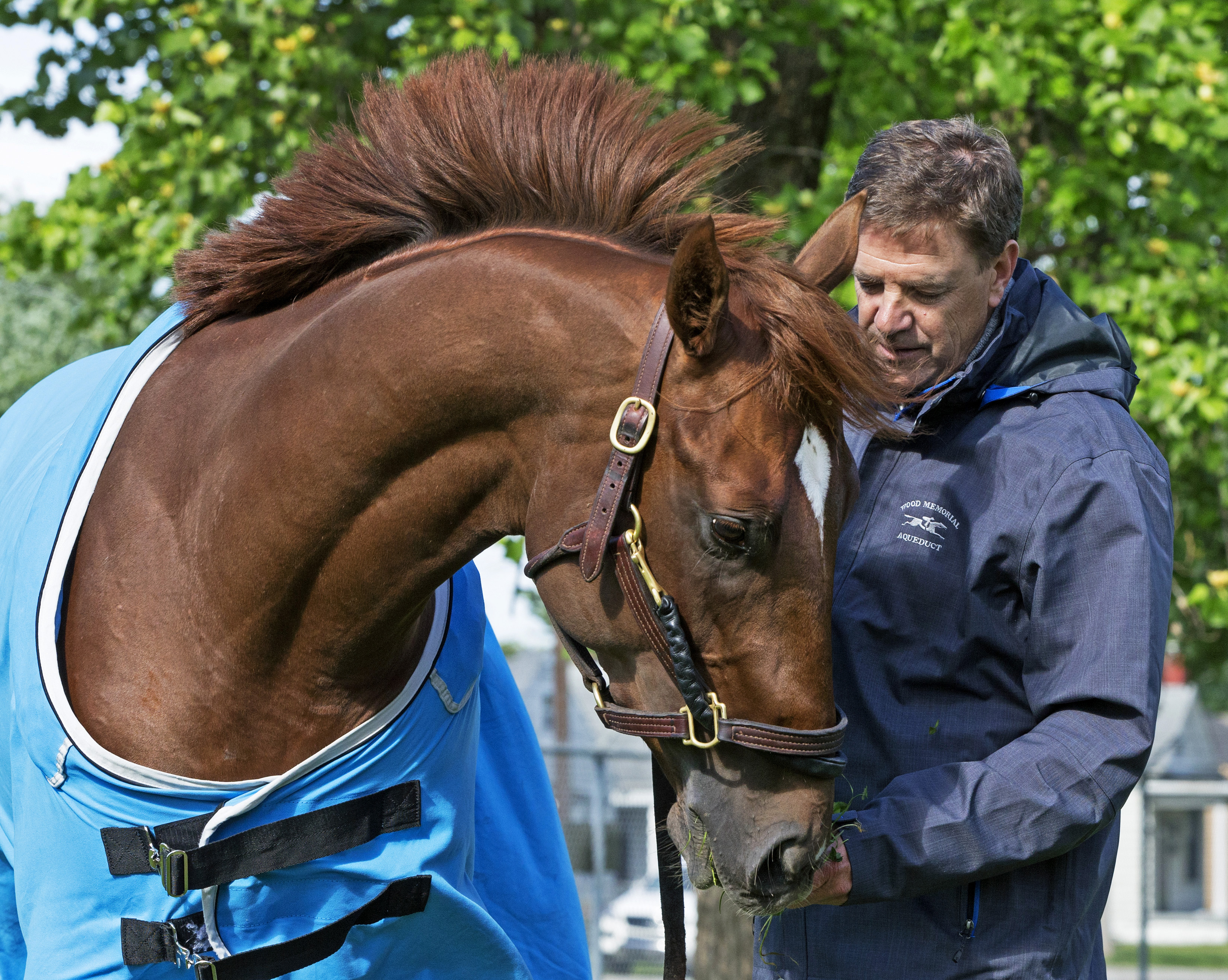
The horses nodding their heads over the stall webbings at their grooms in racetrack shed rows at dawn, walking to the track to gallop with exercise riders in the irons, and racing in a pack before empty grandstands have no idea about the coronavirus pandemic, as officials work to slow and halt its spread.
While virtually every other sporting activity has ground to a halt, Thoroughbred racing continues to operate – albeit, not in a vacuum, as tracks are racing without spectators and postponing or scrapping race dates, with the postponement of the Kentucky Derby to September the most visible effect.
The continuation of racing has been welcomed by those who make their living on both the front and backsides of racetracks, including grooms and other direct caretakers of horses. A horse’s health largely depends on routine, and the caretakers can’t work from home.
"They just live for their horses – that's all they do, all they want to do," New York-based trainer James Bond said. "It's a tough situation. God bless the people that take care of them. They've got families, too, in different places, and they're nervous about their families, they're nervous about themselves. And they don't bat an eye. They just come in there and they do their job, and I don't know what we'd do without them."
Along with the day-to-day tasks of feeding, grooming, and otherwise caring for horses, racetracks have continued to conduct their morning training hours – even Keeneland, which has canceled its spring meeting, has not altered training hours for horses already on its grounds, although no other horses are permitted to ship in.
"They need to train because they're highly strung, and right now, we are racing,” said trainer Graham Motion, who is based out of the Fair Hill Training Center in Maryland. “They need to train, they need to get out of their stalls, because we do have them so tightly wound.”
Thoroughbreds at the peak of fitness can’t simply be shipped out of racetracks and turned out in fields until the current crisis has passed. Motion raised the issue of the strain that a massive influx of horses from tracks and training centers would put on farm space; Bond noted that releasing a horse unused to turnout after the structure of the racetrack poses a safety risk.
“You can’t just take these horses and say, ‘Let’s go to the farm,’ ” Bond said. “That would be the perfect move in this reality if you could do it. But these horses are athletes.”
Bond, who wanted to be a veterinarian when he was younger, recalled making rounds with a vet in the Finger Lakes area who spoke of horses being injured in turnout.
“He said, ‘The only thing I hate is the wintertime, these farm calls,’ ” Bond said. “ ‘These horses, they think they’re just Mighty Mouse. All they do is they go out, and they run in these pastures, and they run through fences, and do this stupid stuff, and they ruin themselves for the rest of their life.’
“You have to be really careful turning horses out,” Bond concluded, noting that he introduces offtrack horses to turnout by gradually increasing the size of their paddock and that different horses, such as colts, require additional precautions.
So, as the horses remain at the racetracks and training centers, so, too, do the grooms and additional stable staff – many of whom, Bond noted, live in close proximity to their charges. Racetracks, training centers, and individual stables thus have undertaken their own precautions against the pandemic.
“We’re really fortunate at Fair Hill that we’re very spread out, it’s kind of a unique situation, I guess,” Motion said of his home base. “But we are working a little bit on top of each other, and we’re very conscious of it. We have a lot of signs up around the barn about the virus, and washing your hands, and personal hygiene, and everyone’s trying to stay in their own space as much as they can. But the show can and needs to go on – and quite frankly, people need to make a living.”
Racetracks around the country have instituted strict access policies to stable areas. At Keeneland, for example, no additional horses are permitted to ship onto the grounds – perhaps bringing in caretakers from other jurisdictions who may have been exposed. The backstretch is limited to essential horsemen, and screening checkpoints, including temperature checks, have been established at entrance gates.
While Keeneland has canceled its spring meeting – partly to prevent that influx of out-of-state horsemen – other tracks have continued to operate without fans, keeping racing employees at work generating handle via off-site wagering.
Back in New York, Aqueduct raced last weekend with no fans and additional restrictions, such as allowing owners access only to a horsemen’s lounge on the track’s second floor. Starting Friday, owners will be completely barred from Aqueduct as well as the barn area at Belmont Park. Santa Anita announced a similar policy Tuesday.
Patrick McKenna, the New York Racing Association spokesman, noted that Thoroughbred racing is responsible for 19,000 jobs and more than $3 billion in annual economic impact in New York.
“Racing generates jobs in nearly every county,” McKenna said in a statement. “These are good-paying jobs connected to small businesses. Opening Aqueduct, and racetracks across the country, supports horsemen and their businesses, racetrack employees, and the backstretch community.
“The uncertainty we are facing as a country right now is without precedent, and its effect on the economy is surely to be immense,” he continued. “With each day that we are able to open the doors safely, NYRA and tracks around the country are reducing that economic uncertainty for an enormous number of hourly workers who otherwise would not be earning money to support their families. We owe a tremendous amount of credit to the men and women who are doing those jobs to keep us going — cleaning crews and maintenance staff especially. This is a delicate balance, and right now we are proud to be able to find the right balance to have a positive economic impact in New York.”