
Allowance features part of pick four
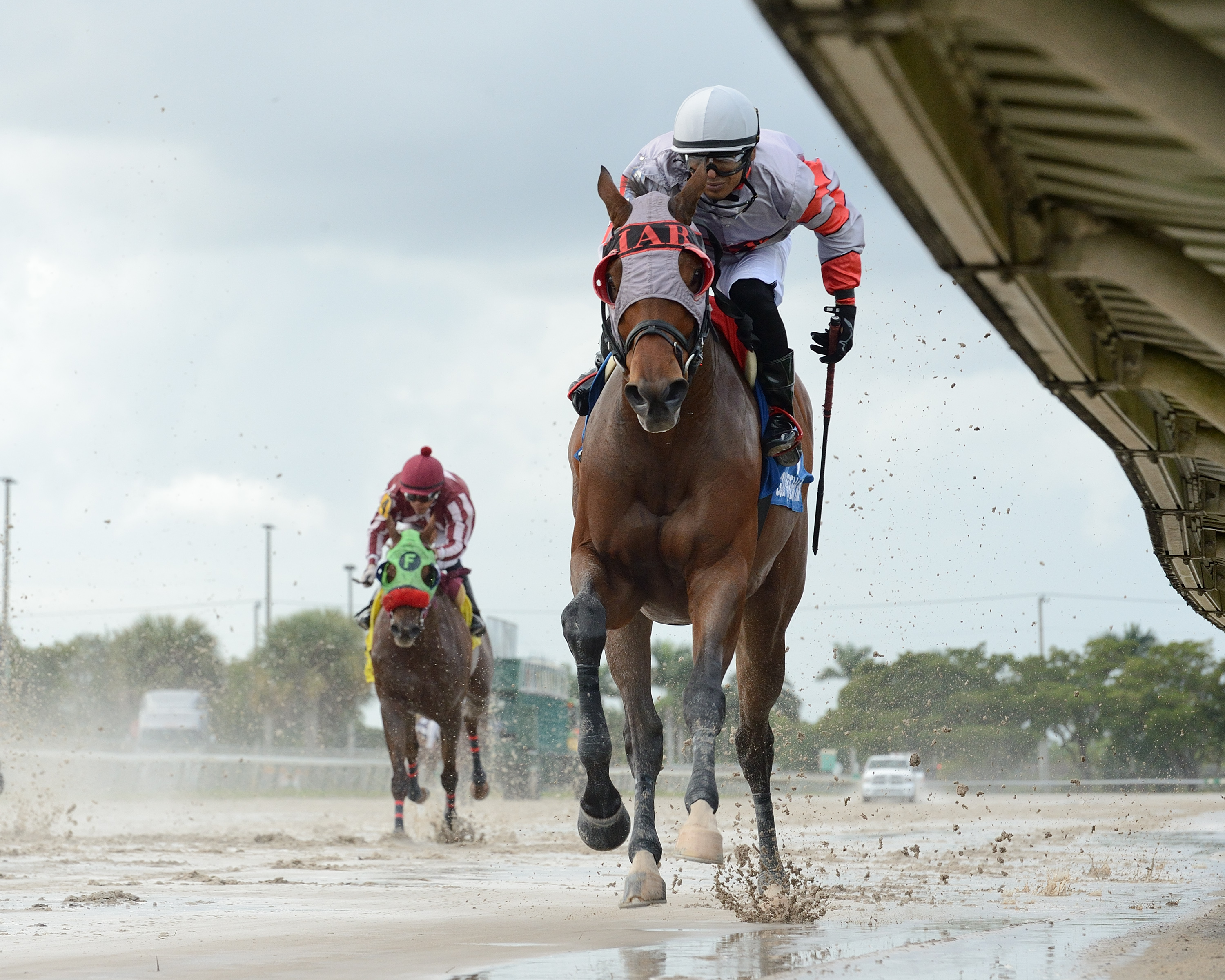
The pick four that ends another three-day week at Gulfstream Park will include a pair of main-track allowances that serve as co-features of a 10-race Sunday card at the South Florida track.
A $52,000 allowance sprint for fillies and mares kicks off the 50-cent late pick four as race 7, with a $53,000 mile for some of the better older horses on the circuit being run an hour or so later as race 9.
Loriloupies, returning from an 11-week layoff for leading trainer Saffie Joseph Jr., looks like the filly to beat in a field of seven in race 7. Quenane and Squeezadios are among the principals in a well-matched lineup of seven in race 9.
:: Get Daily Racing Form Past Performances – the exclusive home of Beyer Speed Figures
The co-features also are part of the 20-cent Rainbow 6, which spans races 5-10. A pool guarantee of about $300,000 for the Rainbow 6 can be expected, assuming the jackpot isn’t swept Friday or Saturday by a solo winning ticket.
First post is 12:50 p.m. Eastern, with the last race going at 5:56. A 60 percent chance of rain in the local forecast will cast doubt on whether four races on the turf (races 2, 4, 6, 8) will remain as scheduled.
After Sunday, Gulfstream goes dark until live action resumes Friday. The highlights next weekend are a pair of one-mile turf races for 2-year-olds, the $75,000 Proud Man and $75,000 Sharp Susan. Both go Saturday.
Noble Drama to CT Classic
Noble Drama, the standout Florida-bred with earnings of $705,687, runs next in the Grade 2, $800,000 Charles Town Classic on Aug. 27. The 6-year-old gelding has won his last two starts, both of them $60,000 handicaps.
“I just think this year he’s gotten better than normal,” said David Fawkes, who trains Noble Drama for owner-breeder Harold Queen.
◗ Gulfstream is among the latest tracks to modify its whip rule, effective as of last weekend. Jockeys may use the whip in overhand fashion no more than six times, and no more than twice in succession, from the three-eighths pole to the wire. The agreement on the rule included input from the Jockeys’ Guild and local horsemen.