
After three-year battle, Mott agrees to serve 7 days for medication violation
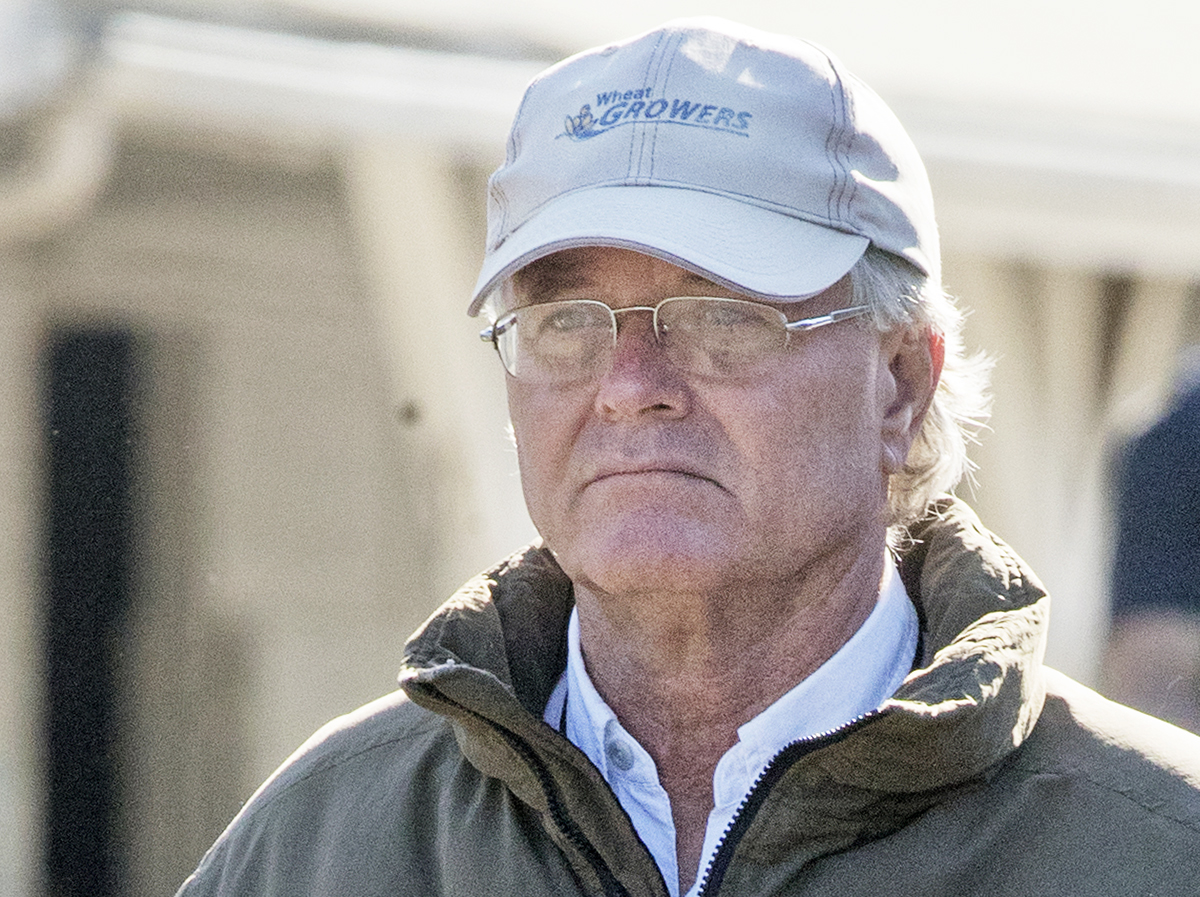
Hall of Fame trainer Bill Mott believes he has helped New York horsemen win the war, but he will surrender his personal battle with the New York State Gaming Commission over a positive drug test regarding one of his horses dating back nearly four years.
On Thursday, Mott will begin serving a seven-day suspension for the finding of the therapeutic medication Flunixin (banamine) in the horse Saratoga Snacks, who finished last in a race at Belmont Park on Sept. 20, 2014. Mott also will pay a $1,000 fine.
Mott also had been cited for Saratoga Snacks having an overage of Lasix in his system. After a three-year legal battle with the commission, it was ordered that Mott was no longer being held responsible for the Lasix overage. In New York, Lasix is administered by a third party, in this case a veterinarian employed by the New York Racing Association.
Mott will serve the suspension – reduced from 15 days provided he does not incur another medication violation for a one-year period beginning July 11 – and pay the fine as a result of a settlement agreement he reached last week with the commission. Mott agreed to drop his lawsuit against the commission, the basis of which was a lack of due process because there was not enough blood to have a split sample conducted on Saratoga Snacks, something Mott felt was a right afforded him – and all horsemen – under commission rules.
“I signed forms that said it was my right to have a split sample, but when it came right down to it they didn’t give it to us because there was none available,” Mott said. “When we questioned it they said ‘Well, we said it’s your right, but it’s really not your right.’ That was what this whole thing was about.”
During the case, Drew Mollica, Mott’s attorney, showed that in nearly half of 93 medication violation cases over a 10-year period (2004-14), there was not enough blood available to conduct a split-sample test.
Last November, the commission announced it would begin taking enough blood to assure horsemen of a split sample, also known as a referee sample, in the event a positive drug test is called. That program is largely funded by the New York Thoroughbred Horsemen’s Association.
“I feel like the only thing we probably accomplished is we finally have a split sample, but we need to read the rule that goes along with it,” Mott said. “If the split sample comes back differently from the original test, does that mean there’s no problem? And if there is no split sample, does that mean there’s no problem? In Kentucky, if there’s no split sample, the original test doesn’t mean anything.”
Mott said over the last three-plus years he has spent a sum in the low six figures on legal fees and thought he would have to pay a sum equal to that to continue his case in civil court.
“I really believe if we went to civil court we could get the whole thing thrown out,” Mott said. “But I can’t justify spending that much money to get that done. I’m going to take the seven days and try to get it behind me.”
Mollica credited New York Supreme Court Judge Barry Kramer with helping to bring a resolution to this case. He also praised Mott for having the courage to take on the commission for as long as he did.
“I couldn’t have been more proud to represent him and couldn’t have been more proud of the result for the benefit for New York horsemen,” Mollica said. “The victory means nothing if we don’t as an industry demand that the Gaming Commission stops these unconstitutional processes. We have to hold them accountable; that’s what Bill Mott did here, he held them accountable. We have to demand transparency.”
Mott will be eligible to return to training July 12. During his suspension, horses from his barn will run in assistant trainer Leana Willaford’s name.
This will be the first time Mott has served a suspension since 2002, when one of his horses tested positive for lidocaine at Aqueduct.
Mott, 64, was inducted into the Hall of Fame 20 years ago. Among North American-based trainers, he ranks fifth all-time in purse money won ($266.1 million) and sixth in races won (4,840).