Doug O’Neill has missed saddling a big horse in a big race before. It’s the nature of the game in this globally oriented age, and it helps to have an assistant trainer you can count on to set the tack right.
Mike Puhich had to laugh. The scene seemed almost surreal, at least compared with the events of just a few months before.
Out on the track the most celebrated jockey in America, winner of the 2012 ESPY Award for Thoroughbred racing, was gearing up to work a 5-year-old gelding who was pretty much anonymous outside a small circle of admirers living in the Pacific Northwest. There were no satellite trucks parked nearby. No rope lines holding back the media. No New York Times. No Bob Costas.
Since the powers of summertime racing decided to hold their marquee events for 3-year-old fillies on the same warm August afternoon, why not compare and contrast.
The Alabama Stakes at Saratoga is a mile and one-quarter test on the main track for a purse of $600,000, with $360,000 to the winner.
The Del Mar Oaks at Del Mar is a mile and one-eighth on the grass course for a purse of $300,000, with $180,000 going to the winner.
Hap Proctor knows better than to take any credit for the run of good fortune his brother’s had at Del Mar this summer. The Tom Proctor stable, led by the horses of Leonard Lavin’s Glen Hill Farm, is on a giddy roll, winning with six of the first 14 starters it has sent forth, including Old Time Hockey in the La Jolla Handicap last weekend.
But as manager of the Glen Hill Farm operation in Ocala, currently in the midst of his annual trip to Del Mar, Hap at least has earned bragging rights as part of the team, a fact he concedes as only one Proctor would to another.
There are any number of ways to analyze the $250,000 John C. Mabee for older fillies and mares on the Del Mar turf course Sunday. One thing is certain, however. At the end of the 1 1/8-miles, wherever they end up in the field of six, Nereid and Cambina will be practically attached at the hip.
Their attraction began 13 months ago at Hollywood Park in the American Oaks. The 1 1/4 miles over the Hollywood Park grass came down to four fillies on the line, with Nereid and Cambina in a dead heat for the win.
Heroes serve a purpose, though one size does not fit all. Mine are mostly literary for the simple reason, I suppose, that it is natural to aim for even the loftiest of targets once you’ve settled on a certain path in life.
I lost three heroes from my living pantheon this week, making it a bad week by most standards but a good time to embrace the reasons they were there in the first place.
If there is a particular secret to making the Hall of Fame as a Thoroughbred trainer, it’s well kept.
For instance, you can assemble a handsome collection of Breeders’ Cup trophies over a long career, win a classic, or train horses to do things no other horse has done before, yet the Hall will fail to recognize men like Michael Dickinson, Julio Canani, David Hofmans, Jay Robbins, or Mel Stute.
Craig Fravel, then second-in-command at Del Mar, looked down upon the field of five parading postward for the 1997 running of the $1 million Pacific Classic and rightly wondered:
“That’s not much for a million dollars, is it?”
He was right. It wasn’t, even though the division of older horses in California at the time was dominated by horses like Gentlemen and Siphon, from the stable of Richard Mandella, and they were proving tough to beat at any price.
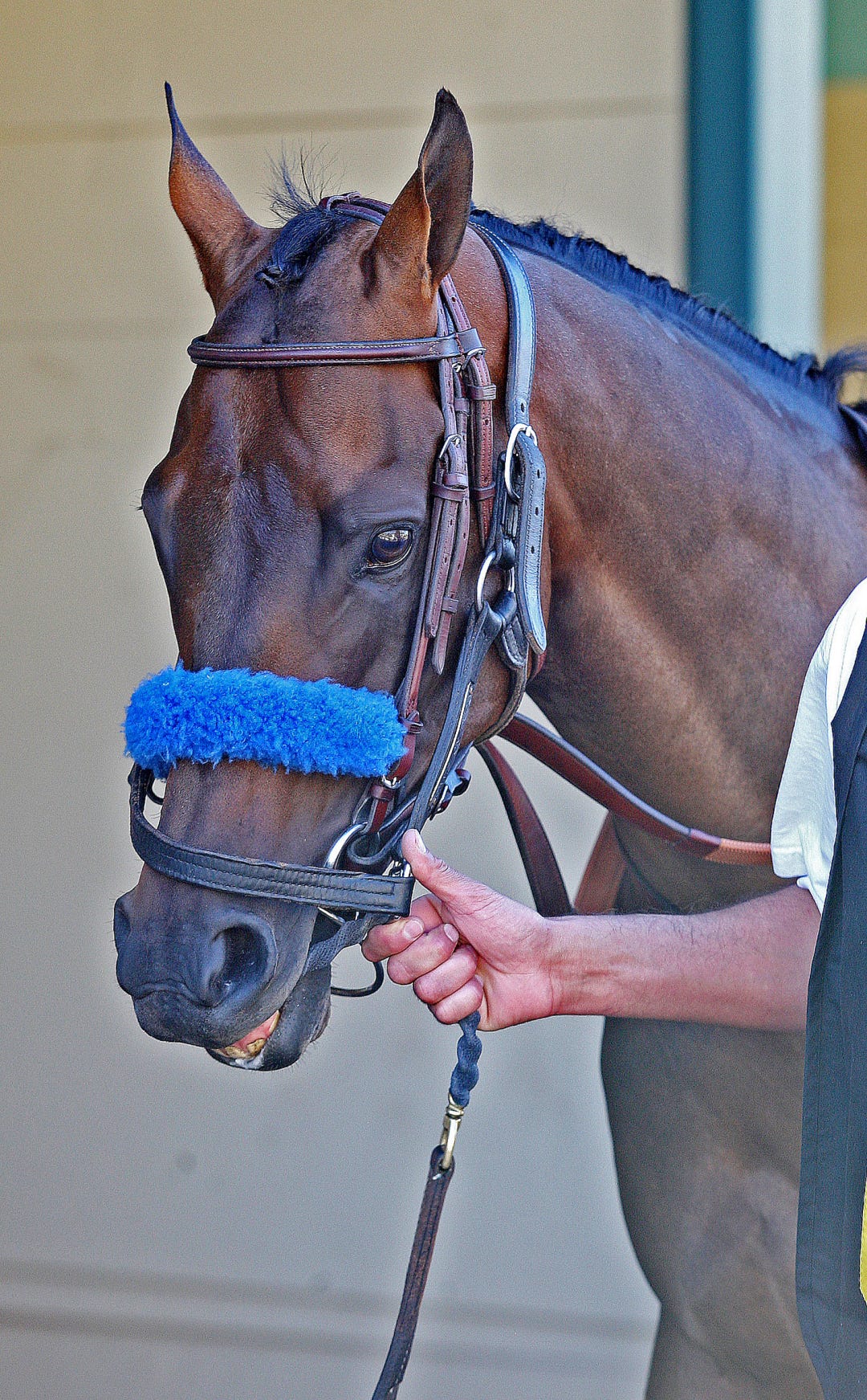
In calling the field postward for the $200,000 San Diego Handicap on Saturday, Del Mar trumpeter Les Kepics might want to play a few bars from “St. James Infirmary” or riff on the opening music from “General Hospital.”
Rail Trip, a golden oldie at 7, butchered his foot last November stumbling at the start of his final appearance of a frustrating East Coast campaign and is lucky to be walking on it, let alone rounding into a hint of the form that brought him victories in races like the 2009 Hollywood Gold Cup and 2010 Californian.