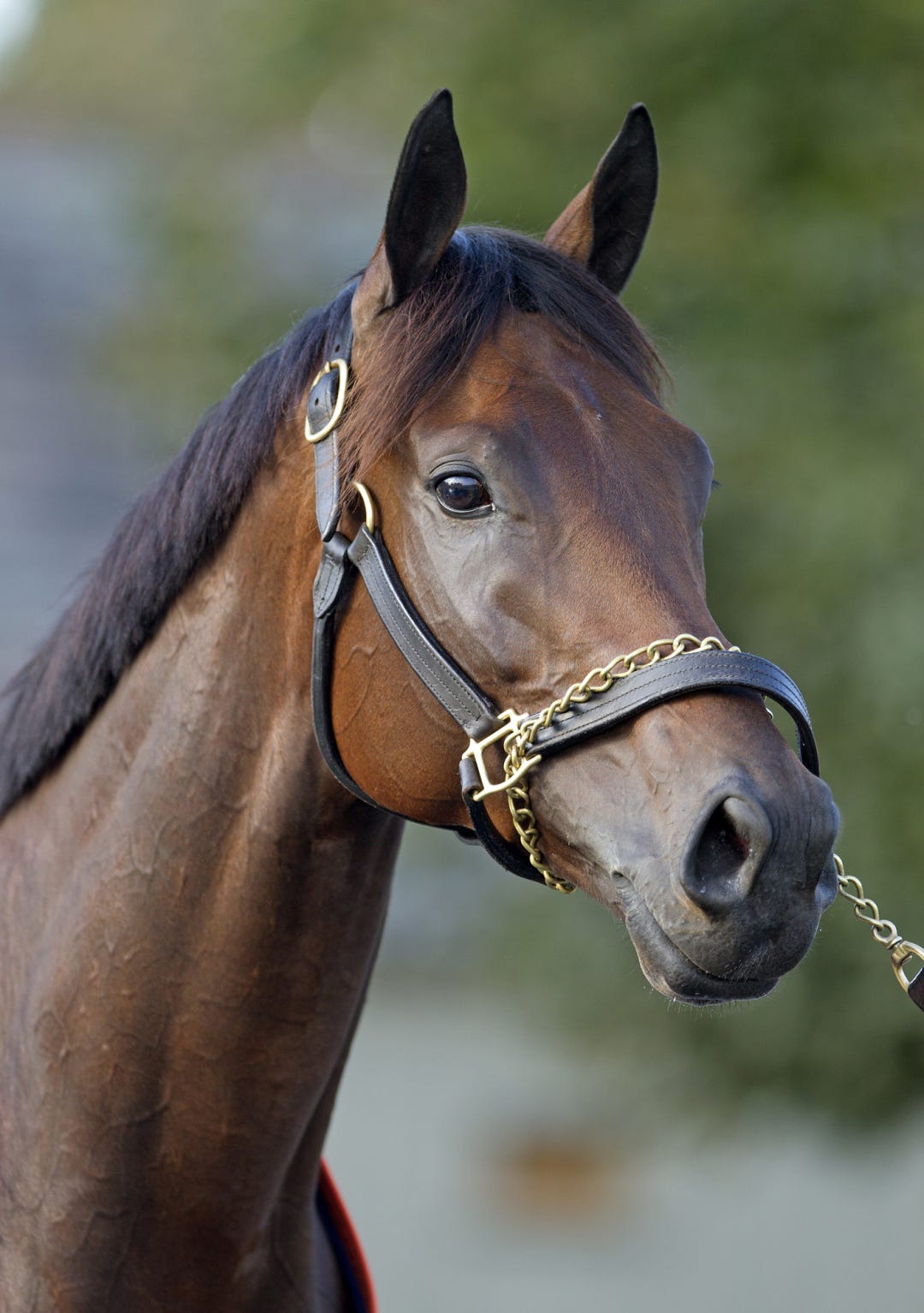
Danehill dominated Australia and Europe for decades, named leading sire in Australia nine times, Britain and Ireland four times, and France two times. Now he adds his first broodmare sire title to that list.
It took a few days after the new year for the last earnings to trickle in and push Scat Daddy past Hard Spun as 2011’s leading freshman sire. He cut it close, but Lady of Shamrock and Swag Daddy’s stakes wins Dec. 30 and 31 made the difference. The final margin was $11,175.
Besides total progeny earnings, Scat Daddy also was the leading freshman sire by winners (29), stakes winners (5), and stakes horses (11).
Kitten’s Joy had a remarkable year in 2011 with his third crop of runners. He edged out Smart Strike by $906 to become leading juvenile sire, finished the season in second to Smart Strike on the turf sire rankings, and was 10th on the general sire list.
That success wasn’t just because of lucky genetics. Kitten’s Joy’s owner and breeder, Ken Ramsey, has left very little to chance when it comes to the breeding career of his 11-year-old “house stallion.” If anyone is surprised to see a grass champion emerge as a leading sire of juveniles, Ramsey suggests they take another look.
When Ken Troutt and then-partner Bill Casner signed the deal for Prestonwood Farm, now WinStar, the stallion Distorted Humor was simply a small part of a large-package deal involving land and horses. At the time, the Forty Niner horse didn’t look terribly valuable. He’d started his stud career in 2000 with a $12,500 fee, and with his first foals just hitting the ground, there was no reason to think Distorted Humor someday would become North America’s leading sire.
As Bernardini steps in to replace his sire, A.P. Indy, in the $150,000 stud fee bracket, stallion managers know that while a top proven sire can still command a high price tag, even the best of the new stallions aren’t able to crack that upper market like they used to.
This year’s survey of the Midwest stallion market and the corresponding broodmare population reflects the pragmatic attitude regional breeders have adopted since the nation’s economic downturn that preceded the 2009 breeding season. While returns at the major Thoroughbred sales this year are registering increases compared with the last several years, stallion and mare populations in the Midwest have remained constant, even in states where purses are supplemented by added gaming revenue.