

This year's Preakness to be run on Oct. 3 at Pimlico
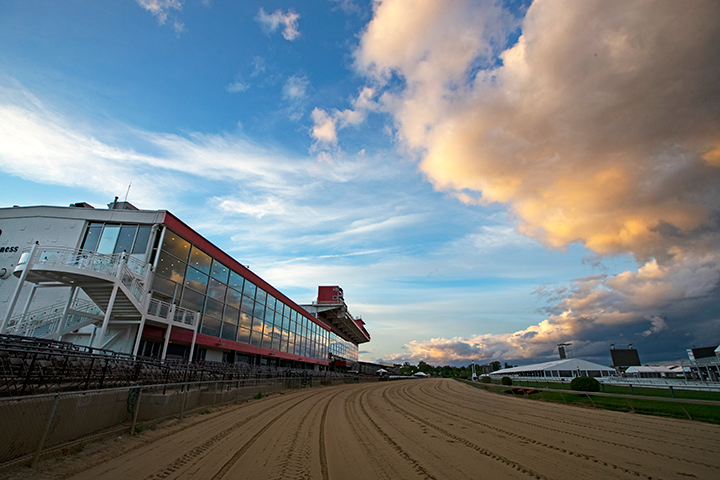
The 2020 Preakness Stakes at Pimlico Race Course in Baltimore has been rescheduled to Oct. 3 due to the COVID-19 pandemic, according to Larry Hogan, the governor of Maryland, who made the announcement during a Preakness-themed broadcast on Saturday afternoon, the day the race would have been held this year.
The announcement by Hogan was preceded by a short appearance by Belinda Stronach, the president of The Stronach Group, which owns Pimlico.
“I would like to thank Governor Hogan and all of the state and local leaders, along with our industry stakeholders, racetrack communities and partners, including our broadcast partner NBC Sports, for the ongoing support and commitment to racing,” Stronach said in a release accompanying the announcement.
:: To stay up to date, follow us on: Facebook | Instagram | Twitter
The rescheduling of the Preakness to the first Saturday in October would place the race four weeks after the rescheduled Kentucky Derby on Sept. 5, and five weeks prior to this year’s Breeders’ Cup, on Nov. 6-7 at Keeneland Racecourse in Lexington, Ky.
The Stronach Group said in its release that additional details regarding the Preakness and the Black-Eyed Susan Stakes, a race for 3-year-old fillies traditionally held the day prior to the Preakness, would be made available “in the coming months.”
It is unclear if races scheduled for the summer or fall would be allowed to have spectators due to the unpredictability of the arc of the COVID-19 virus, which has disrupted the schedules of all major sports in the U.S. However, tracks in Kentucky have already been given the all-clear to resume racing, though spectator-free, and it is generally believed that both the Derby and other major races at tracks with government approvals to operate would take place even without spectators.
The Stronach Group said that InfieldFest, a concert usually held in the infield of Pimlico for the Preakness crowd, would not be held at the Preakness this year.
As the second leg of the Triple Crown, the Preakness Stakes has been held two weeks after the Derby since 1931, the year that the present-day spacing of the Triple Crown was set (with one exception, in 1945, when it was run one week after a rescheduled Kentucky Derby). The race was first run in 1873, two years prior to the Kentucky Derby having its first running. While the Preakness was not held from 1891-1893, it has been run continuously since then, though it was run at Gravesend Track in Coney Island, N.Y., from 1894-1909.
Like the Kentucky Derby does for Churchill Downs Inc., the Preakness generates tens of millions of dollars in revenue for Pimlico’s parent company, The Stronach Group. Last year, handle on the Preakness set a record at $62.8 million, while total handle on the entire 14-race card also set a record, at $99.9 million. Attendance last year was announced by Pimlico as 131,256.
The Preakness is also critical to the community surrounding Pimlico and to Baltimore, drawing tens of thousands of people into the city and neighborhood each year. Several years ago, government officials in Baltimore feuded publicly over The Stronach Group’s public vows to move the Preakness to the company’s other Maryland track, Laurel Park, but that feud was ended last year when the groups coordinated the drafting of legislation that would keep the Preakness at Pimlico for at least 30 years. The legislation became law this year.
The rescheduling of the Preakness will likely force the New York Racing Association to run the Belmont Stakes, the third leg of the Triple Crown, sometime this summer. On Saturday, New Yok Gov. Andrew Cuomo gave NYRA the go-ahead to conduct spectator-free racing beginning on June 1. A day earlier, the association’s chief executive officer, David O’Rourke, told David Grening of the Daily Racing Form that the race would likely be run during the summer, at a distance that might be shorter than the traditional 1 ½ miles.