
Women leaving their mark on racing, empowering next generation
International Women’s Day, first celebrated in 1909, is a globally recognized day both celebrating the achievements of women and presenting a call to action for accelerating equity.Presented alphabetically below, nine women holding various roles in the Thoroughbred industry share their thoughts on working as women in racing.
Shannon Bishop Arvin
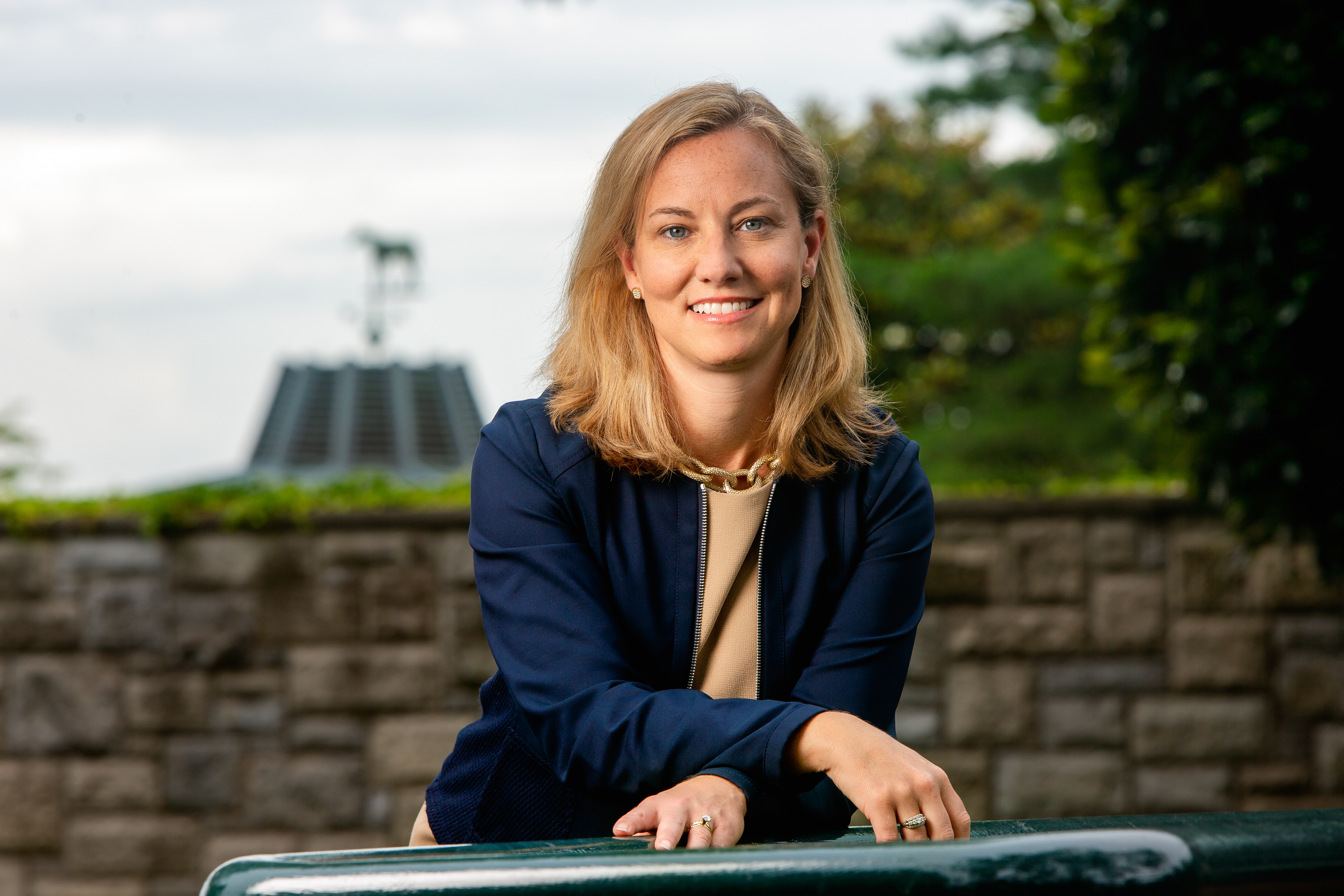
Arvin, who serves as Keeneland’s president and CEO, was the first woman named to the position. She also is the first woman to be elected chair of the National Thoroughbred Racing Association. In other roles in the industry, Arvin is a member of The Jockey Club, a trustee of The Jockey Club Safety Net Foundation, a trustee of the Thoroughbred Owners and Breeders Association, and serves on the board of directors of the University of Kentucky’s Gluck Equine Research Foundation.
What is your favorite part of working in the racing industry? “My favorite part of working in the racing industry is being out on the Keeneland grounds, working with our amazing team, and interacting with people from all over the world and from all walks of life. I love being on the backside in the barns, seeing the many people who work so hard, revere the horse, and make working with horses their life’s work. Traveling is also a fascinating part of the racing industry, both domestically and internationally. [Former Keeneland president Ted Bassett] gave me some good advice early on, which was to ‘not waste too much time sitting behind my desk.’ I take that advice to heart and work to spend time everywhere on our grounds and other places where Keeneland has a reach.”
What are any difficulties you feel women in racing face? “I think the obstacles women face in the racing industry are similar to those in other industries. You have to first be confident in your own skin, be yourself, and know to your core that being a woman is not an impediment. If the first door closes, keep knocking. Surround yourself with good people, men and women, who believe in you, and strive always to do the right thing. Don’t be afraid to think outside of the box, and never do things a certain way just because that is the way they have always been done. I am not a disrupter by nature necessarily, but at the same time, I’m not at all afraid to disrupt those practices, customs, and habits that should be disrupted.”
Jocelyn Brooks
Brooks is the director of sales at Airdrie Stud, which currently stands 12 stallions in Kentucky and which also has a consignment presence at major sales. She previously was chief of staff for Sagamore Racing.
What is your favorite part of working in the Thoroughbred industry? “My favorite part is the horses, close second would be the people! There is something so special about knowing a horse from a foal to a yearling to a racehorse and beyond . . . getting to watch them grow and develop physically and mentally. Each horse is an individual, and I love learning and understanding what works for each of them in their routines and training. I love seeing as many horses as possible, at the sales or on the track. There is so much to learn and being around the individual athletes, looking at their breeding and pedigree, it brings things full circle.”
What are any challenges you feel women in the industry face? “Male or female, just being put in a position doesn’t mean you will have respect overnight, but I do think as a woman it can be harder to have your voice heard. Women are often dismissed, not heard, and/or not taken seriously. It is frustrating and disheartening. If you’re passionate about what you do and what you believe, you will be heard and you will find people that value and respect your time, energy, and insights. We can all make an effort to proactively practice inclusivity and encourage others to do so.”
What’s your advice for women entering the industry? “For women specifically, I would say make connections with women already in the industry – we would love to support you and bring your passion and talent to our industry. There are formal programs like the Amplify Mentorship Program and casual settings like the Thoroughbred Ladies Cocktail Club.”
Dr. Tiffany Mack Daniels
Living The Dream Stables is a syndicate committed to increasing minority Thoroughbred ownership. Daniels is an owner and founding member of Living The Dream’s women’s syndicate, a group of African-American owners who scored their first win in 2022. The group also promotes the Ed Brown Society, which celebrates the history of African-Americans in the equine industry and creates opportunities for young people of color to gain industry experience.
What is your favorite part of being involved in the Thoroughbred industry? “Being with family and friends, having fun together at the track while cheering on the most beautiful four-legged animals on Earth. My second-favorite part is witnessing our horses winning races, because the joy of winning is everything!”
What are any challenges you feel women in the industry face? “As a 20-plus-year chiropractor and business owner, I would not say that there are particular difficulties that are specific to racing, but I do believe that there is a stigma associated with women in most industries or sports that makes our journey slightly harder. Personally, I am accustomed to working hard to achieve success at whatever life presents to me, so the horse racing industry is not unique to difficulties as a woman.”
Kelsey Danner
Danse Macabre won the Grade 3 Herecomesthebride Stakes last Saturday at Gulfstream Park, becoming the first graded stakes winner saddled by Danner, who also has trained stakes winners Longshadow, Smokin’ Jay, and Viburnum. The daughter of trainer Mark Danner, Kelsey Danner worked as an assistant for different operations for several years before hanging her own shingle in 2017. Her barn has achieved seven-figure earnings in each of the last two seasons.
What is your favorite part of working in racing? “The day-to-day training that gets the horse to a race. I love taking a young horse and developing it into an athlete.”
What are any challenges you feel women in the industry face? “This is a really difficult question. The industry is hard for everyone. If I point out the hardships women face or how it’s not always fair to women, I’ll be perceived as weak or whiny. I could also face backlash from others in the industry. I want to be thought of as a successful trainer, regardless of my gender.”
What’s your advice for women entering the industry? “Be prepared, work hard, but enjoy it. Find a team that you fit. Don’t waste time in barns, or around people, that won’t help you succeed. Keep an open mind – there is always something to learn.”
Glenda Humphrey George
George is a Thoroughbred owner with Living The Dream’s women’s syndicate.
What is your favorite part of being involved in racing? “My favorite part of being involved in the racing industry is that I am part of a female syndicate that is comprised of six dynamic African-American women. Without them, horse ownership would be impossible. Having a winning horse is an added plus.”
What are any difficulties you feel women in racing face? “We live in a male-dominated world, and women face difficulties in all facets of our lives, particularly Black women. Some of the challenges include barriers to access and not being taken seriously.”
What’s your advice for women entering the racing industry? “Diversity and inclusion are very important. Nothing should be off-limits to us. It is important for us to break down walls and level the playing field in this male-dominated industry.”
Stephanie Hronis
Hronis Racing campaigned unbeaten Horse of the Year Flightline, fellow Breeders’ Cup Classic winner and champion Accelerate, and champion Stellar Wind. Hronis was a chair on the planning committee for the inaugural Horse Racing Women’s Summit held last September at Santa Anita. In other roles in the industry, she serves on the boards for the Thoroughbred Owners and Breeders Association and Thoroughbred Owners of California, is a board member of The Jockey Club Safety Net Foundation, and is on the board of the Edwin J. Gregson Foundation.
What are any difficulties you feel women in racing face? “My answer here hopefully challenges some to consider their unrealized biases. The important reality is that this is a challenging area not just with men towards women, but what may surprise people is there is a whole psychology out there about women being biased towards women in the form of rivalry. While I believe the industry is wanting and many are trying to equalize the playing field for women, based on what I have heard and observed, a blaring challenge still exists. There are women I know of with good ideas who want to help their organization stay relevant. But biases can show up, making it difficult to get those ideas taken seriously. It is especially apparent in getting outside-of-the-box ideas heard, where you’re being stereotyped as ‘being such a girl’ about it and end up having those legitimate ideas dismissed. Something to champion with ‘being such a girl’ about it is, women typically are looking at the larger picture and solving multiple problems at once. It’s how our brains are wired. Recognizing and being honest about our biases is when change can happen, great ideas get implemented, and this type of difficulty is reduced.”
What’s your advice for women entering the racing industry? “Go where you are uncomfortable. I have to challenge myself with that often. I’m relatively new to the industry. I don’t have the historical relationships that are generations deep like others do, so joining a board, being the sole female at the table or one of a few, going to meetings with those I’ve only heard of and looked up to, walking into the paddock, talking to someone in the press, and so much more can be intimidating to an infinite level. But you show up. Go there. Ask questions. Be wise with your circle-of-trust people, and be to them what you want in return. The value of ‘ride or dies’ can never be undersold. Give more than what you take. Be patient and not in a rush to achieve a certain something. Many times, I see people who show up with huge ideas and great gusto because the goal is to gain attention or status or achievement, and they fizzle out. Be sincere with yourself and others and keep patient so you can build something that has the best chance of lasting no matter how large or small. The industry will benefit from what you have to offer.”
Barbara D. Livingston
Livingston, chief photographer for Daily Racing Form, is a six-time Eclipse Award winner and the author of seven books, including several in her Old Friends series.
What is your favorite part of working in the racing industry? “Working with the horses and the people that love them.”
What are any challenges you feel women in this industry face? “Sometimes, a groom might be more willing to do something like fix a foretop for a female photographer. . . . There are times it has helped me, there have been many times it has worked against me, just the typical things you would guess in what has been a male-dominated sport, and photography having been a male-dominated profession. . . . I just am too driven to do what I do to let those things slow me down or stop me.”
Jessica Paquette
A racing industry veteran, Paquette late last year was hired as the full-time track announcer at Parx Racing, becoming the only female full-time, year-round track announcer at a U.S. racetrack. Paquette, who was the director of communications at the Thoroughbred Retirement Foundation, previously called races at Suffolk Downs, Colonial Downs, and Sam Houston Race Park, and has extensive on-camera experience as a racing analyst.
What’s your favorite part of working in racing? “My favorite part is getting to play a role in the sport I love, and hopefully, when it’s all over, to have left it a little better than it was when I started. I love that every day – and every race – has the chance for something extraordinary to happen.”
What are the challenges you feel women in this industry face? “I think there is a fair bit of sexism and misogyny. This isn’t exclusive to racing – women have these obstacles still in many career paths. We have come a long way, but we also still have a long way to go.”
What’s your advice for women entering the Thoroughbred industry? “There is nothing you can’t do. I never saw a career path as an announcer as a kid because I saw no representation of someone that looked like me or sounded like me doing the job. There is a seat at the table for everyone. Someone else’s success doesn’t take anything away from you, and as women, we need to elevate each other and empower each other at every opportunity. Find your people and your community – no one gets anywhere alone.”
Mary Rampellini
Rampellini is a turf writer and handicapper covering Oaklawn Park and Lone Star Park, as well as major stakes at other tracks in Louisiana, Texas, New Mexico, Oklahoma, and other events for Daily Racing Form.
What are any challenges you feel women in the industry face? “I can only speak from my experience, and I must admit there’s not been a straw in my path in racing as someone who both grew up in the sport and works with extremely professional individuals at Daily Racing Form. For those who are facing adversity, my hope is that you are able to use it as motivation to forge your own path to prosperity. You will be proud of yourself that you made your own name in racing.”
What’s your advice for women looking to get involved with the Thoroughbred industry? “Start walking hots! What I mean by that is, learn the game from the ground up. The more you understand what goes on in a racing stable, the better you will be in any aspect of the game you wish to pursue. When you begin to learn the challenges and nuances involved in caring for a racehorse, conditioning a racehorse, riding a racehorse, and more, it will be eye-opening and it will give you perspective some of your peers might not have on their résumé. It will be your key to the quarter pole!”
:: Want to learn more about handicapping and wagering? Check out DRF's Handicapping 101 and Wagering 101 pages.