

Syndication: Coping with a changing market for seasons and shares
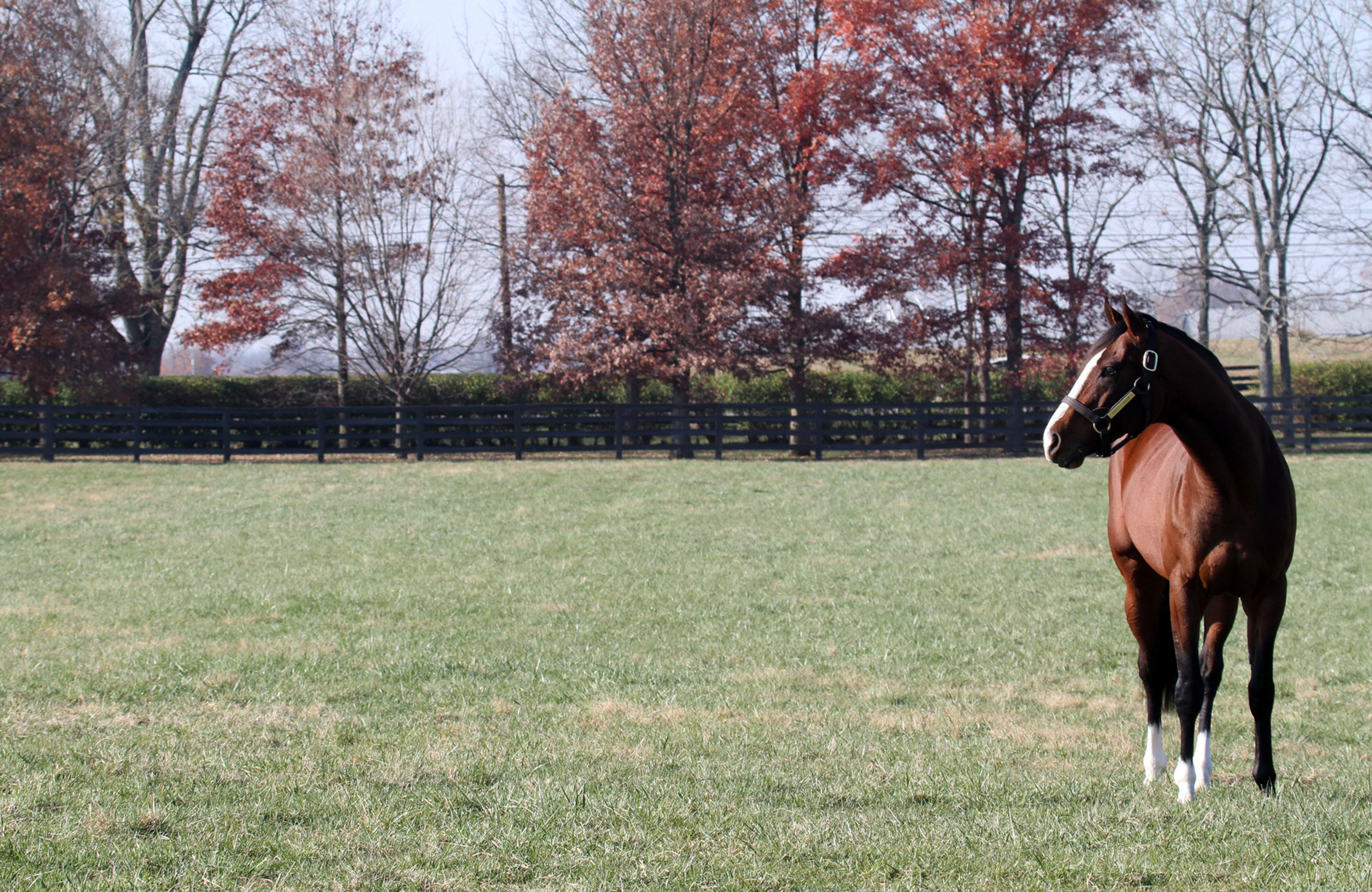
The days of 40-share syndicates aren’t over, but stallion syndication today has a new look, courtesy of innovations like the popular “Share the Upside” program that allow breeders to acquire lifetime breeding rights by committing mares to a stallion, instead of through purchasing shares.
“Stallion syndication is less common today because of several factors,” said Jamie LaMonica, president of The Stallion Company in Lexington, Ky. “Number one, we haven’t been retiring as many good stallion prospects over the last four years, because a lot of farms were on the sidelines and not spending the cash. The people who were spending the cash included Coolmore, Darley, and other typical non-syndicators.
“Number two, I think some of the people who were buying stallion prospects did want breeder involvement in their horses, like Spendthrift, but they had to come up with something that fit breeders’ budgets and the lack of available credit. So those farms started remarketing the idea of syndication through programs like ‘Share the Upside.’ Those have become increasingly popular, especially for horses in the $10,000 and under [stud fee] range.”
North America’s active Thoroughbred broodmare population dropped by about 32 percent from 2008 to 2011. At the same time, the most popular stallions often got larger books, growing their share of the available market. Those trends increased the pressure on stud farms as they competed for a shrinking pool of mares.
“When the books started rising, the number of mares you could breed rose, and the market was booming, people could buy these stallions, breed them to huge books, and with just two or three investors cover their risk,” said Ben Taylor, vice president of Taylor Made Stallions in Nicholasville, Ky. “Now you have to lock mare support up or they can’t get the income they need in the stallion’s third and fourth year.
“On the very top end, the horses that are being syndicated for the most, I think you can get by with traditional syndicates, because there are enough wealthy people who want to be involved and breed to the best horses and are willing to participate under those terms and conditions,” he said. “But when you drop down to a Grade 1 winner without a lot of pedigree or a Grade 2 winner with pedigree, you don’t have the big money chasing those horses, and you’ve got to get a system set up where you can draw more of the grassroots breeders. The way you do that is to offer them value, and after they pay you a determined amount of stud fees, you’ll issue them a lifetime breeding right.”
Upmarket stallion prospects can still command shareholder attention and fill out 40- or 50-share syndicates, bloodstock experts say. Those syndicate agreements hold appeal for blue-chip investors who can pay the up-front price and who also believe access to the horse (and his seasons) will be relatively limited, a factor that can increase share values.
LaMonica said Union Rags is a perfect example. Last year’s Belmont winner, Union Rags stands as the property of a syndicate at Lane’s End in Versailles, Ky., and the son of Dixie Union entered stud this year with a $35,000 fee.
“They paid a premium price for the horse, and they syndicated him at the premium price,” LaMonica said. “They went to people who liked the horse and thought there could be an access problem to the horse, and they were rewarded for it, because now they have a big group of unbelievably solid shareholders who will support that horse with very good mares.”
The usual number of shares in syndicates has risen over the years, from 32 in the 1970’s to 40 and then to 50. That helps investors share the expenses of marketing and caring for the horse they’re investing in, and it can make buying a share more attractive.
“The numbers of mares these kinds of stallions are breeding, that’s what’s facilitating the share numbers going up,” Taylor said. “If you have a 50-share syndicate, most stallions can breed 100 mares plus the breeding rights, so they lock up a book in the range of 100 mares just through the shareholders, if they use those shares to breed. And some of these syndicates will stipulate that you have to use your seasons for a certain amount of time.”
“The reason I’m a fan of the traditional 40-share syndicate structure is that, when the horse hits, or if he’s really popular, you’re paid a dividend,” LaMonica said.
But LaMonica noted that, for stallion owners and managers, the breeding-rights incentives offer a big plus: consistent book sizes, especially for horses in the most competitive part of the market or enduring the traditionally thinner third and fourth seasons.
MIDWEST STALLIONS: WinStar influence grows with new stallion facility
MORE: Shore Breeze reigns in Illinois | Newcomers boost Ohio | Spanish Steps tops Indiana
The “Share the Upside” program, which started at B. Wayne Hughes’s Spendthrift Farm in Lexington after the bloodstock market (and breeders’ credit lines) plummeted in 2008, has been adopted by more farms. The program can be individually tweaked but generally does not offer dividends or a share of the profits if a young sire becomes successful or is sold. Instead, most offer breeders a lifetime breeding right to the horse in exchange for a multiyear breeding agreement. “Share the Upside” is a good deal for both breeders and the farm, Spendthrift general manager Ned Toffey said.
“It leaves us in control, and we don’t need to get shareholder votes to make decisions,” Toffey said of Spendthrift’s “Share the Upside” program. “We’re hoping we have people who have a vested interest, and it’s to their benefit to continue supporting the horses through years three and four. And one of the things ‘Share the Upside’ did in a challenging market is allow people to earn a lifetime breeding right in a horse without putting up all the money up front. We’re allowing you to earn the right in the form of stands-and-nurses seasons. It also allows you to get out at any time. If you decide you don’t want to follow up and breed the second year, for example, you can walk away, and you’re not out any money. At a time when cash is tight for a lot of people and banks are doing less lending, it was something that made sense.”
Such terms can give a stallion an edge over competitors.
“It’s killing some of these nice horses that are middle-of-the-road horses, because those third- and fourth-year sires are taking up a lot of the mares that, in the past, would have filtered back to them,” Taylor said.
Taylor Made offers its own twist on the breeding-rights incentive, called “preferred ownership rights,” on Old Fashioned and Astrology. Old Fashioned, by Unbridled’s Song, is a third-crop sire in 2013 with an $8,000 fee, and Astrology, an A.P. Indy horse, enters stud this year at $7,500.
“People pay no bills, but they have access to breed to the horse each year, and if the horse is sold, they receive a percentage of the proceeds,” Taylor said. “Old Fashioned and Astrology were both young horses that we thought had the potential to be really good sires, and we wanted to offer a situation where breeders would be rewarded if they bred to the horse. It also would give the horse a legit opportunity to make it by having enough numbers.”
But bloodstock experts also sound a cautionary note about some breeding-rights incentives.
“If a stallion becomes a big-time stallion, there are going to be seasons out there available on the market that are not under the control of the syndicate manager,” Taylor said. “When that happens, you’re going to have more of a free market. If the manager doesn’t set a fair stud fee, he’ll lose control of where the seasons are being bought and sold. He sets it too high, all those breeding-rights owners will be looking to sell. Set it too low, they’ll be out on the open market selling them. That’s a very dangerous situation to put yourself in. You can get those shareholders selling in the open market competing against each other and driving the price down.”
For the right horse − even some who don’t stand for higher stud fees to start with − traditional syndication still may be a good option. LaMonica points to a pair of young Claiborne Farm stallions as examples: Trappe Shot, a Tapit horse standing his second season for $10,000, and Algorithms, a first-year Bernardini horse with a $7,500 fee.
Both had strongly appealing pedigree and performance records, and they were priced right, LaMonica said.
“So you could really do the math and say, ‘After three or four years, I’m going to have a free lottery ticket,’ ” he said. “You know you’re going to have a zero-cost basis by the time you know whether they can run or not.”
New stallions in Kentucky in 2013
| Stallion | Year of birth, pedigree | Farm | 2013 fee |
|---|---|---|---|
| Union Rags | 2009, Dixie Union-Tempo, by Gone West | Lane's End | $35,000 |
| Bodemeister | 2009, Empire Maker-Untouched Talent, by Storm Cat | WinStar Farm | 30,000 |
| To Honor and Serve | 2008, Bernardini-Pilfer, by Deputy Minister | Gainesway | 30,000 |
| Americain | 2005, Dynaformer-America, by Arazi | Calumet Farm | 20,000 |
| Shackleford | 2008, Forestry-Oatsee, by Unbridled | Darby Dan Farm | 20,000 |
| Stay Thirsty | 2008, Bernardini-Marozia, by Storm Bird | Ashford Stud | 20,000 |
| Creative Cause | 2009, Giant's Causeway-Dream of Summer, by Siberian Summer | Airdrie Stud | 15,000 |
| Gemologist | 2009, Tiznow-Crystal Shard, by Mr. Prospector | WinStar Farm | 15,000 |
| Tapizar | 2008, Tapit-Winning Call, by Deputy Minister | Gainesway | 15,000 |
| The Factor | 2008, War Front-Greyciousness, by Miswaki | Lane's End | 15,000 |
| Hansen | 2009, Tapit-Stormy Sunday, by Sir Cat | Ashford Stud | 12,500 |
| Brilliant Speed | 2008, Dynaformer-Speed Succeeds, by Gone West | Three Chimneys Farm | 10,000 |
| Caleb's Posse | 2008, Posse-Abbey's Missy, by Slewacide | Three Chimneys Farm | 10,000 |
| Eye of the Leopard | 2006, A.P. Indy-Eye of the Sphynx, by Smart Strike | Calumet Farm | 10,000 |
| Jersey Town | 2006, Speightstown-Jersey Girl, by Belong to Me | Darby Dan Farm | 10,000 |
| Midas Touch | 2007, Galileo-Approach,by Darshaan | War Horse Place | 10,000 |
| Aikenite | 2007, Yes It's True-Silverlado, by Saint Ballado | Calumet Farm | 7,500 |
| Algorithms | 2009, Bernardini-Ava Knowsthecode, by Cryptoclearance | Claiborne Farm | 7,500 |
| Astrology | 2008, A.P. Indy-Quiet Eclipse, by Quiet American | Taylor Made Stallions | 7,500 |
| Bullet Train | 2007, Sadler's Wells-Kind, by Danehill | Wintergreen Stallion Station | 7,500 |
| Dialed In | 2008, Mineshaft-Miss Doolittle, by Storm Cat | Darby Dan Farm | 7,500 |
| Lentenor | 2007, Dynaformer-La Ville Rouge, by Carson City | Calumet Farm | 7,500 |
| Mythical Power | 2006, Congaree-School for Scandal, by Is It True | War Horse Place | 7,500 |
| Santiva | 2008, Giant's Causeway-Slide, by Smarten | War Horse Place | 7,500 |
| Dominus | 2008, Smart Strike-Cuando, by Lord At War | Spendthrift Farm | 6,500 |
| Maclean's Music | 2008, Distorted Humor-Forest Music, by Unbridled's Song | Hill 'n' Dale Farms | 6,500 |
| Baryshnikov | 2006, Empire Maker-Ski Dancer, by Baldski | Oak Lodge USA | 5,000 |
| Country Day | 2006, Speightstown-Hidden Assets, by Mt. Livermore | Crestwood Farm | 5,000 |
| Get Stormy | 2006, Stormy Atlantic-Foolish Gal, by Kiri's Clown | Crestwood Farm | 5,000 |
| Stately Victor | 2007, Ghostzapper-Collect the Cash, by Dynaformer | Buck Pond Farm | 5,000 |
| Bold Warrior | 2008, Bernardini-Hollywood Wildcat, by Kris S. | Roseglade Farm | 2,500 |
| Skipshot | 2007, Skip Away-Heavenly Note, by Sunny's Halo | Considine Farm | 2,500 |
| Haimish Hy | 2007, Ecton Park-Tifonica, by Equalize | Starwood Farm | 2,000 |
Top 15 sires by stud fee in Kentucky in 2013
| Stallion (YOB, Sire) | Farm | Stud fee |
|---|---|---|
| Bernardini (2003, A.P. Indy) | Darley | $150,000 |
| Tapit (2001, Pulpit) | Gainesway | $125,000 |
| Distorted Humor (1993, Forty Niner) | WinStar Farm | $100,000 |
| Medaglia d'Oro (1999, El Prado) | Darley | $100,000 |
| Street Cry (1998, Machiavellian) | Darley | $100,000 |
| Giant's Causeway (1997, Storm Cat) | Ashford Stud | $85,000 |
| Smart Strike (1992, Mr. Prospector) | Lane's End | $85,000 |
| War Front (2002, Danzig) | Claiborne Farm | $80,000 |
| Awesome Again (1994, Deputy Minister) | Adena Springs Kentucky | $75,000 |
| Tiznow (1997, Cee's Tizzy) | WinStar Farm | $75,000 |
| Malibu Moon (1997, A.P. Indy) | Spendthrift Farm | $70,000 |
| Hard Spun (2004, Danzig) | Darley | $60,000 |
| More Than Ready (1997, Southern Halo) | WinStar Farm | $60,000 |
| Speightstown (1998, Gone West) | WinStar Farm | $60,000 |
| Unbridled's Song (1993, Unbridled) | Taylor Made Stallions | $60,000 |