

Preakness reliable predictor of champions
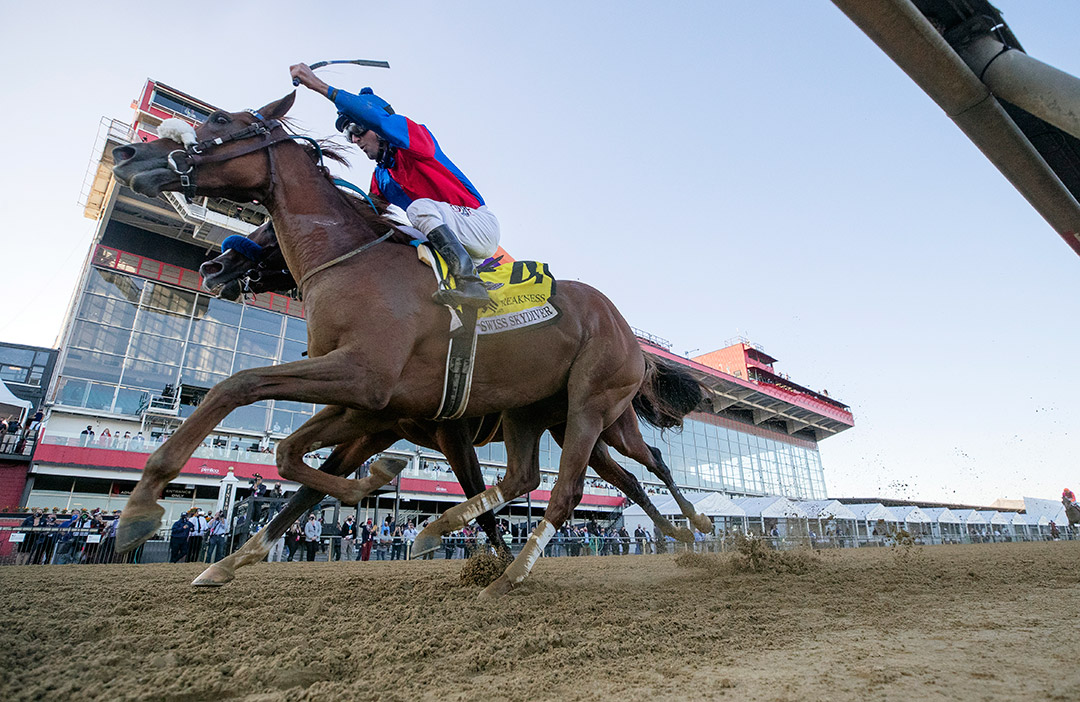
BALTIMORE – Over the last quarter-century, the Preakness has been the most accurate predictor of which 3-year-old will wind up being named the divisional champion – even more than the Kentucky Derby. Since 1996, 16 of the last 25 Preakness winners have been voted the top 3-year-old that year, and that doesn’t even include Rachel Alexandra, the 2009 Horse of the Year and top 3-year-old filly, and Swiss Skydiver, the top 3-year-old filly of 2020.
Five Preakness winners who either were defeated in the Derby or didn’t contest it wound up as champion – Point Given (2001), Afleet Alex (2005), Bernardini (2006), Curlin (2007), and Lookin At Lucky (2010).
:: DRF's Preakness Headquarters: Contenders, latest news, past performances, analysis, and more
During that same span, 13 Derby winners were voted the Eclipse. The only two of those that didn’t also win the Preakness were Animal Kingdom (2011) and Authentic (2020).
Under different circumstances, Medina Spirit clearly would have a huge head start on divisional honors if he were to win here Saturday as the favorite, but his positive post-race test from the Derby would seem to put that in jeopardy, given many voters’ reluctance to bestow tacit approval in such cases.
Preakness runs to form
One of the more enduring and amazing statistical tidbits regarding the Preakness is that a 23-1 shot remains the longest shot ever to win the race in 145 runnings. That was Master Derby in 1975.
For comparison, the longest-priced Kentucky Derby winner was Donerail at 91-1 in 1913, while numerous others have won at higher than 23-1, including such recent bombs as Giacomo (2005) and Mine That Bird (2009), both 50-1 shots. Similarly, the Belmont Stakes has yielded plenty of big win mutuels, with Sarava at 70-1 in 2002 being the highest.
Meanwhile, favorites have won 73 runnings of the Preakness (50.3 percent), a far higher ratio than the universal rate of 30 percent or so, and easily the highest in all three Triple Crown races.